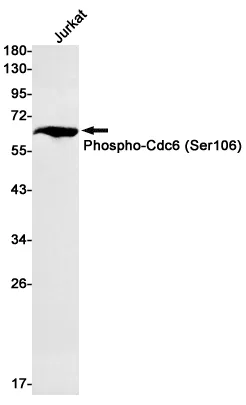
Summary
Performance
Immunogen
Application
Background
Prostaglandin inactivation. Contributes to the regulation of events that are under the control of prostaglandin levels. Catalyzes the NAD-dependent dehydrogenation of lipoxin A4 to form 15-oxo-lipoxin A4. Inhibits in vivo proliferation of colon cancer cells. Primary enzyme catalyzing the conversion of hydroxylated arachidonic acid species to their corresponding oxidized metabolites (Probable). Prostaglandin inactivation, catalyzes the first step in the catabolic pathway of the prostaglandins. Contributes to the regulation of events that are under the control of prostaglandin levels (PubMed:15574495, PubMed:16828555, PubMed:8086429). Catalyzes the NAD- dependent dehydrogenation of lipoxin A4 to form 15-oxo-lipoxin A4 (PubMed:10837478). Converts 11(R)-HETE to 11-oxo-5,8,12,14-(Z,Z,E,Z)- eicosatetraenoic acid (ETE) (PubMed:21916491). Has hydroxylated docosahexaenoic acid metabolites as substrates (PubMed:25586183). Converts resolvins E1, D1 and D2 to their oxo products which represents a mode of resolvins inactivation and stabilizes their anti-inflammatory actions (PubMed:16757471, PubMed:22844113).
Research Area
Immunology