Literature Sharing: Characterization of Tumor Immune Microenvironment by Multiplex Immunofluorescence

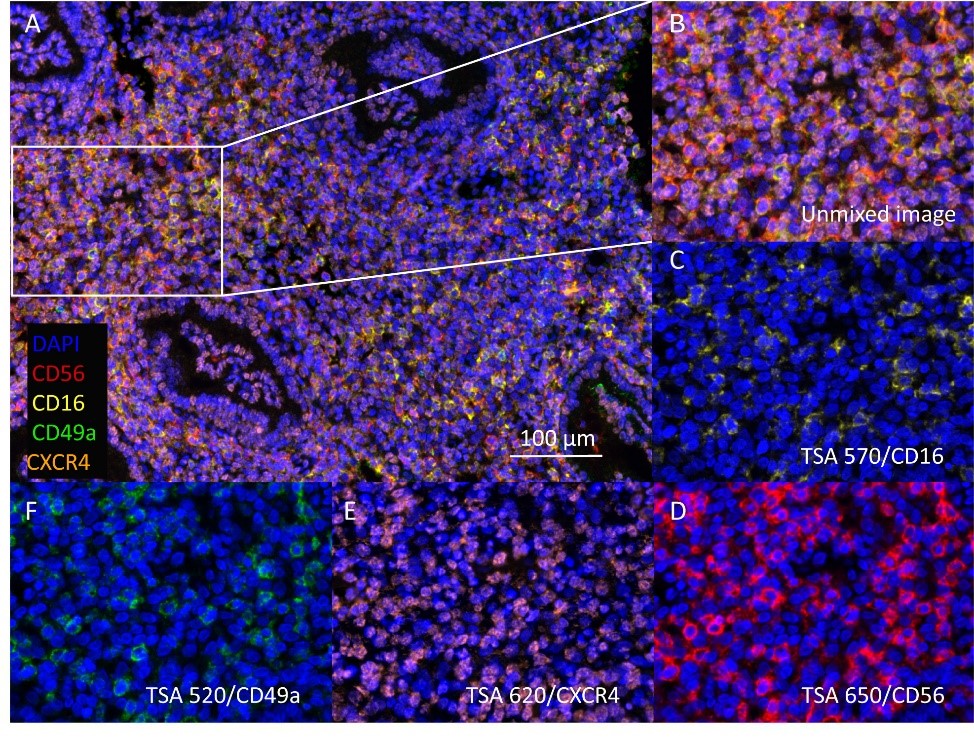
The cellular composition, functional status, and spatial distribution of the tumor immune microenvironment (TME) are core factors determining tumor progression and immunotherapy efficacy. Precise analysis of TME characteristics has become a key direction in tumor research. However, traditional research tools have significant limitations: single immunohistochemistry (IHC) can only detect a single target, failing to show intercellular interactions; flow cytometry enables multiparametric analysis but requires cell dissociation, losing crucial spatial information; early multiplex fluorescence staining techniques were limited by low signal intensity and poor antibody species compatibility, making them difficult to meet clinical sample analysis needs. Against this backdrop, a multiplex immunofluorescence (mIHC) platform based on tyramide signal amplification (TSA) technology has emerged, providing the possibility for "panoramic" analysis of TME. The team of Viratham Pulsawatdi A published a study titled "A robust multiplex immunofluorescence and digital pathology workflow for the characterisation of the tumour immune microenvironment" in Molecular Oncology. This study took colorectal cancer (CRC) formalin-fixed paraffin-embedded (FFPE) tissues as research objects, and based on the Opal multiplex immunofluorescence platform of TSA technology, constructed and verified a standardized workflow from staining to image analysis, providing a reliable method for precise characterization of tumor immune microenvironment. The following is an in-depth analysis from the aspects of technical essence, experimental logic, core findings and application value.

   💬 WhatsApp