IL-17 Receptor C Rabbit Polyclonal Antibody($99/20μL)

IL-17 Receptor C Rabbit Polyclonal Antibody($99/20μL)

Cat: APRab00404
Size:20μL Price:$99
Size:50μL Price:$150
Size:100μL Price:$280

Size:200μL Price:$520
Application:WB,ELISA

Reactivity:Human
Conjugate:Unconjugated
Optional conjugates: Biotin, FITC (free of charge).
See other 26 conjugates.

Gene Name:IL17RC Category: Polyclonal Antibody Tags: , , , , ,

Summary

Production Name

IL-17 Receptor C Rabbit Polyclonal Antibody

Description

Rabbit polyclonal Antibody

Host

Rabbit

Application

WB,ELISA

Reactivity

Human


Performance

Conjugation

Unconjugated

Modification

Unmodified

Isotype

IgG

Clonality

Polyclonal

Form

Liquid

Storage

Store at 4°C short term. Aliquot and store at -20°C long term. Avoid freeze/thaw cycles.

Buffer

Liquid in PBS containing 50% glycerol, 0.5% protective protein and 0.02% sodium azide, pH 7.3.

Purification

Affinity Chromatography


Immunogen

Gene Name

IL17RC

Alternative Names

IL17RC; Interleukin-17 receptor C; IL-17 receptor C; IL-17RC; Interleukin-17 receptor homolog; IL17Rhom; Interleukin-17 receptor-like protein; IL-17RL; ZcytoR14

Gene ID

84818

SwissProt ID

Q8NAC3


Application

Dilution Ratio

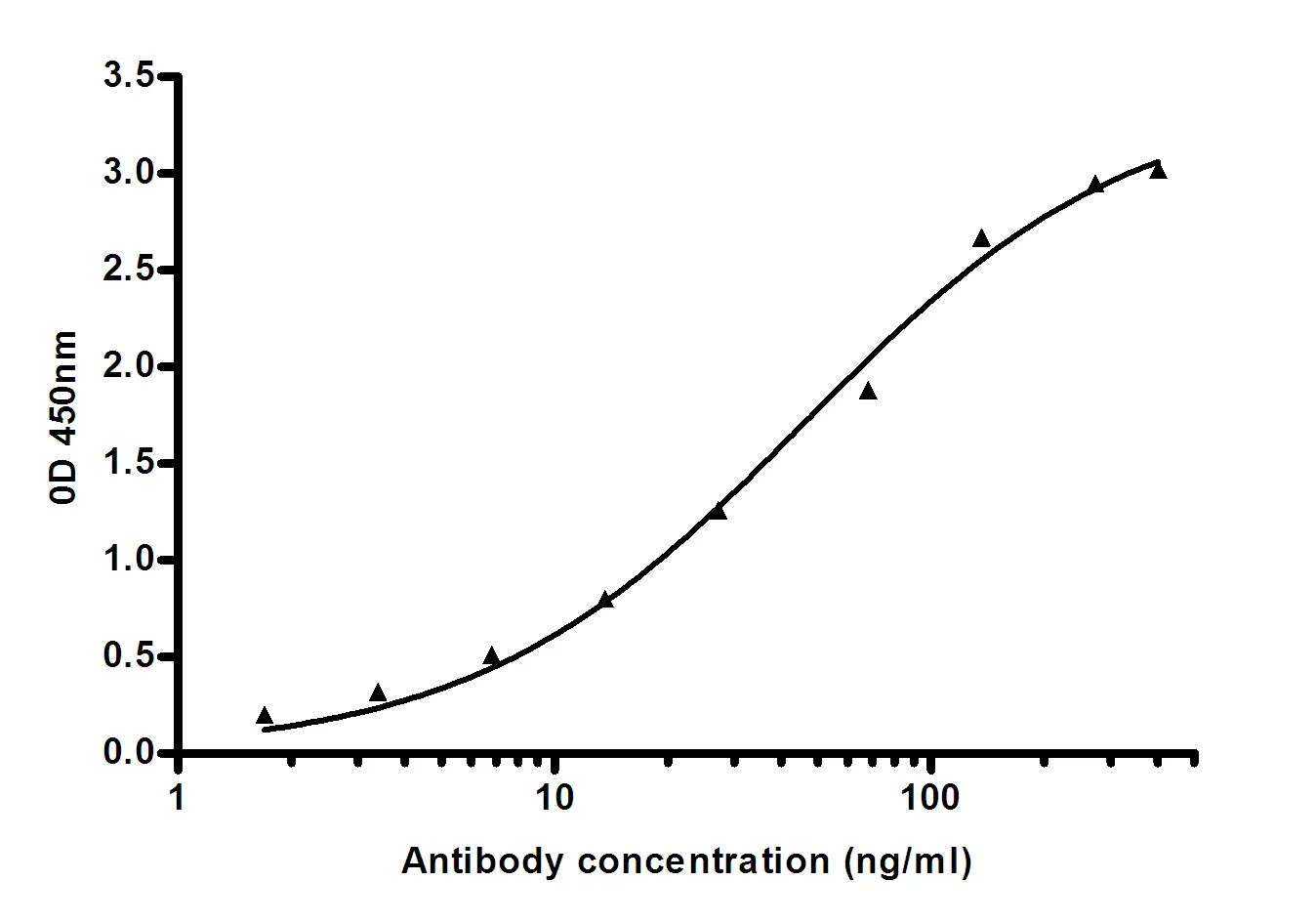
WB 1:500-1:1000,ELISA 1:5000-1:20000

Molecular Weight

Calculated MW: 86 kDa; Observed MW: 70 kDa


Background

This gene encodes a single-pass type I membrane protein that shares similarity with the interleukin-17 receptor (IL-17RA). Unlike IL-17RA, which is predominantly expressed in hemopoietic cells, and binds with high affinity to only IL-17A, this protein is expressed in nonhemopoietic tissues, and binds both IL-17A and IL-17F with similar affinities. The proinflammatory cytokines, IL-17A and IL-17F, have been implicated in the progression of inflammatory and autoimmune diseases. Multiple alternatively spliced transcript variants encoding different isoforms have been detected for this gene, and it has been proposed that soluble, secreted proteins lacking transmembrane and intracellular domains may function as extracellular antagonists to cytokine signaling.


Research Area

Immunology
   💬 WhatsApp