

AKAP 2 Rabbit Polyclonal Antibody($99/20μL)

AKAP 2 Rabbit Polyclonal Antibody($99/20μL)

Cat: APRab06722
Size:20μL Price:$99
Size:50μL Price:$118
Size:100μL Price:$220

Size:200μL Price:$380
Application:WB,ELISA

Reactivity:Human,Rat,Mouse
Conjugate:Unconjugated
Optional conjugates: Biotin, FITC (free of charge).
See other 26 conjugates.

Gene Name:AKAP2 Category: Polyclonal Antibody Tags:

Summary

Production Name

AKAP 2 Rabbit Polyclonal Antibody

Description

Rabbit polyclonal Antibody

Host

Rabbit

Application

WB,ELISA

Reactivity

Human,Rat,Mouse


Performance

Conjugation

Unconjugated

Modification

Unmodified

Isotype

IgG

Clonality

Polyclonal

Form

Liquid

Storage

Store at 4°C short term. Aliquot and store at -20°C long term. Avoid freeze/thaw cycles.

Buffer

Liquid in PBS containing 50% glycerol, 0.5% protective protein and 0.02% New type preservative N.

Purification

Affinity purification


Immunogen

Gene Name

AKAP2

Alternative Names

AKAP2; KIAA0920; PRKA2; A-kinase anchor protein 2; AKAP-2; AKAP-KL; Protein kinase A-anchoring protein 2; PRKA2

Gene ID

445815/11217

SwissProt ID

Q9Y2D5


Application

Dilution Ratio

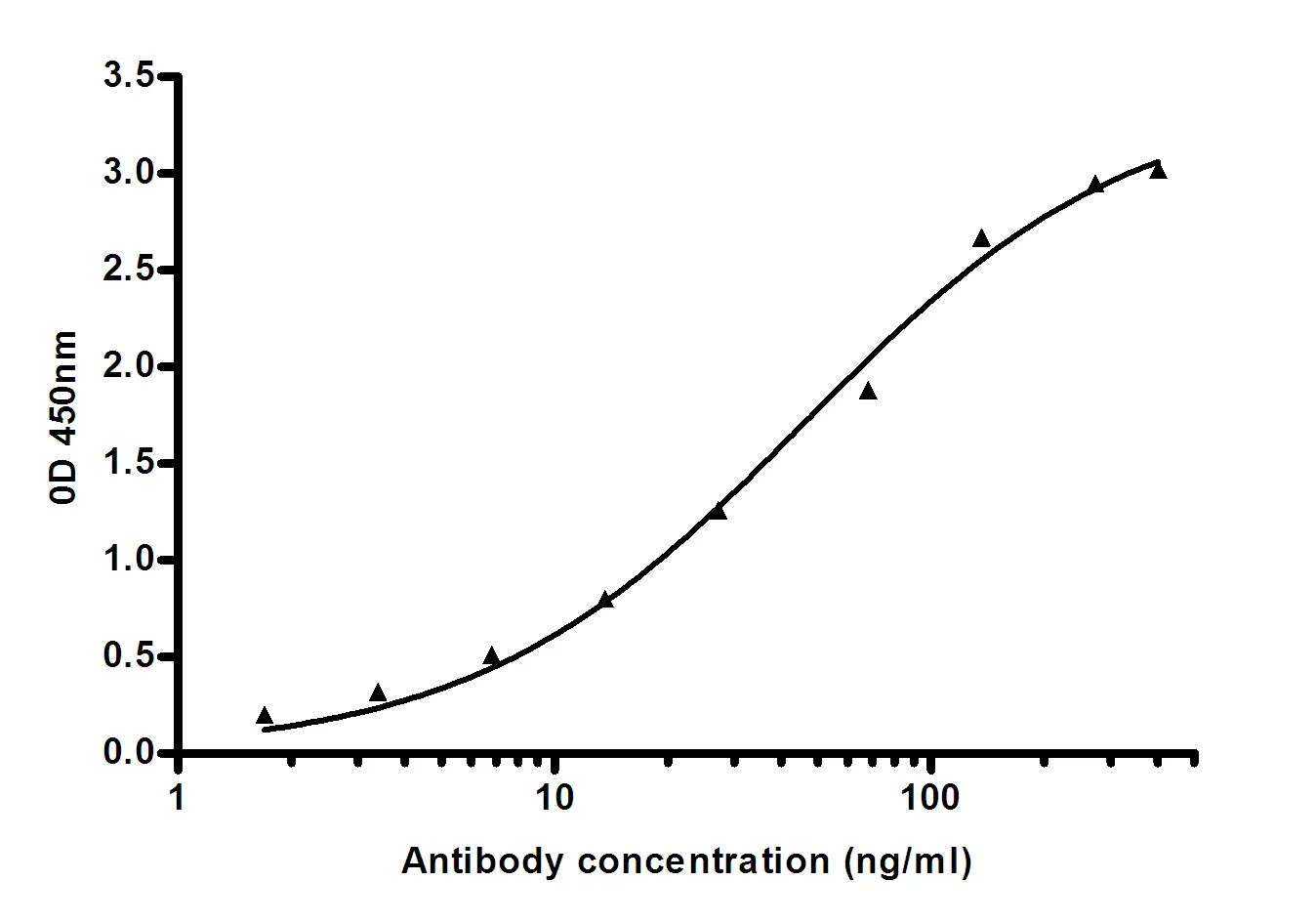
WB 1:500-1:2000,ELISA 1:10000-1:20000

Molecular Weight

96kDa


Background

The protein encoded by this gene binds to the regulatory subunit of protein kinase A and is found associated with the actin cytoskeleton. The encoded protein mediates signals carried by cAMP and may be involved in creating polarity in certain signaling processes. Three transcript variants encoding different isoforms have been found for this gene. [provided by RefSeq, Mar 2011],caution:It is uncertain whether Met-1 or Met-3 is the initiator.,function:Binds to regulatory subunit (RII) of protein kinase A. May be involved in establishing polarity in signaling systems or in integrating PKA-RII isoforms with downstream effectors to capture, amplify and focus diffuse, trans-cellular signals carried by cAMP.,miscellaneous:Can be differentially expressed as a natural AKAP2-PALM2 chimeric protein.,similarity:Belongs to the paralemmin family.,tissue specificity:Expressed in infantile heart and muscle, and fibroblasts.,


Research Area
   💬 WhatsApp