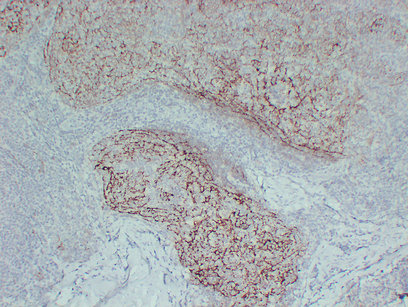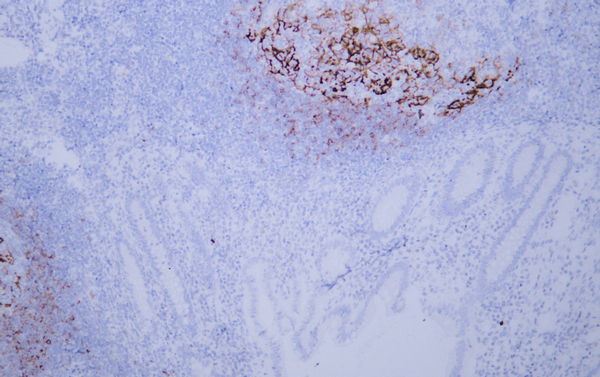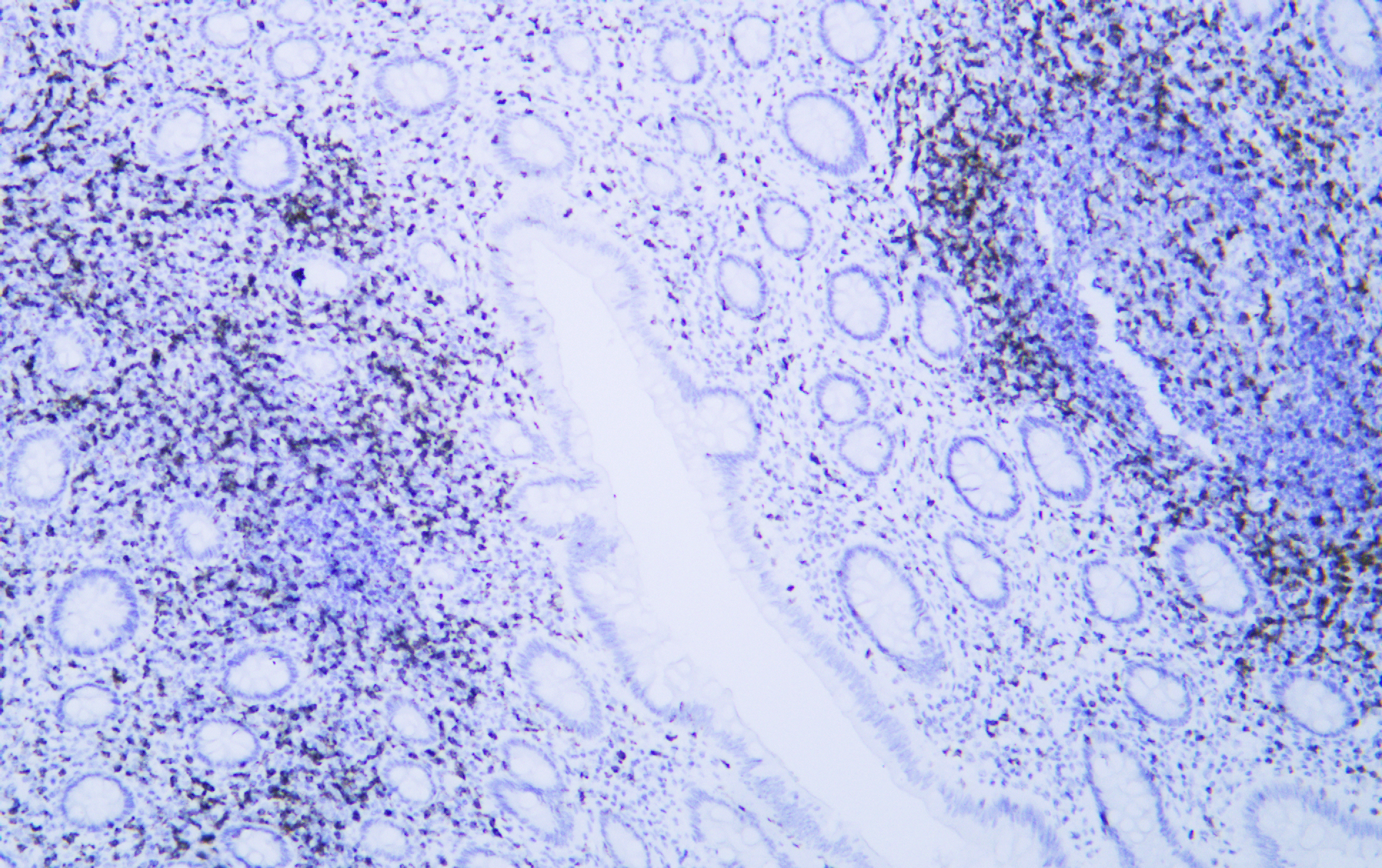


Cytokeratin 7(CK7) Mouse Monoclonal Antibody

Cytokeratin 7(CK7) Mouse Monoclonal Antibody

Cat. No.: AMM22021
Size:50μL Price:$168
Size:100μL Price:$300
Application:IHC,ELISA

Reactivity:Human
Conjugate:Unconjugated
Gene Name:KRT7 SCL
Category: Pathology Antibodies Tags: , , , , ,

Summary

Production Name

Cytokeratin 7(CK7) Mouse Monoclonal Antibody

Description

Pathology Antibodies

Host

Mouse

Application

IHC,ELISA

Reactivity

Human


Performance

Conjugation

Unconjugated

Modification

Unmodified

Isotype

IgG1,Kappa

Clonality

Monoclonal

Form

Liquid

Storage

Store at 4°C short term. Aliquot and store at -20°C long term. Avoid freeze/thaw cycles.

Buffer

PBS, 50% glycerol, 0.05% Proclin 300, 0.05%BSA

Purification

The antibody was affinity-purified from ascites by affinity-chromatography using specific immunogen.


Immunogen

Gene Name

KRT7 SCL

Alternative Names

CK 7;CK-7;CK7;Cytokeratin 7;Cytokeratin-7;D15Wsu77e;K2C7;K2C7_HUMAN;K7;Keratin 7;Keratin 7, type II;Keratin type II cytoskeletal 7;Keratin, 55K type II cytoskeletal;Keratin, simple epithelial;Keratin, simple epithelial type I, K7;Keratin, type II cytoskeletal 7;Keratin-7;Krt2-7;KRT7;MGC11625;MGC129731;MGC3625;Sarcolectin;SCL;Type II mesothelial keratin K7;Type-II keratin Kb7

Gene ID

Human:3855

SwissProt ID

Human:P08729,Mouse:Q9DCV7,Rat:Q6IG12


Application

Dilution Ratio

IHC 1:200-400;ELISA 1:500-5000

Molecular Weight

Calculated MW:51kDa,Observed MW:51kDa


Background

keratin 7(KRT7) Homo sapiens The protein encoded by this gene is a member of the keratin gene family. The type II cytokeratins consist of basic or neutral proteins which are arranged in pairs of heterotypic keratin chains coexpressed during differentiation of simple and stratified epithelial tissues. This type II cytokeratin is specifically expressed in the simple epithelia lining the cavities of the internal organs and in the gland ducts and blood vessels. The genes encoding the type II cytokeratins are clustered in a region of chromosome 12q12-q13. Alternative splicing may result in several transcript variants; however, not all variants have been fully described. [provided by RefSeq, Jul 2008],


Research Area

Pathology
   💬 WhatsApp