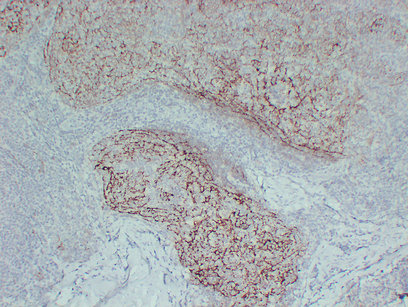
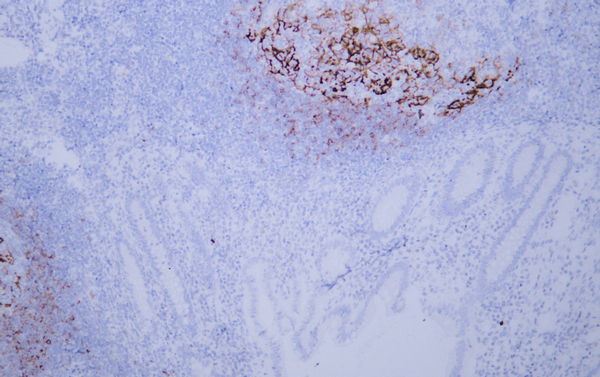
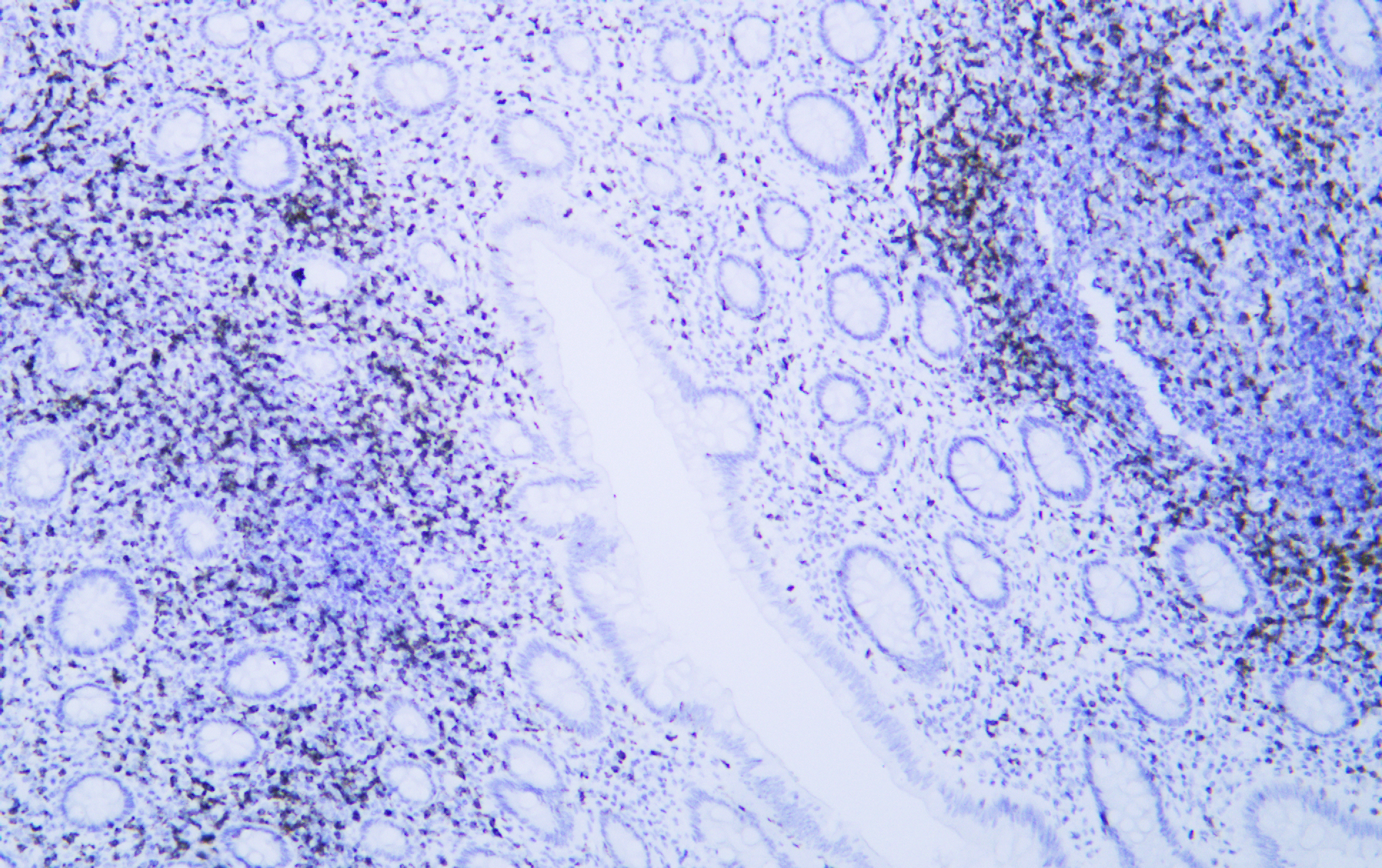
p40 Mouse Monoclonal Antibody

p40 Mouse Monoclonal Antibody

Cat. No.: AMM22095
Size:50μL Price:$168
Size:100μL Price:$300
Application:IHC,ELISA

Reactivity:Human,Mouse
Conjugate:Unconjugated
Gene Name:TP63 KET P63 P73H P73L TP73L
Category: Pathology Antibodies Tags: , , , , , ,

Summary

Production Name

p40 Mouse Monoclonal Antibody

Description

Pathology Antibodies

Host

Mouse

Application

IHC,ELISA

Reactivity

Human,Mouse


Performance

Conjugation

Unconjugated

Modification

Unmodified

Isotype

IgG2b,Kappa

Clonality

Monoclonal

Form

Liquid

Storage

Store at 4°C short term. Aliquot and store at -20°C long term. Avoid freeze/thaw cycles.

Buffer

PBS, 50% glycerol, 0.05% Proclin 300, 0.05%BSA

Purification

The antibody was affinity-purified from ascites by affinity-chromatography using specific immunogen.


Immunogen

Gene Name

TP63 KET P63 P73H P73L TP73L

Alternative Names

Tumor protein 63;p63;Chronic ulcerative stomatitis protein;CUSP;Keratinocyte transcription factor KET;Transformation-related protein 63;TP63;Tumor protein p73-like;p73L;p40;p51;

Gene ID

Human:8626

SwissProt ID

Human:Q9H3D4


Application

Dilution Ratio

IHC 1:50-100;ELISA 1:500-5000

Molecular Weight

Calculated MW:77kDa,Observed MW:77kDa,69kDa


Background

tumor protein p63(TP63) Homo sapiens This gene encodes a member of the p53 family of transcription factors. The functional domains of p53 family proteins include an N-terminal transactivation domain, a central DNA-binding domain and an oligomerization domain. Alternative splicing of this gene and the use of alternative promoters results in multiple transcript variants encoding different isoforms that vary in their functional properties. These isoforms function during skin development and maintenance, adult stem/progenitor cell regulation, heart development and premature aging. Some isoforms have been found to protect the germline by eliminating oocytes or testicular germ cells that have suffered DNA damage. Mutations in this gene are associated with ectodermal dysplasia, and cleft lip/palate syndrome 3 (EEC3); split-hand/foot malformation 4 (SHFM4); ankyloblepharon-ectodermal defects-cleft lip/palate; ADULT syndrome (acro-dermato-ungual-lacrim


Research Area

Pathology
   💬 WhatsApp