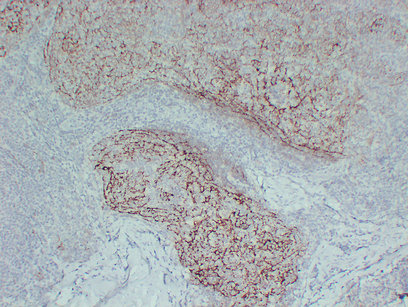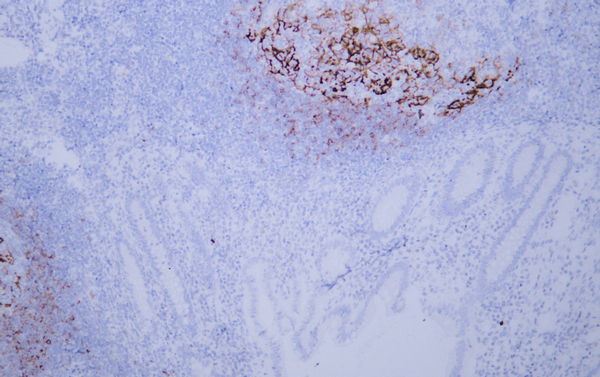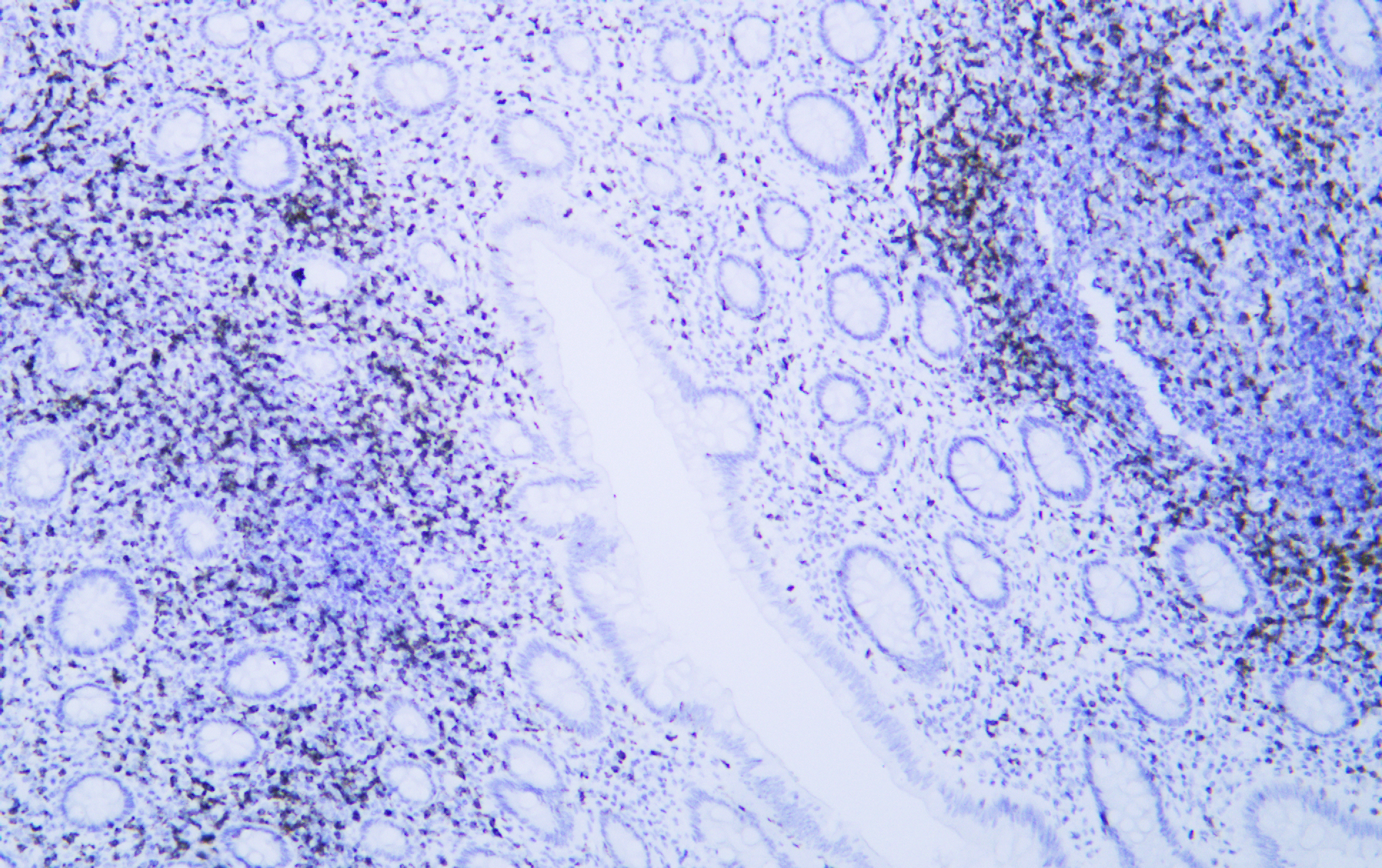


CD44 Mouse Monoclonal Antibody

CD44 Mouse Monoclonal Antibody

Cat. No.: AMM22108
Size:50μL Price:$168
Size:100μL Price:$300
Application:IHC,ELISA

Reactivity:Human
Conjugate:Unconjugated
Gene Name:CD44 LHR MDU2 MDU3 MIC4
Category: Pathology Antibodies Tags: , , , , ,

Summary

Production Name

CD44 Mouse Monoclonal Antibody

Description

Pathology Antibodies

Host

Mouse

Application

IHC,ELISA

Reactivity

Human


Performance

Conjugation

Unconjugated

Modification

Unmodified

Isotype

IgG2b,Kappa

Clonality

Monoclonal

Form

Liquid

Storage

Store at 4°C short term. Aliquot and store at -20°C long term. Avoid freeze/thaw cycles.

Buffer

PBS, 50% glycerol, 0.05% Proclin 300, 0.05%BSA

Purification

The antibody was affinity-purified from ascites by affinity-chromatography using specific immunogen.


Immunogen

Gene Name

CD44 LHR MDU2 MDU3 MIC4

Alternative Names

CD44 antigen;CDw44;Epican;Extracellular matrix receptor III;ECMR-III;GP90 lymphocyte homing/adhesion receptor;HUTCH-I;Heparan sulfate proteoglycan;Hermes antigen;Hyaluronate receptor;Phagocytic glycoprotein 1;PGP-1;Phagocytic glycoprotein I;PGP-I;CD antigen CD44;

Gene ID

Human:960

SwissProt ID

Human:P16070


Application

Dilution Ratio

IHC 1:200-400;ELISA 1:500-5000

Molecular Weight

Calculated MW:81kDa,Observed MW:81kDa


Background

The protein encoded by this gene is a cell-surface glycoprotein involved in cell-cell interactions, cell adhesion and migration. It is a receptor for hyaluronic acid (HA) and can also interact with other ligands, such as osteopontin, collagens, and matrix metalloproteinases (MMPs). This protein participates in a wide variety of cellular functions including lymphocyte activation, recirculation and homing, hematopoiesis, and tumor metastasis. Transcripts for this gene undergo complex alternative splicing that results in many functionally distinct isoforms, however, the full length nature of some of these variants has not been determined. Alternative splicing is the basis for the structural and functional diversity of this protein, and may be related to tumor metastasis. [provided by RefSeq, Jul 2008],


Research Area

Pathology
   💬 WhatsApp