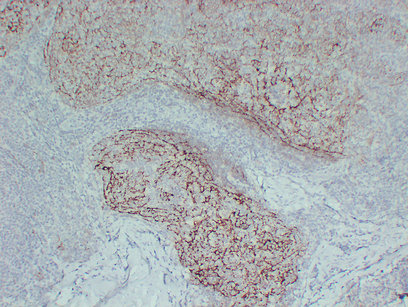
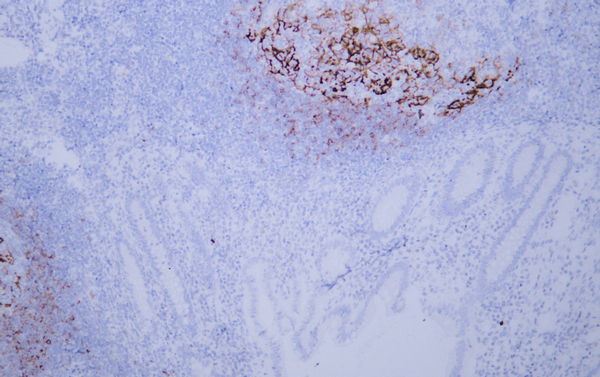
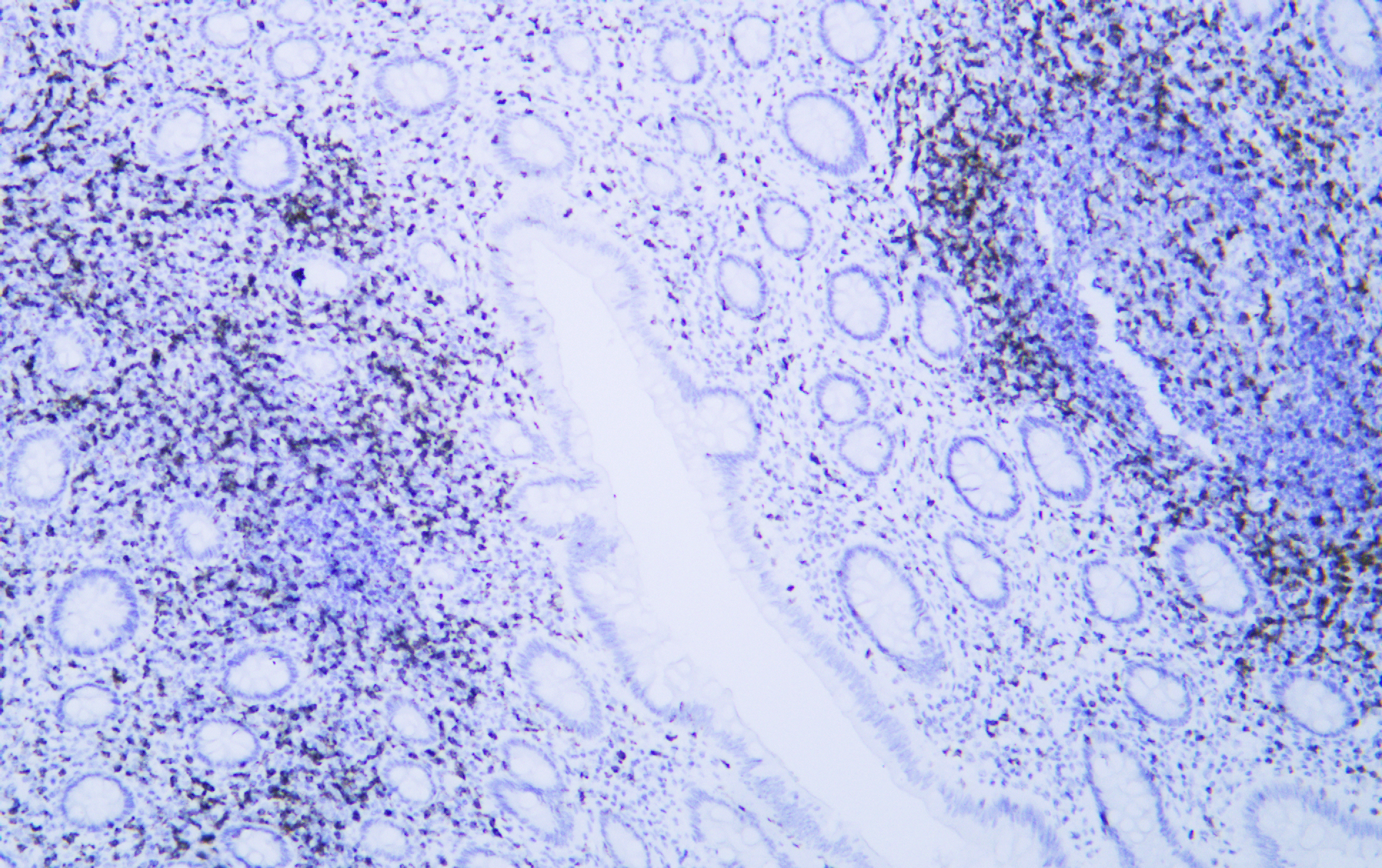
Her-2 Mouse Monoclonal Antibody

Her-2 Mouse Monoclonal Antibody

Cat. No.: AMM22127
Size:50μL Price:$168
Size:100μL Price:$300
Application:IHC,ELISA

Reactivity:Human
Conjugate:Unconjugated
Gene Name:ERBB2 HER2 MLN19 NEU NGL
Category: Pathology Antibodies Tags: , , , , ,

Summary

Production Name

Her-2 Mouse Monoclonal Antibody

Description

Pathology Antibodies

Host

Mouse

Application

IHC,ELISA

Reactivity

Human


Performance

Conjugation

Unconjugated

Modification

Unmodified

Isotype

IgG2a,Kappa

Clonality

Monoclonal

Form

Liquid

Storage

Store at 4°C short term. Aliquot and store at -20°C long term. Avoid freeze/thaw cycles.

Buffer

PBS, 50% glycerol, 0.05% Proclin 300, 0.05%BSA

Purification

The antibody was affinity-purified from ascites by affinity-chromatography using specific immunogen.


Immunogen

Gene Name

ERBB2 HER2 MLN19 NEU NGL

Alternative Names

Receptor tyrosine-protein kinase erbB-2;Metastatic lymph node gene 19 protein;MLN 19;Proto-oncogene Neu;Proto-oncogene c-ErbB-2;Tyrosine kinase-type cell surface receptor HER2;p185erbB2;CD antigen CD340;

Gene ID

Human:2064

SwissProt ID

Human:P04626


Application

Dilution Ratio

IHC 1:200-400;ELISA 1:500-5000

Molecular Weight

Calculated MW:137kDa,Observed MW:180kDa


Background

This gene encodes a member of the epidermal growth factor (EGF) receptor family of receptor tyrosine kinases. This protein has no ligand binding domain of its own and therefore cannot bind growth factors. However, it does bind tightly to other ligand-bound EGF receptor family members to form a heterodimer, stabilizing ligand binding and enhancing kinase-mediated activation of downstream signalling pathways, such as those involving mitogen-activated protein kinase and phosphatidylinositol-3 kinase. Allelic variations at amino acid positions 654 and 655 of isoform a (positions 624 and 625 of isoform b) have been reported, with the most common allele, Ile654/Ile655, shown here. Amplification and/or overexpression of this gene has been reported in numerous cancers, including breast and ovarian tumors. Alternative splicing results in several additional transcript variants, some encoding d


Research Area

Pathology
   💬 WhatsApp