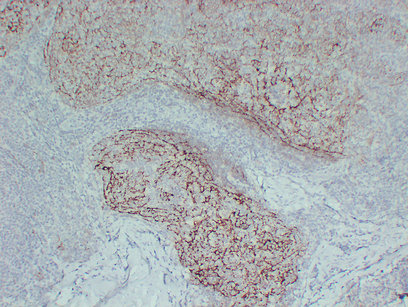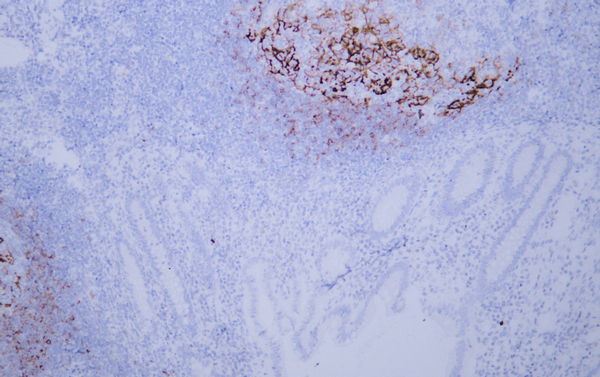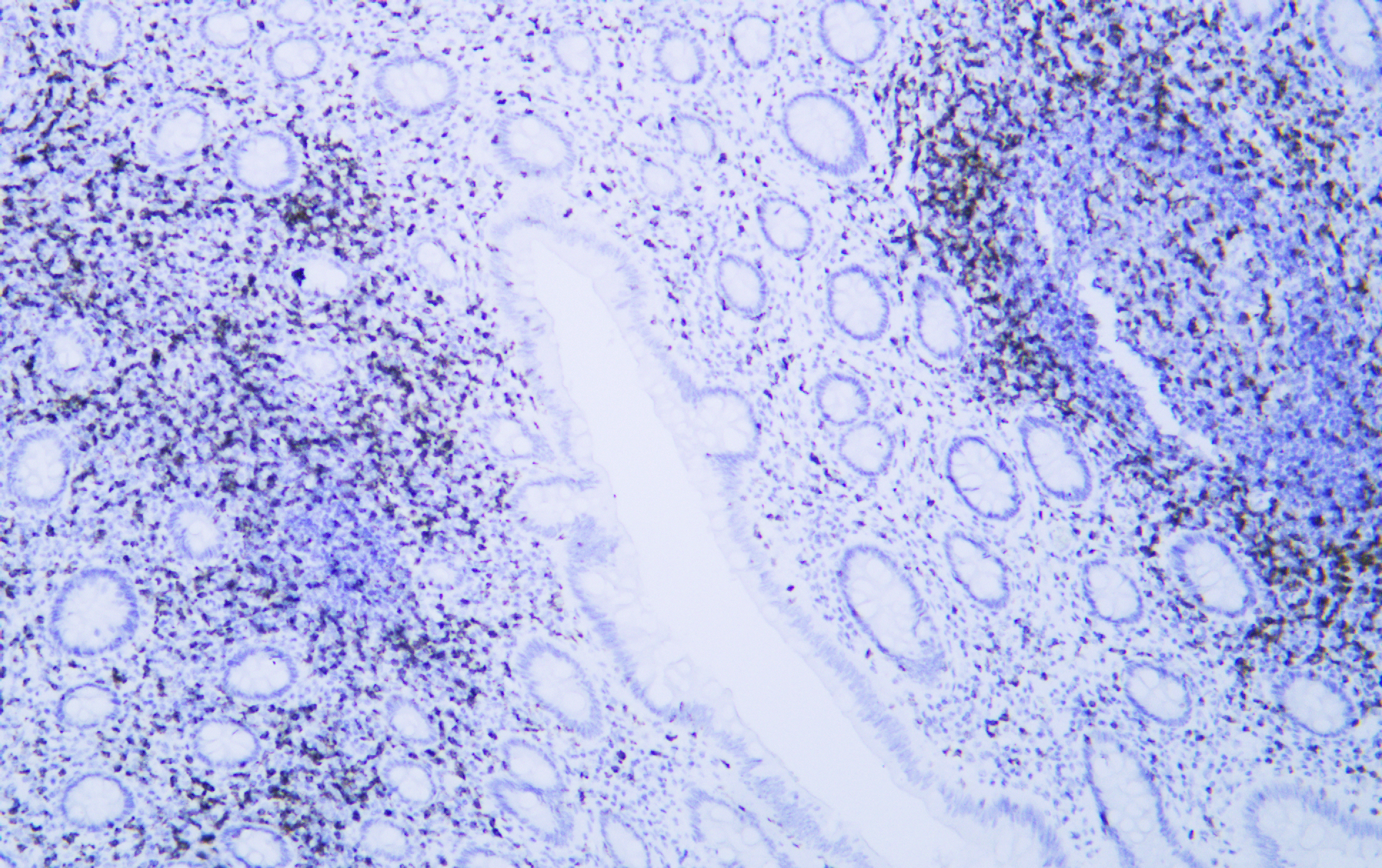


MUC4 Mouse Monoclonal Antibody

MUC4 Mouse Monoclonal Antibody

Cat. No.: AMM22133
Size:50μL Price:$168
Size:100μL Price:$300
Application:IHC,IF,ELISA

Reactivity:Human
Conjugate:Unconjugated
Gene Name:MUC4
Category: Pathology Antibodies Tags: , , , , , ,

Summary

Production Name

MUC4 Mouse Monoclonal Antibody

Description

Pathology Antibodies

Host

Mouse

Application

IHC,IF,ELISA

Reactivity

Human


Performance

Conjugation

Unconjugated

Modification

Unmodified

Isotype

IgG2a,Kappa

Clonality

Monoclonal

Form

Liquid

Storage

Store at 4°C short term. Aliquot and store at -20°C long term. Avoid freeze/thaw cycles.

Buffer

PBS, 50% glycerol, 0.05% Proclin 300, 0.05%BSA

Purification

The antibody was affinity-purified from ascites by affinity-chromatography using specific immunogen.


Immunogen

Gene Name

MUC4

Alternative Names

Mucin-4;MUC-4;Ascites sialoglycoprotein;ASGP;Pancreatic adenocarcinoma mucin;Testis mucin;Tracheobronchial mucin;[Cleaved into: Mucin-4 alpha chain;Ascites sialoglycoprotein 1;ASGP-1;Mucin-4 beta chain;Ascites sialoglycoprotein 2;ASGP-2;]

Gene ID

Human:4585

SwissProt ID

Human:Q99102


Application

Dilution Ratio

IHC 1:200-400;IF 1:50-200;ELISA 1:500-5000

Molecular Weight

Calculated MW:231kDa


Background

The major constituents of mucus, the viscous secretion that covers epithelial surfaces such as those in the trachea, colon, and cervix, are highly glycosylated proteins called mucins. These glycoproteins play important roles in the protection of the epithelial cells and have been implicated in epithelial renewal and differentiation. This gene encodes an integral membrane glycoprotein found on the cell surface, although secreted isoforms may exist. At least two dozen transcript variants of this gene have been found, although for many of them the full-length transcript has not been determined or they are found only in tumor tissues. This gene contains a region in the coding sequence which has a variable number (>100) of 48 nt tandem repeats. [provided by RefSeq, Jul 2008],


Research Area

Pathology
   💬 WhatsApp