
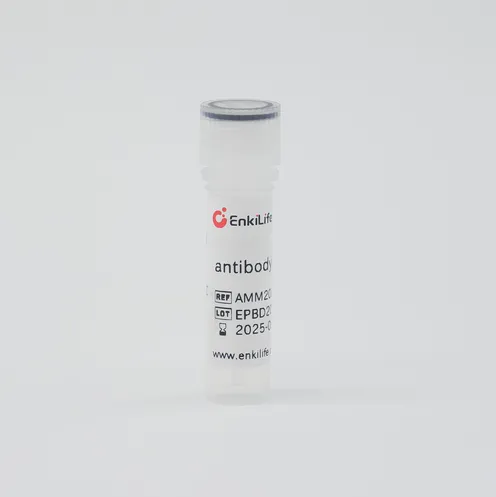
Size:100μg Price:$358
Application:ELISA, IHC, WB
Reactivity:Wenzhou Apodemus agrarius henipavirus 1, Mojiang virus, Wenzhou shrew henipavirus 1, Langya virus, Crocidura olivieri henipavirus 1, Lechcodon virus, Hasua virus
Conjugate:Unconjugated
Gene Name:Matrix
Summary
Performance
Immunogen
Application
Background
Nipah virus (NiV), a highly pathogenic zoonotic paramyxovirus, mediates host cell entry through the coordinated action of two envelope glycoproteins: the attachment glycoprotein (G), which engages the host cell receptors ephrin-B2 and ephrin-B3, and the fusion glycoprotein (F), which drives membrane fusion following receptor binding. These viral surface proteins, along with the viral RNA-dependent RNA polymerase (RdRp) complex comprising the nucleoprotein (N), phosphoprotein (P), and large polymerase protein (L), constitute the primary molecular targets for therapeutic intervention and vaccine development. The conserved receptor-binding interface of the G protein and the fusion machinery of the F protein represent particularly attractive targets for neutralizing antibodies and entry inhibitors, while the viral replication machinery offers potential targets for broad-spectrum antiviral compounds targeting paramyxovirus transcription and replication.
Research Area
Microbiology&Infectious Disease