

Cleaved-Cathepsin A 32k (R326) Rabbit Polyclonal Antibody($99/20μL)

Cleaved-Cathepsin A 32k (R326) Rabbit Polyclonal Antibody($99/20μL)

Cat: APRab08972
Size:20μL Price:$99
Size:50μL Price:$118
Size:100μL Price:$220

Size:200μL Price:$380
Application:WB,ELISA

Reactivity:Human,Mouse
Conjugate:Unconjugated
Optional conjugates: Biotin, FITC (free of charge).
See other 26 conjugates.

Gene Name:CTSA Category: Polyclonal Antibody Tags: ,

Summary

Production Name

Cleaved-Cathepsin A 32k (R326) Rabbit Polyclonal Antibody

Description

Rabbit polyclonal Antibody

Host

Rabbit

Application

WB,ELISA

Reactivity

Human,Mouse


Performance

Conjugation

Unconjugated

Modification

Unmodified

Isotype

IgG

Clonality

Polyclonal

Form

Liquid

Storage

Store at 4°C short term. Aliquot and store at -20°C long term. Avoid freeze/thaw cycles.

Buffer

Liquid in PBS containing 50% glycerol, 0.5% protective protein and 0.02% New type preservative N.

Purification

Affinity purification


Immunogen

Gene Name

CTSA

Alternative Names

CTSA; PPGB; Lysosomal protective protein; Carboxypeptidase C; Carboxypeptidase L; Cathepsin A; Protective protein cathepsin A; PPCA; Protective protein for beta-galactosidase

Gene ID

5476

SwissProt ID

P10619


Application

Dilution Ratio

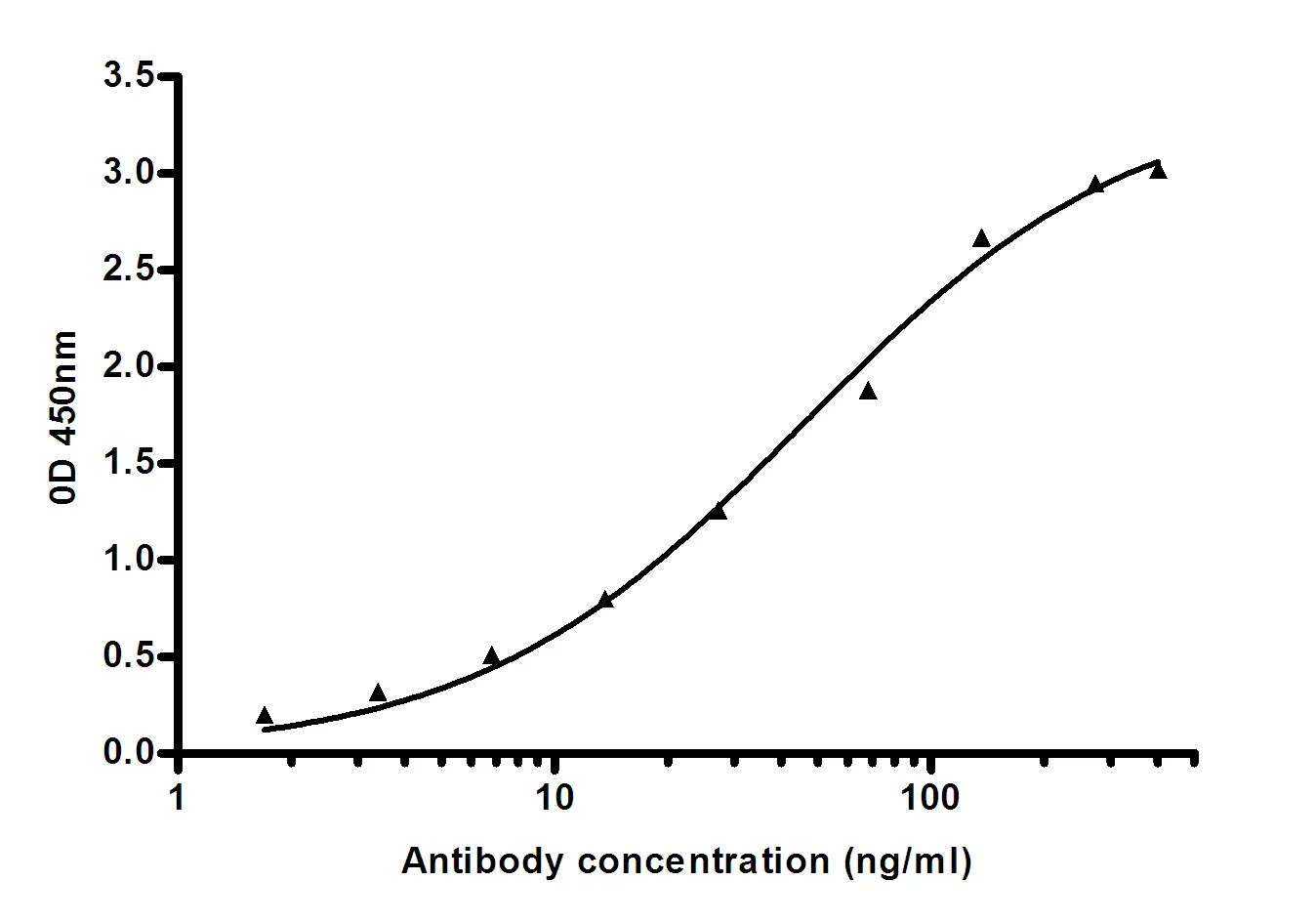
WB 1:500-1:2000,ELISA 1:5000-1:20000

Molecular Weight

33kDa


Background

This gene encodes a member of the peptidase S10 family of serine carboxypeptidases. Alternative splicing results in multiple transcript variants, at least one of which encodes a preproprotein that is proteolytically processed to generate two chains that comprise the heterodimeric active enzyme. This enzyme possesses deamidase, esterase and carboxypeptidase activities and acts as a scaffold in the lysosomal multienzyme complex. Mutations in this gene are associated with galactosialidosis. [provided by RefSeq, Nov 2015],catalytic activity:Release of a C-terminal amino acid with broad specificity.,disease:Defects in CTSA are the cause of galactosialidosis [MIM:256540]. It is an autosomal recessive disease.,function:Protective protein appears to be essential for both the activity of beta-galactosidase and neuraminidase, it associates with these enzymes and exerts a protective function necessary for their stability and activity. This protein is also a carboxypeptidase and can deamidate tachykinins.,similarity:Belongs to the peptidase S10 family.,subunit:Heterodimer of a 32 kDa chain and a 20 kDa chain; disulfide-linked.,


Research Area

Lysosome;Renin-angiotensin system;
   💬 WhatsApp