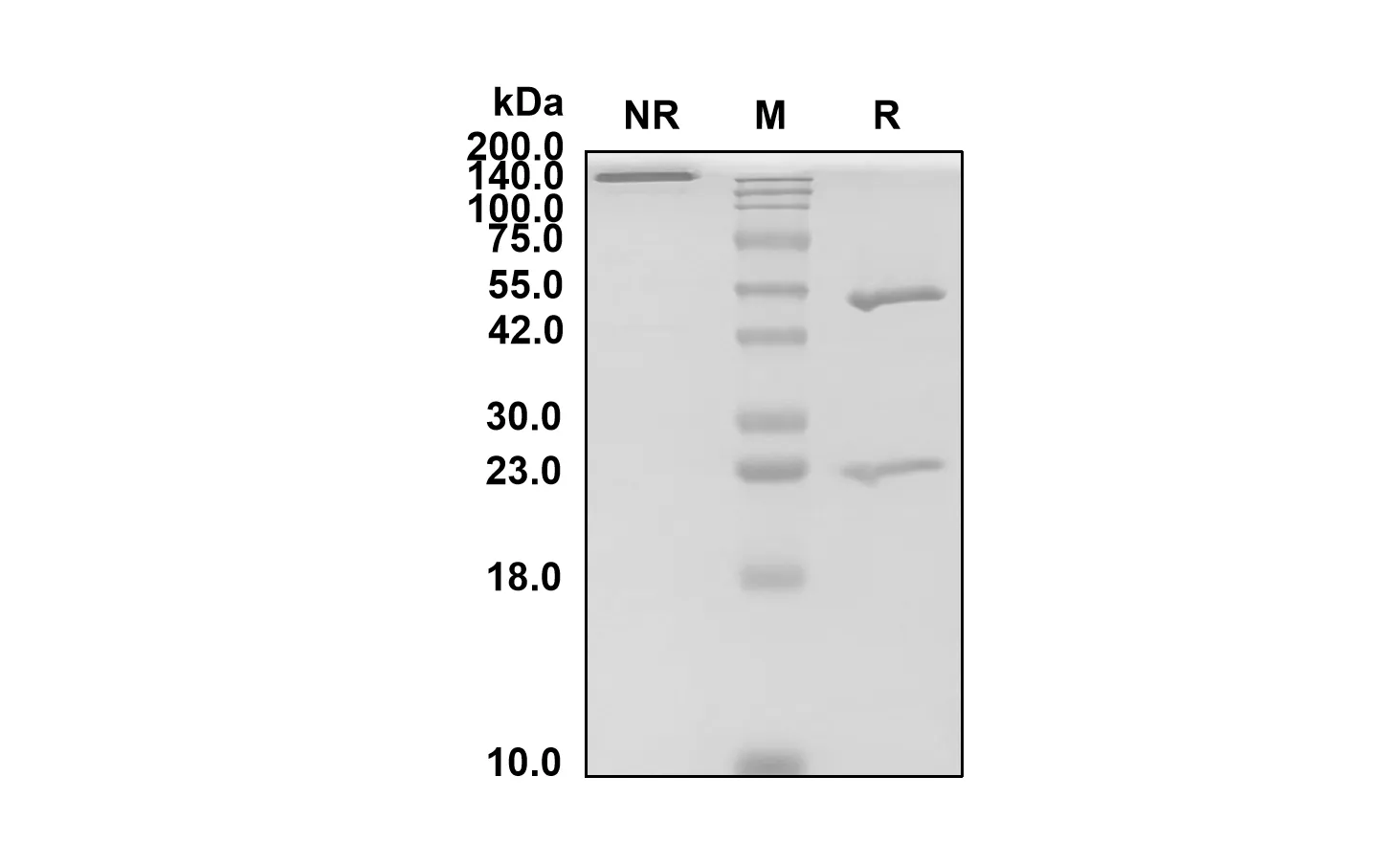
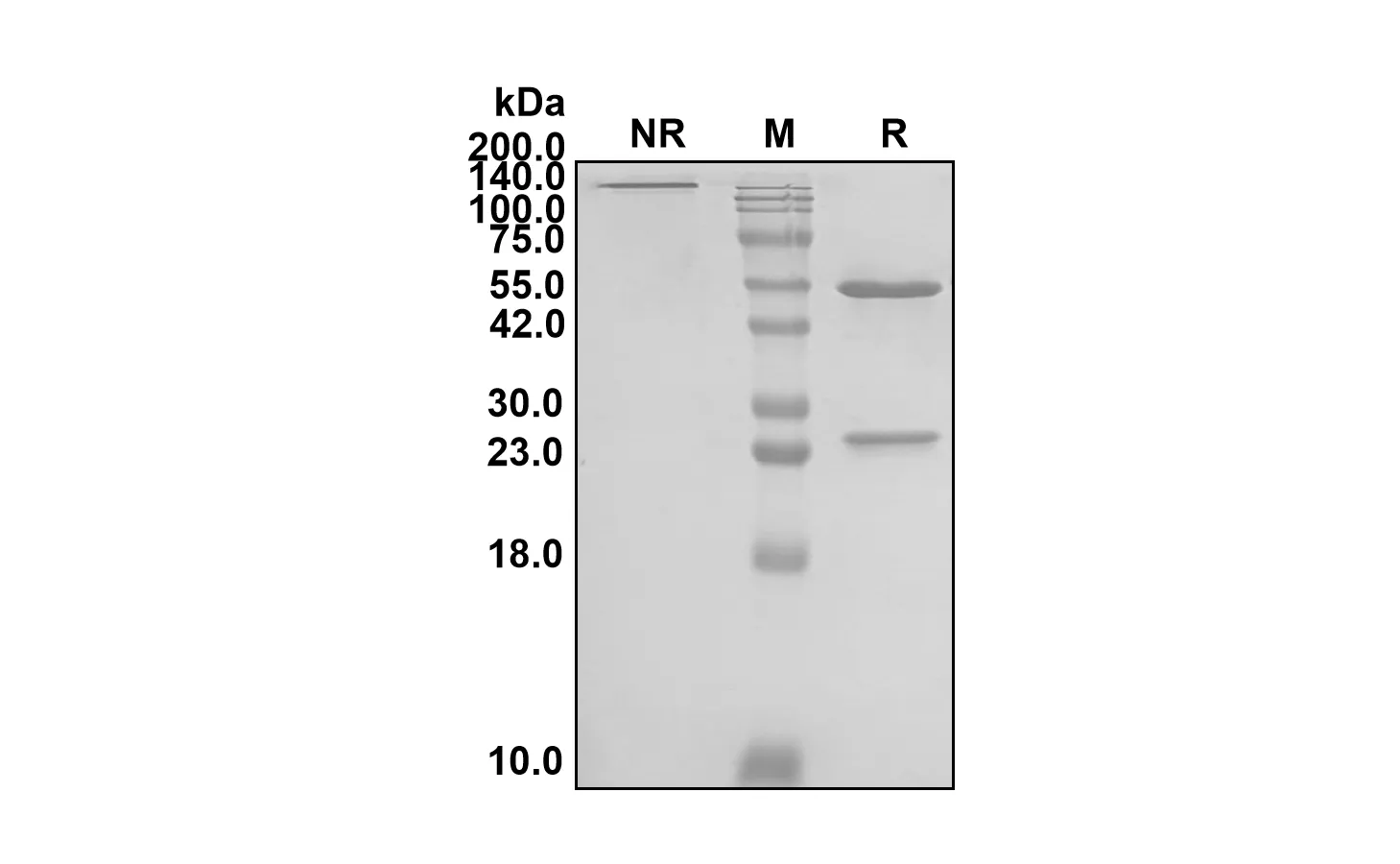
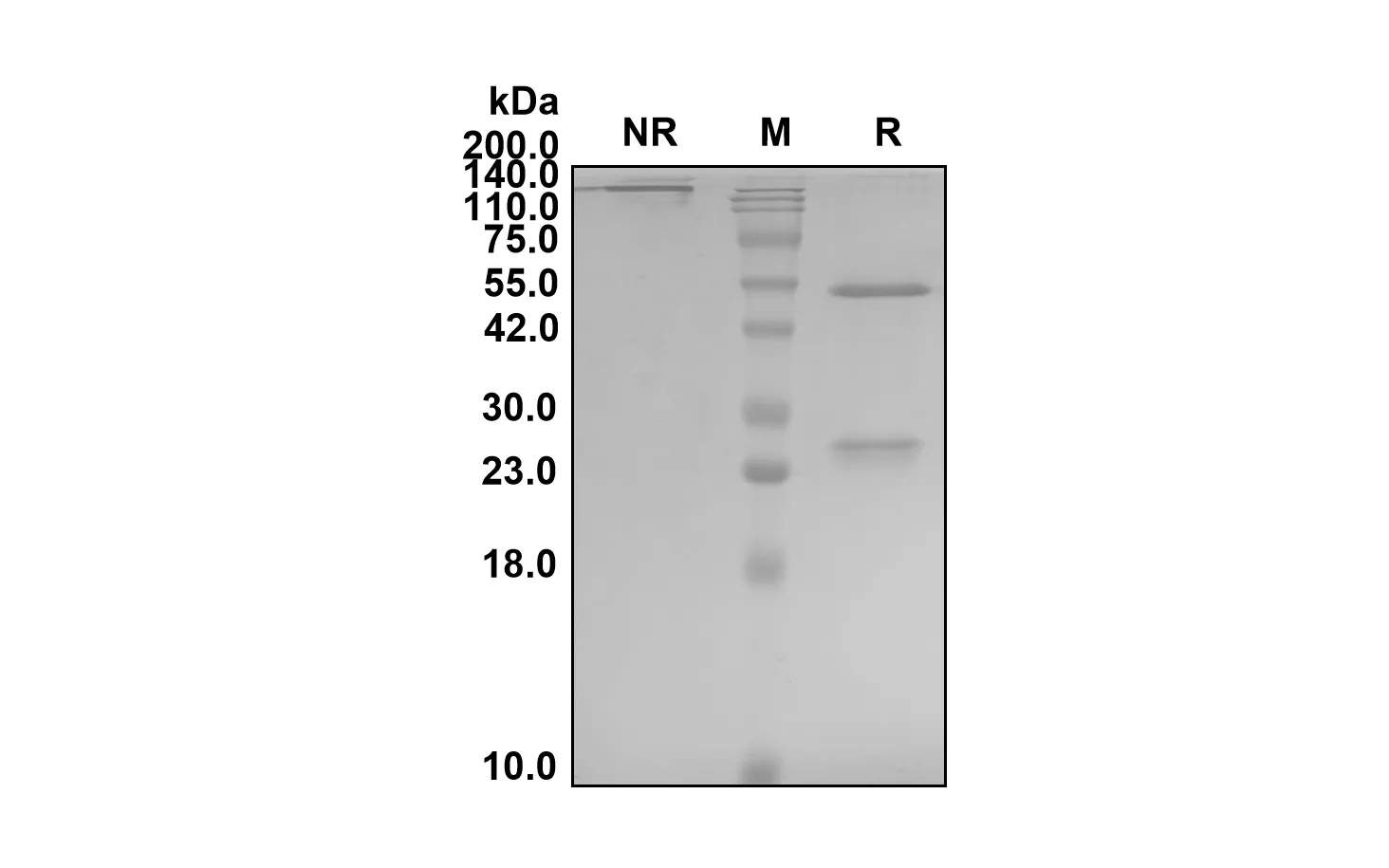
Summary
Background
This non-therapeutic biosimilar antibody uses the same variable regions from the therapeutic antibody Daclizumab making it ideal for research use. The Daclizumab biosimilar antibody reacts with the Tac epitope on the α-subunit of human IL-2Rα also known as CD25, Ly-43, p55, or Tac. IL-2Rα is the 55 kDa ligand-binding subunit of the interleukin 2 receptor alpha chain. IL-2Rα is expressed on activated mature T and B lymphocytes, thymocyte subsets, pre-B cells, and T regulatory cells. IL-2Rα has been shown to play roles in lymphocyte differentiation, activation, and proliferation. Alone, the IL-2Rα binds IL-2 with relatively low affinity however, when IL-2Rα associates with IL-2Rβ (CD122) and the common gamma chain (CD132) the complex binds IL-2 with high affinity. Daclizumab functions by blocking the IL-2 binding site on the low- and high-affinity IL-2R without depleting T cells by antibody-dependent cellular cytotoxicity, complement mediated lysis or apoptosis, or activating the receptor and signaling pathways. This blockade results in the inhibition of several IL-2 dependent T-cell functions, including antigen- and mitogen-induced proliferation, cytokine secretion by activated Th1 and Th2 lymphocytes, and interference with CD28-dependent CD40 ligand expression.