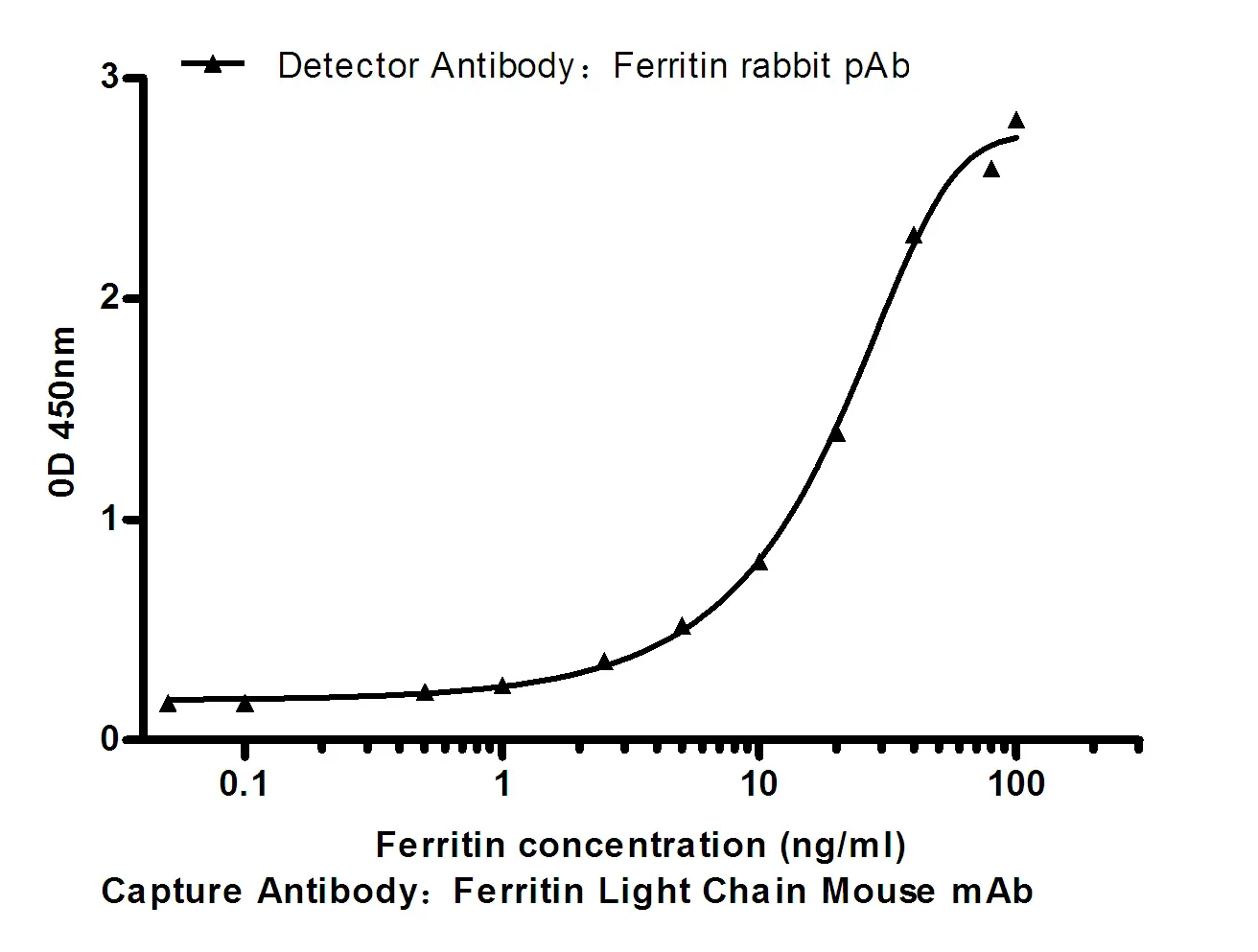
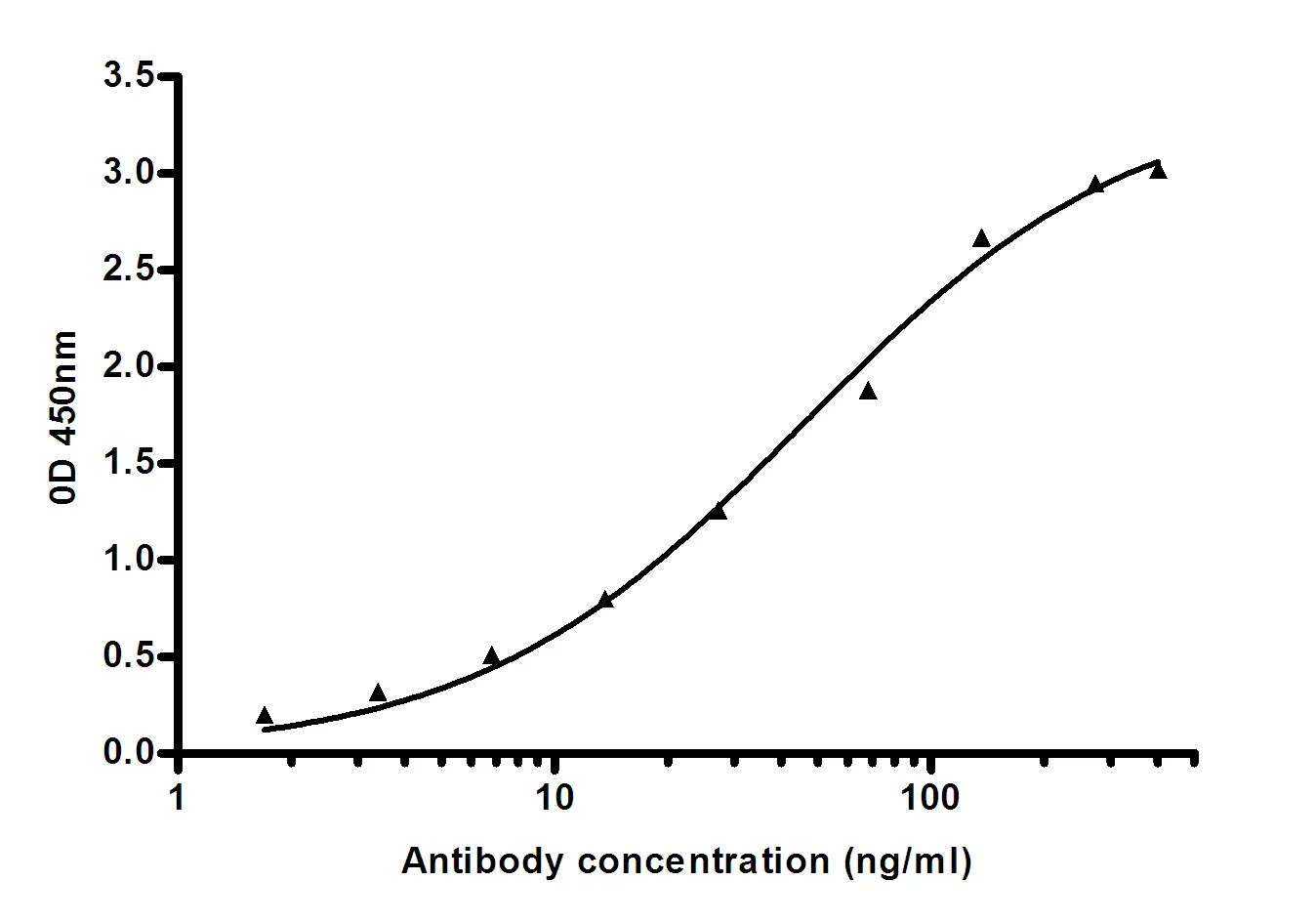
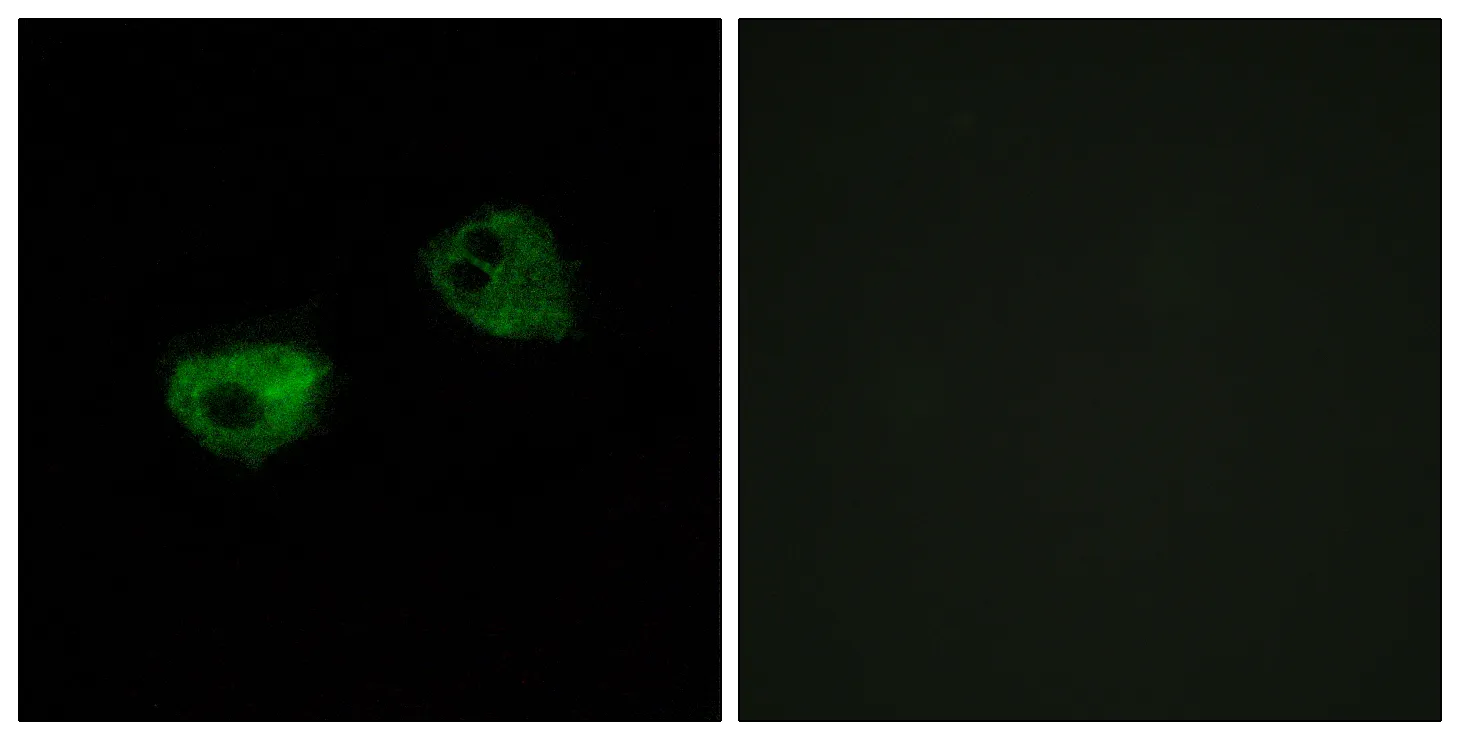
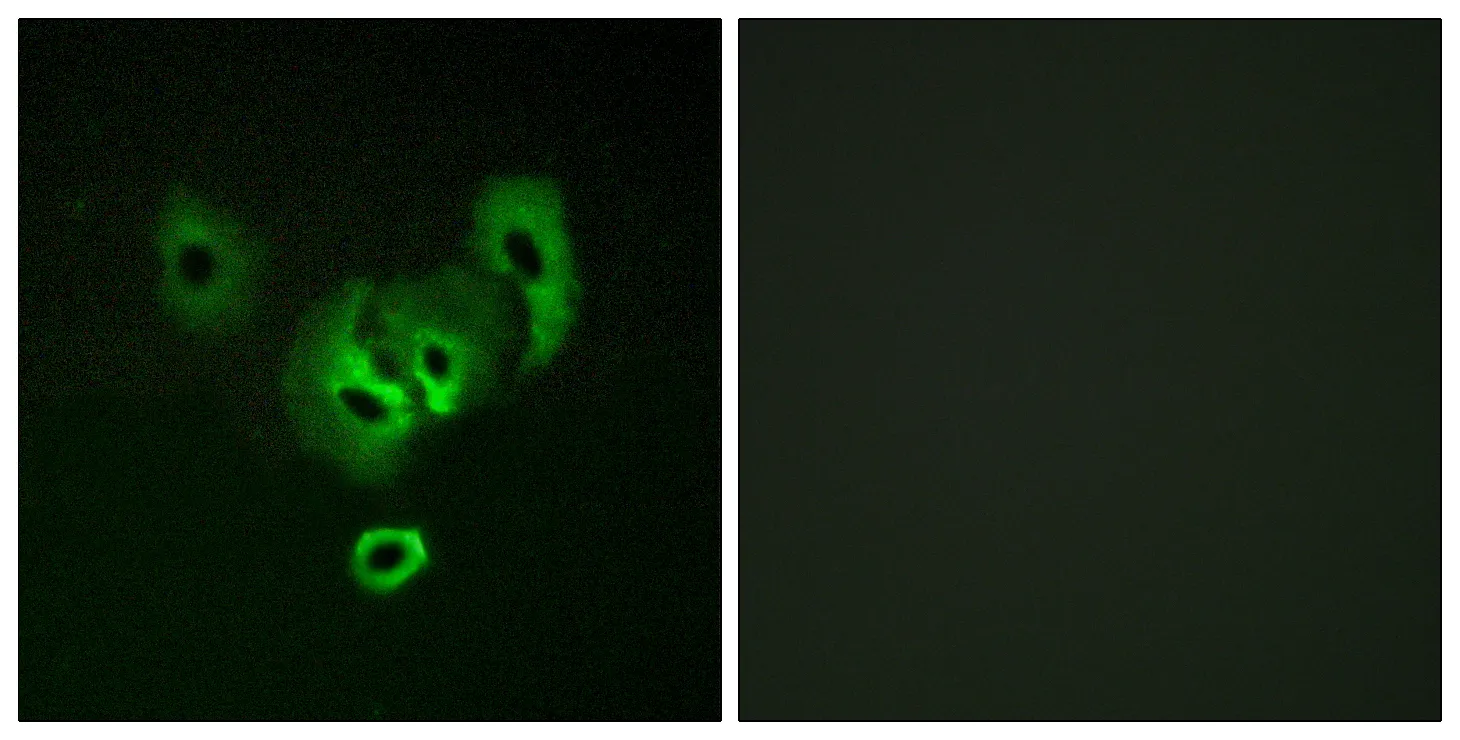
Summary
Performance
Immunogen
Application
Background
This gene encodes a member of the Eph receptor family of receptor tyrosine kinase transmembrane glycoproteins. These receptors are composed of an N-terminal glycosylated ligand-binding domain, a transmembrane region and an intracellular kinase domain. They bind ligands called ephrins and are involved in diverse cellular processes including motility, division, and differentiation. A distinguishing characteristic of Eph-ephrin signaling is that both receptors and ligands are competent to transduce a signaling cascade, resulting in bidirectional signaling. This protein belongs to a subgroup of the Eph receptors called EphB. Proteins of this subgroup are distinguished from other members of the family by sequence homology and preferential binding affinity for membrane-bound ephrin-B ligands. Allelic variants are associated with prostate and brain cancer susceptibility. Alternative splicing results in multiple trcatalytic activity:ATP + a [protein]-L-tyrosine = ADP + a [protein]-L-tyrosine phosphate.,disease:Defects in EPHB2 are involved in the development of prostate cancer metastasis to the brain [MIM:603688].,disease:Defects in EPHB2 are involved in the progression of prostate cancer [MIM:176807].,function:Receptor for members of the ephrin-B family. Acts as a tumor suppressor.,similarity:Belongs to the protein kinase superfamily. Tyr protein kinase family.,similarity:Belongs to the protein kinase superfamily. Tyr protein kinase family. Ephrin receptor subfamily.,similarity:Contains 1 protein kinase domain.,similarity:Contains 1 SAM (sterile alpha motif) domain.,similarity:Contains 2 fibronectin type-III domains.,subunit:The ligand-activated form interacts with multiple proteins, including GTPase-activating protein (RASGAP) through its SH2 domain. Binds RASGAP through the juxtamembrane tyrosines residues. Interacts with PRKCABP and GRIP1.,tissue specificity:Brain, heart, lung, kidney, placenta, pancreas, liver and skeletal muscle. Preferentially expressed in fetal brain.,
Research Area
Axon guidance;