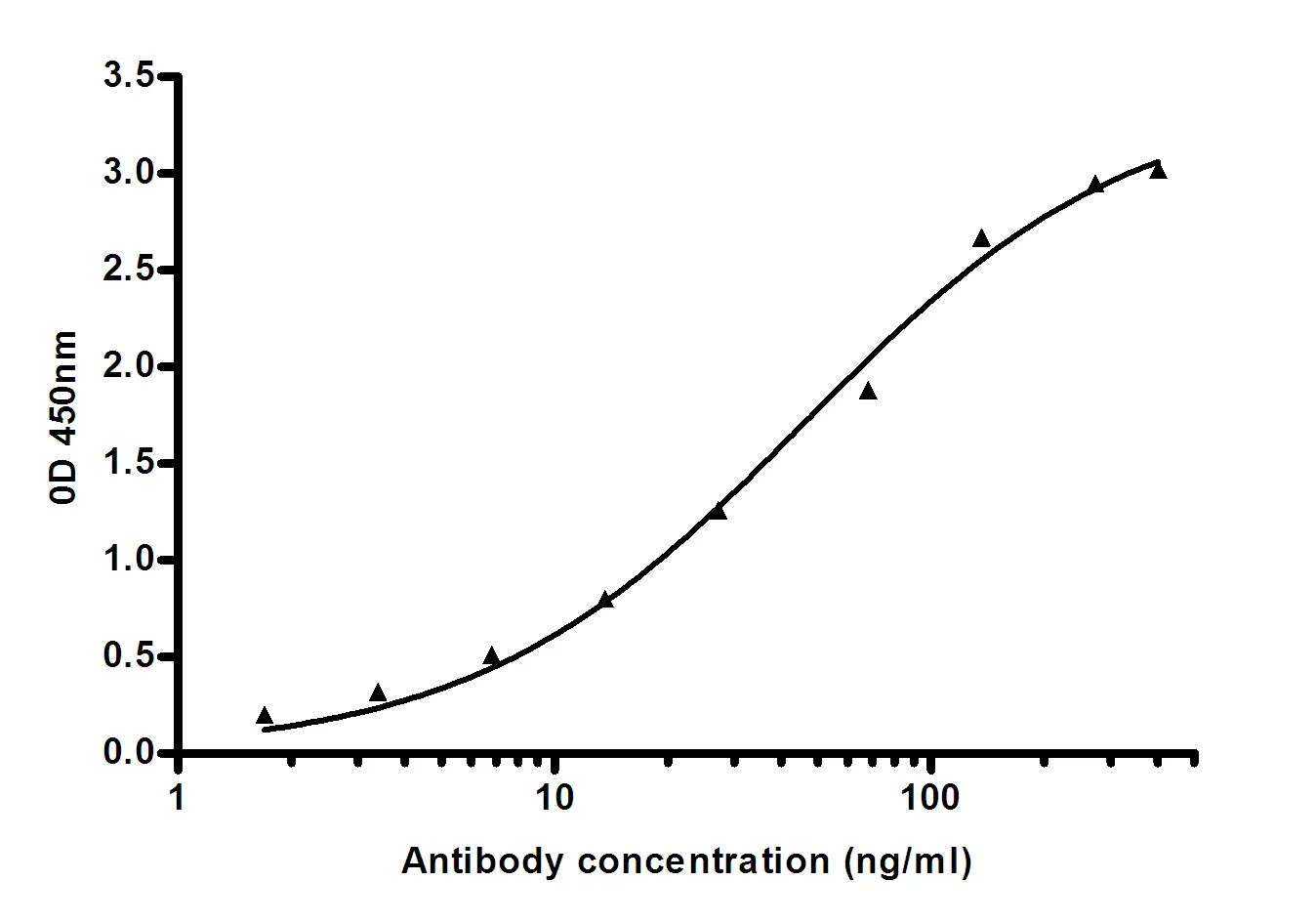
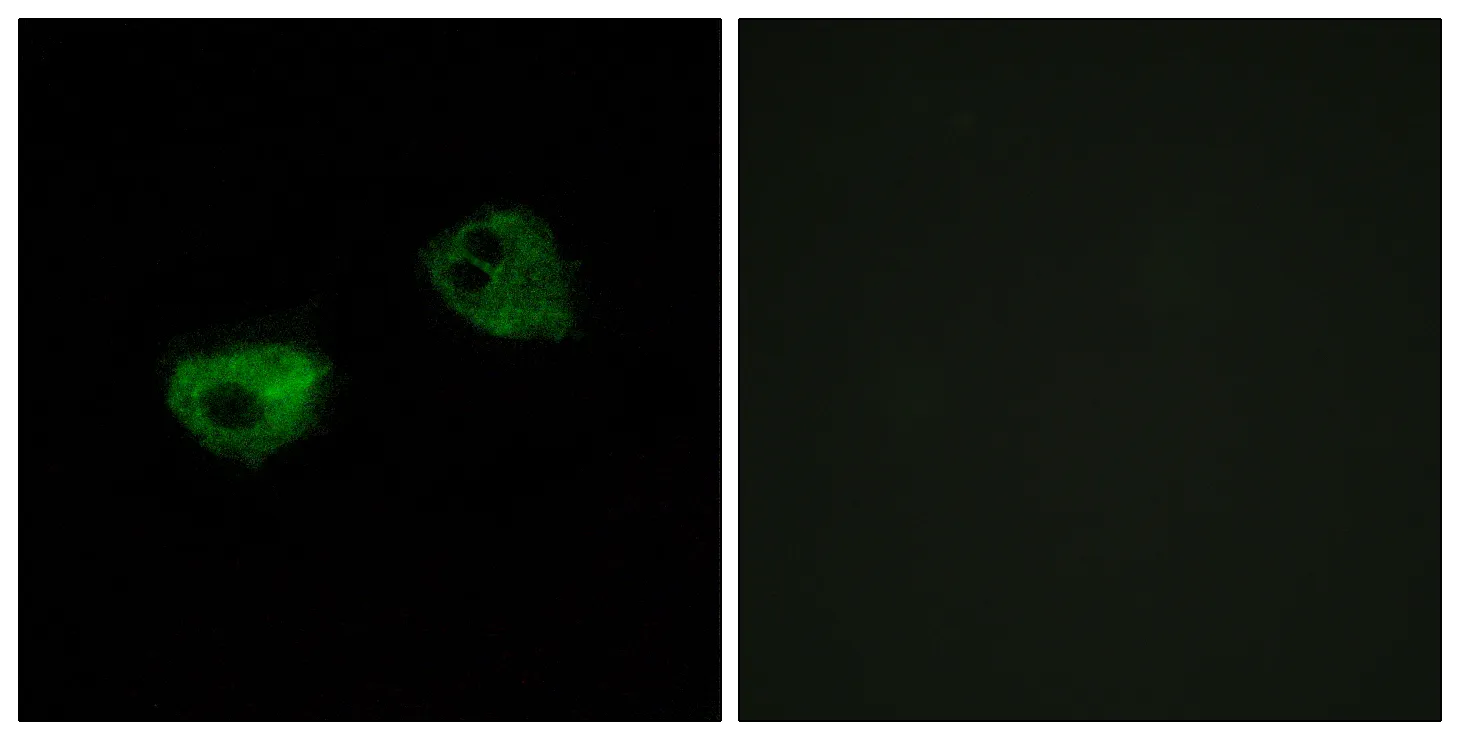
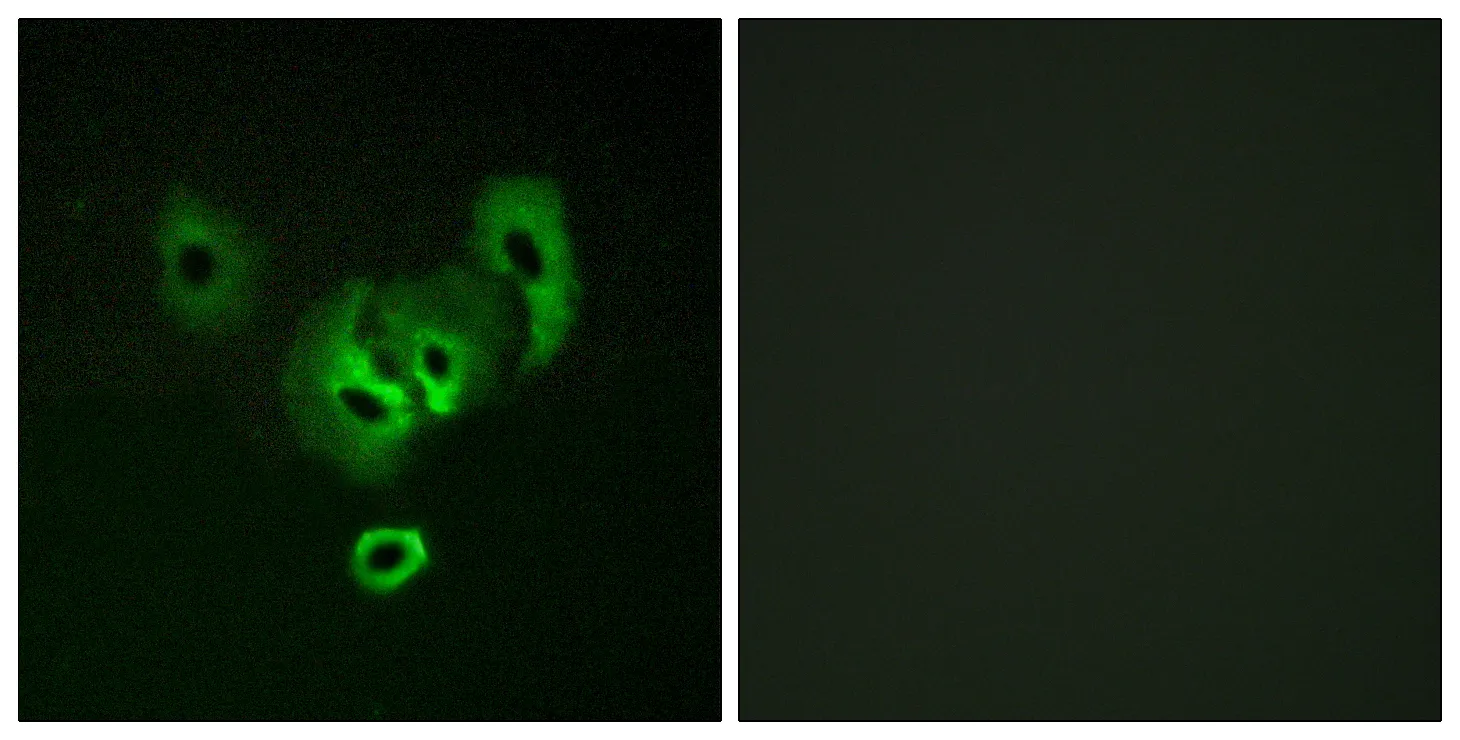
HURP Rabbit Polyclonal Antibody($99/20μL)

HURP Rabbit Polyclonal Antibody($99/20μL)

Cat: APRab12287
Size:20μL Price:$99
Size:50μL Price:$118
Size:100μL Price:$220

Size:200μL Price:$380
Application:WB,ELISA

Reactivity:Human,Rat,Mouse
Conjugate:Unconjugated
Optional conjugates: Biotin, FITC (free of charge).
See other 26 conjugates.

Gene Name:DLGAP5 Category: Polyclonal Antibody Tags:

Summary

Production Name

HURP Rabbit Polyclonal Antibody

Description

Rabbit polyclonal Antibody

Host

Rabbit

Application

WB,ELISA

Reactivity

Human,Rat,Mouse


Performance

Conjugation

Unconjugated

Modification

Unmodified

Isotype

IgG

Clonality

Polyclonal

Form

Liquid

Storage

Store at 4°C short term. Aliquot and store at -20°C long term. Avoid freeze/thaw cycles.

Buffer

Liquid in PBS containing 50% glycerol, 0.5% protective protein and 0.02% New type preservative N.

Purification

Affinity purification


Immunogen

Gene Name

DLGAP5

Alternative Names

DLGAP5; DLG7; KIAA0008; Disks large-associated protein 5; DAP-5; Discs large homolog 7; Disks large-associated protein DLG7; Hepatoma up-regulated protein; HURP

Gene ID

9787

SwissProt ID

Q15398


Application

Dilution Ratio

WB 1:500-1:2000,ELISA 1:20000-1:40000

Molecular Weight

95kDa


Background

developmental stage:Elevated levels of expression detected in the G2/M phase of synchronized cultures of HeLa cells.,function:Potential cell cycle regulator that may play a role in carcinogenesis of cancer cells. Mitotic phosphoprotein regulated by the ubiquitin-proteasome pathway. Key regulator of adherens junction integrity and differentiation that may be involved in CDH1-mediated adhesion and signaling in epithelial cells.,PTM:Phosphorylated upon DNA damage, probably by ATM or ATR. Decreased phosphorylation levels are associated with the differentiation of intestinal epithelial cells.,PTM:Ubiquitinated, leading to its degradation.,similarity:Belongs to the SAPAP family.,subcellular location:Localizes to the spindle poles in mitotic cells. Colocalizes with CDH1 at sites of cell-cell contact in intestinal epithelial cells.,subunit:Interacts with CDC2. Interacts with the C-terminal proline-rich region of FBXO7. Recruited by FBXO7 to a SCF (SKP1-CUL1-F-box) protein complex in a CDC2/Cyclin B-phosphorylation dependent manner. Interacts with CDH1.,tissue specificity:Abundantly expressed in fetal liver. Expressed at lower levels in bone marrow, testis, colon, and placenta.,developmental stage:Elevated levels of expression detected in the G2/M phase of synchronized cultures of HeLa cells.,function:Potential cell cycle regulator that may play a role in carcinogenesis of cancer cells. Mitotic phosphoprotein regulated by the ubiquitin-proteasome pathway. Key regulator of adherens junction integrity and differentiation that may be involved in CDH1-mediated adhesion and signaling in epithelial cells.,PTM:Phosphorylated upon DNA damage, probably by ATM or ATR. Decreased phosphorylation levels are associated with the differentiation of intestinal epithelial cells.,PTM:Ubiquitinated, leading to its degradation.,similarity:Belongs to the SAPAP family.,subcellular location:Localizes to the spindle poles in mitotic cells. Colocalizes with CDH1 at sites of cell-cell contact in intestinal epithelial cells.,subunit:Interacts with CDC2. Interacts with the C-terminal proline-rich region of FBXO7. Recruited by FBXO7 to a SCF (SKP1-CUL1-F-box) protein complex in a CDC2/Cyclin B-phosphorylation dependent manner. Interacts with CDH1.,tissue specificity:Abundantly expressed in fetal liver. Expressed at lower levels in bone marrow, testis, colon, and placenta.,


Research Area
   💬 WhatsApp