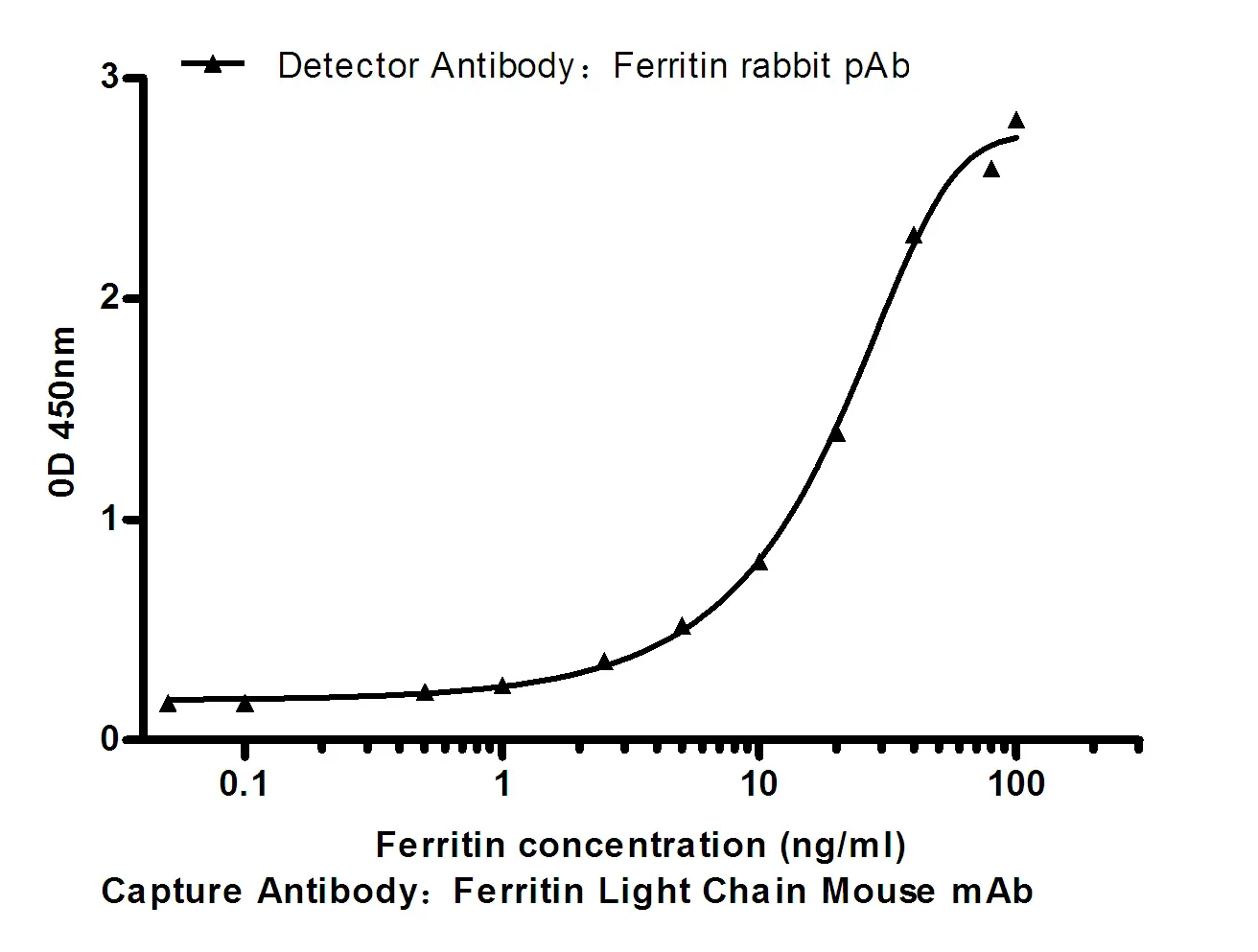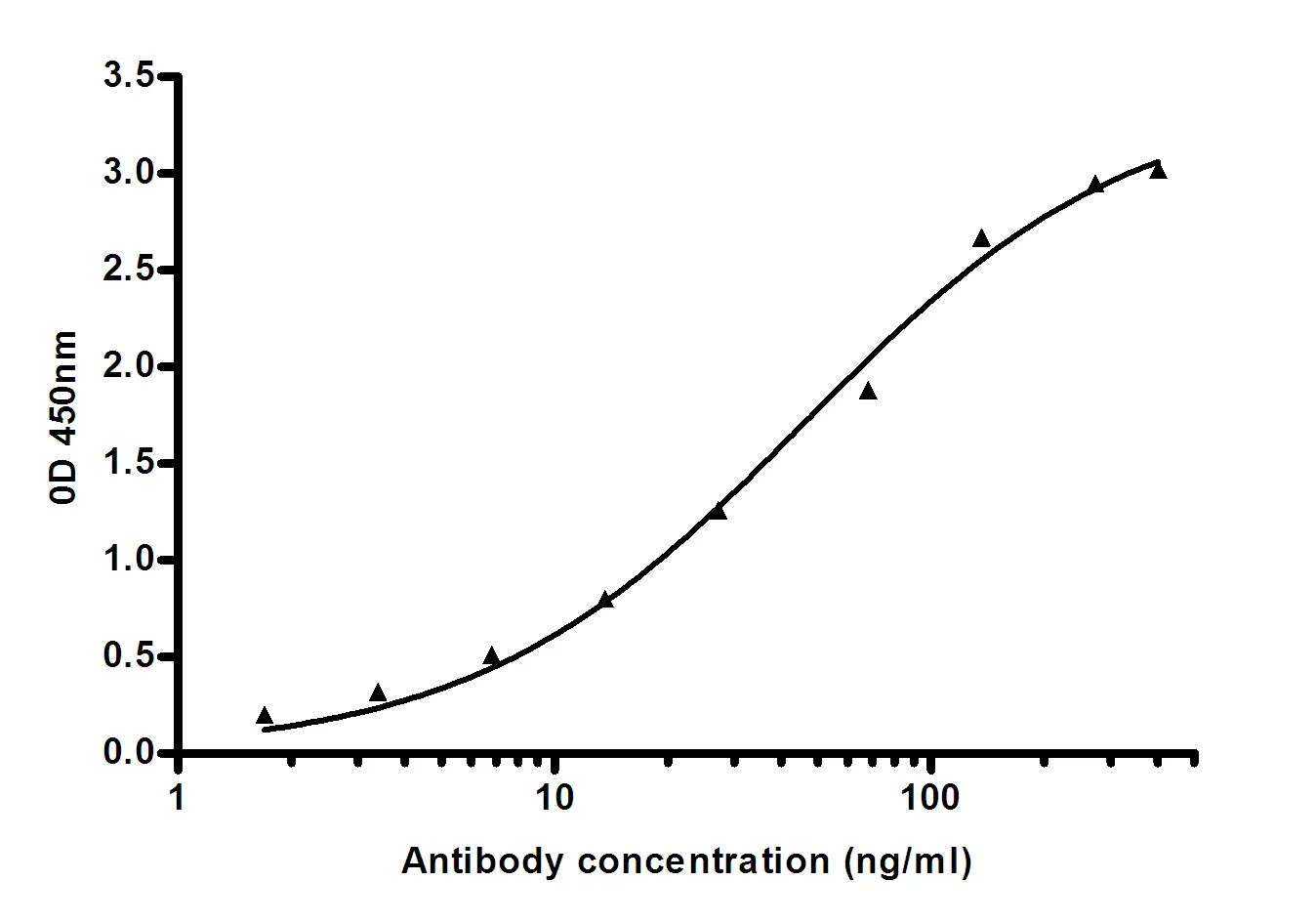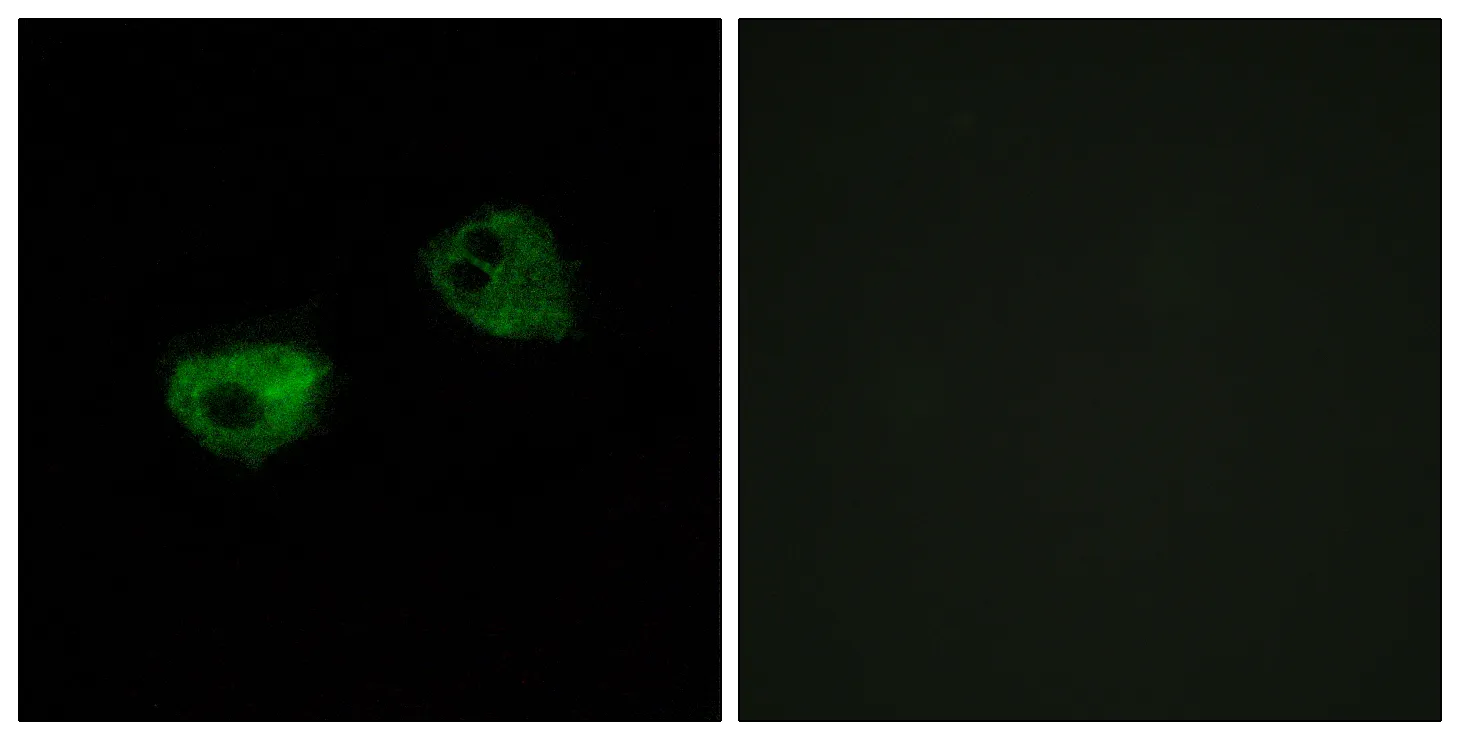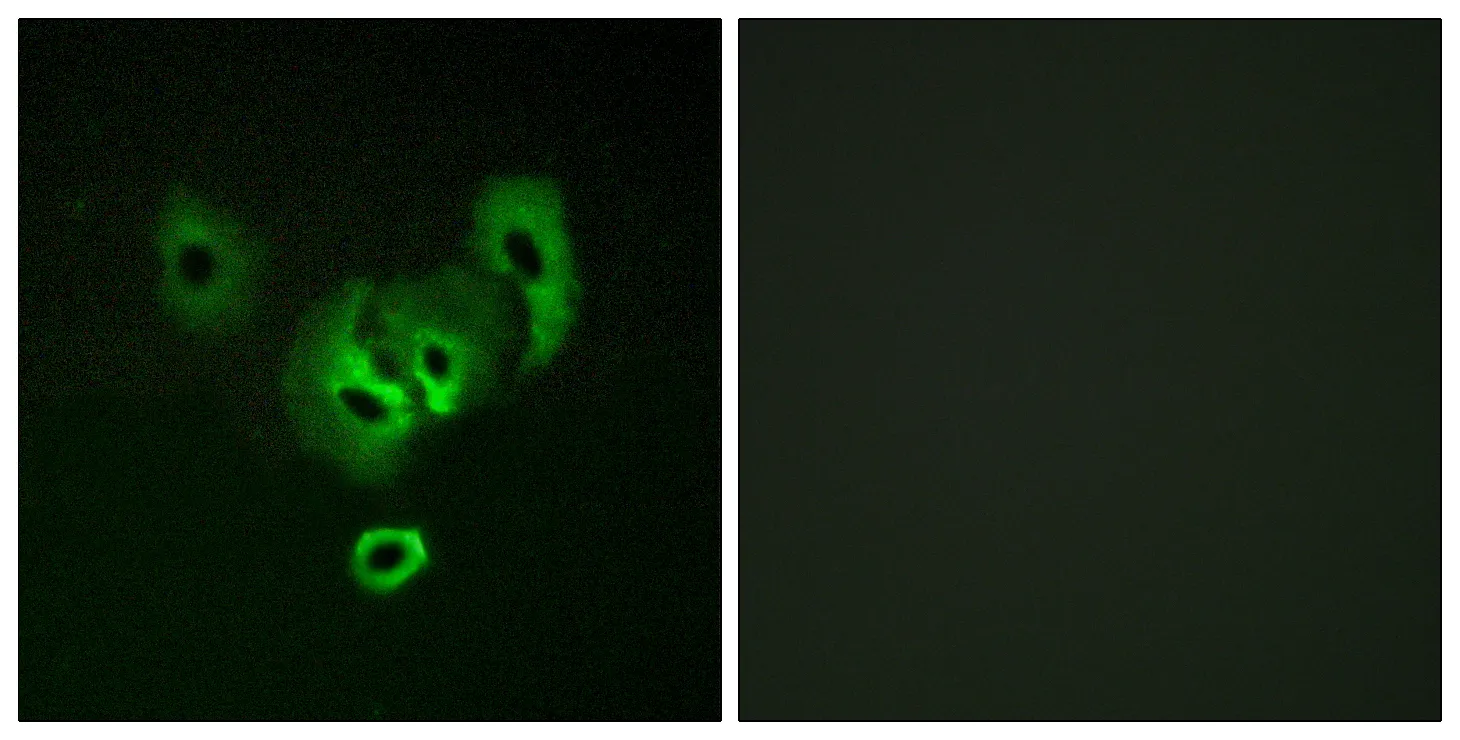


Summary
Performance
Immunogen
Application
Background
This gene encodes a member of the inositol 1,4,5-trisphosphate [Ins(1,4,5)P(3)] 3-kinase family of enzymes that catalyze the phosphorylation of inositol 1,4,5-trisphosphate to 1,3,4,5-tetrakisphosphate. The encoded protein is localized to the nucleus and cytoplasm and has both nuclear import and nuclear export activity. Single nucleotide polymorphisms in this gene are associated with Kawasaki disease.[provided by RefSeq, Sep 2009],catalytic activity:ATP + 1D-myo-inositol 1,4,5-trisphosphate = ADP + 1D-myo-inositol 1,3,4,5-tetrakisphosphate.,disease:Genetic variations in ITPKC influence susceptibility to Kawasaki disease [MIM:611775]; also known as mucocutaneous lymph node syndrome or infantile polyarteritis. Kawasaki disease is an acute, self-limited vasculitis of infants and children characterized by prolonged fever unresponsive to antibiotics, polymorphous skin rash, erythema of the oral mucosa, lips, and tongue, erythema of the palms and soles, bilateral conjunctival injection, and cervical lymphadenopathy. Coronary artery aneurysms develop in 15 to 25% of those left untreated, making Kawasaki disease the leading cause of acquired heart disease among children in developed countries.,enzyme regulation:Activated by calcium/calmodulin. Inhibited by high concentrations of the substrate Ins(1,2,4)P3, and allosterically activated by the product Ins(1,3,4,5)P4.,function:Can phosphorylate inositol 2,4,5-triphosphate to inositol 2,4,5,6-tetraphosphate.,similarity:Belongs to the inositol phosphokinase (IPK) family.,subcellular location:Shuttles actively between nucleus and cytoplasm with both nuclear import and nuclear export activity.,tissue specificity:Highly expressed in pancreas, skeletal muscle, liver, placenta and weakly in kidney and brain.,
Research Area