

KCNF1 Rabbit Polyclonal Antibody($99/20μL)

KCNF1 Rabbit Polyclonal Antibody($99/20μL)

Cat: APRab12934
Size:20μL Price:$99
Size:50μL Price:$118
Size:100μL Price:$220

Size:200μL Price:$380
Application:WB,IHC,ELISA

Reactivity:Human,Mouse
Conjugate:Unconjugated
Optional conjugates: Biotin, FITC (free of charge).
See other 26 conjugates.

Gene Name:KCNF1 Category: Polyclonal Antibodies Tags:

Summary

Production Name

KCNF1 Rabbit Polyclonal Antibody

Description

Rabbit polyclonal Antibody

Host

Rabbit

Application

WB,IHC,ELISA

Reactivity

Human,Mouse


Performance

Conjugation

Unconjugated

Modification

Unmodified

Isotype

IgG

Clonality

Polyclonal

Form

Liquid

Storage

Store at 4°C short term. Aliquot and store at -20°C long term. Avoid freeze/thaw cycles.

Buffer

Liquid in PBS containing 50% glycerol, 0.5% protective protein and 0.02% New type preservative N.

Purification

Affinity purification


Immunogen

Gene Name

KCNF1

Alternative Names

KCNF1; Potassium voltage-gated channel subfamily F member 1; Voltage-gated potassium channel subunit Kv5.1; kH1

Gene ID

3754

SwissProt ID

Q9H3M0


Application

Dilution Ratio

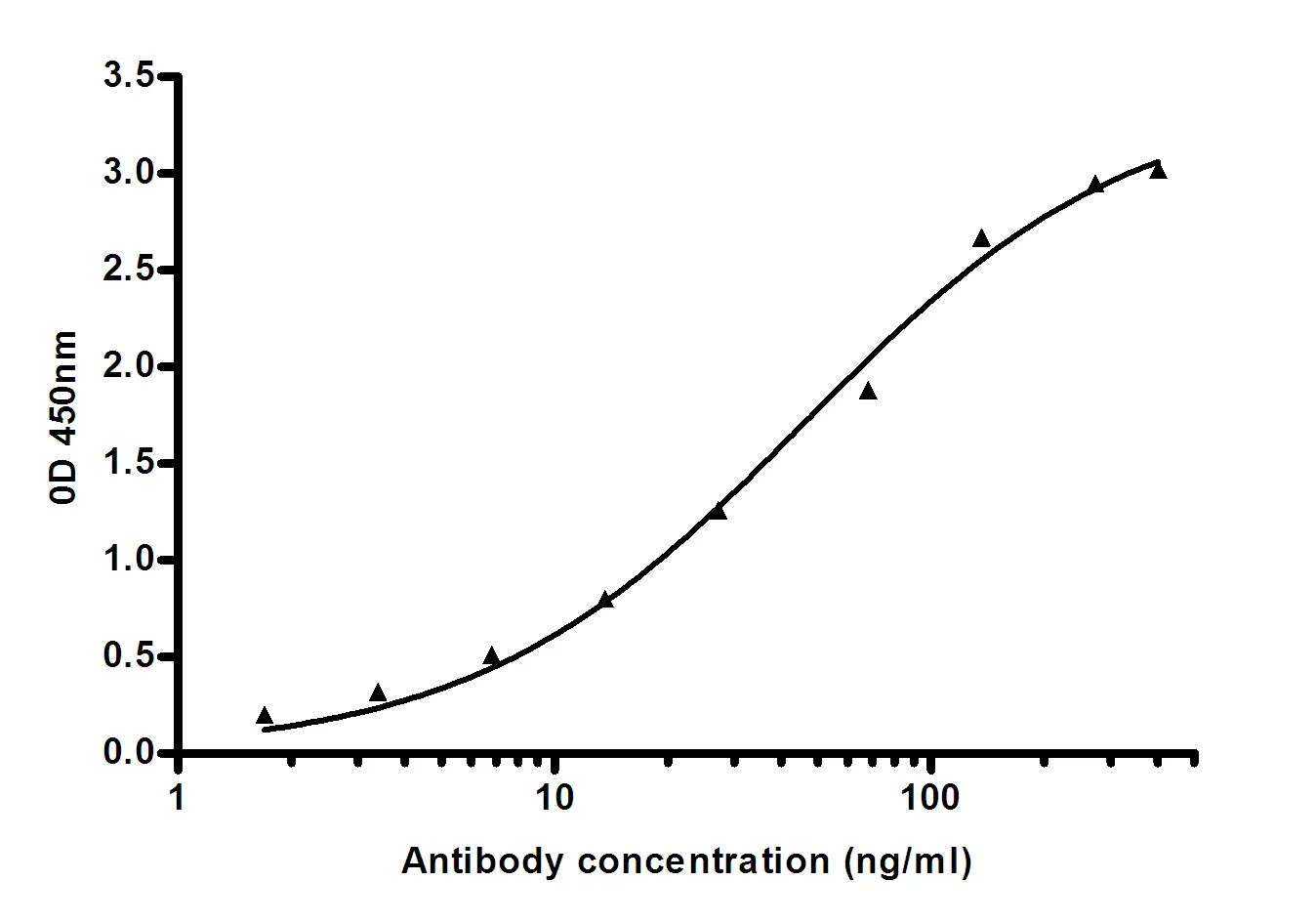
WB 1:500-1:2000,IHC 1:50-1:300,ELISA 1:2000-1:20000

Molecular Weight

55kDa


Background

Voltage-gated potassium (Kv) channels represent the most complex class of voltage-gated ion channels from both functional and structural standpoints. Their diverse functions include regulating neurotransmitter release, heart rate, insulin secretion, neuronal excitability, epithelial electrolyte transport, smooth muscle contraction, and cell volume. This gene encodes a member of the potassium channel, voltage-gated, subfamily F. This gene is intronless and expressed in all tissues tested, including the heart, skeletal muscle, brain, kidney, and pancreas. [provided by RefSeq, Jul 2008],domain:The segment S4 is probably the voltage-sensor and is characterized by a series of positively charged amino acids at every third position.,function:Putative voltage-gated potassium channel.,similarity:Belongs to the potassium channel family. F subfamily.,subunit:Heteromultimer with KCNG3, KCNG4 and KCNV2. Interacts with DLG1.,tissue specificity:Detected in heart, brain, liver, skeletal muscle, kidney and pancreas.,


Research Area
   💬 WhatsApp