Summary
Performance
Immunogen
Application
Background
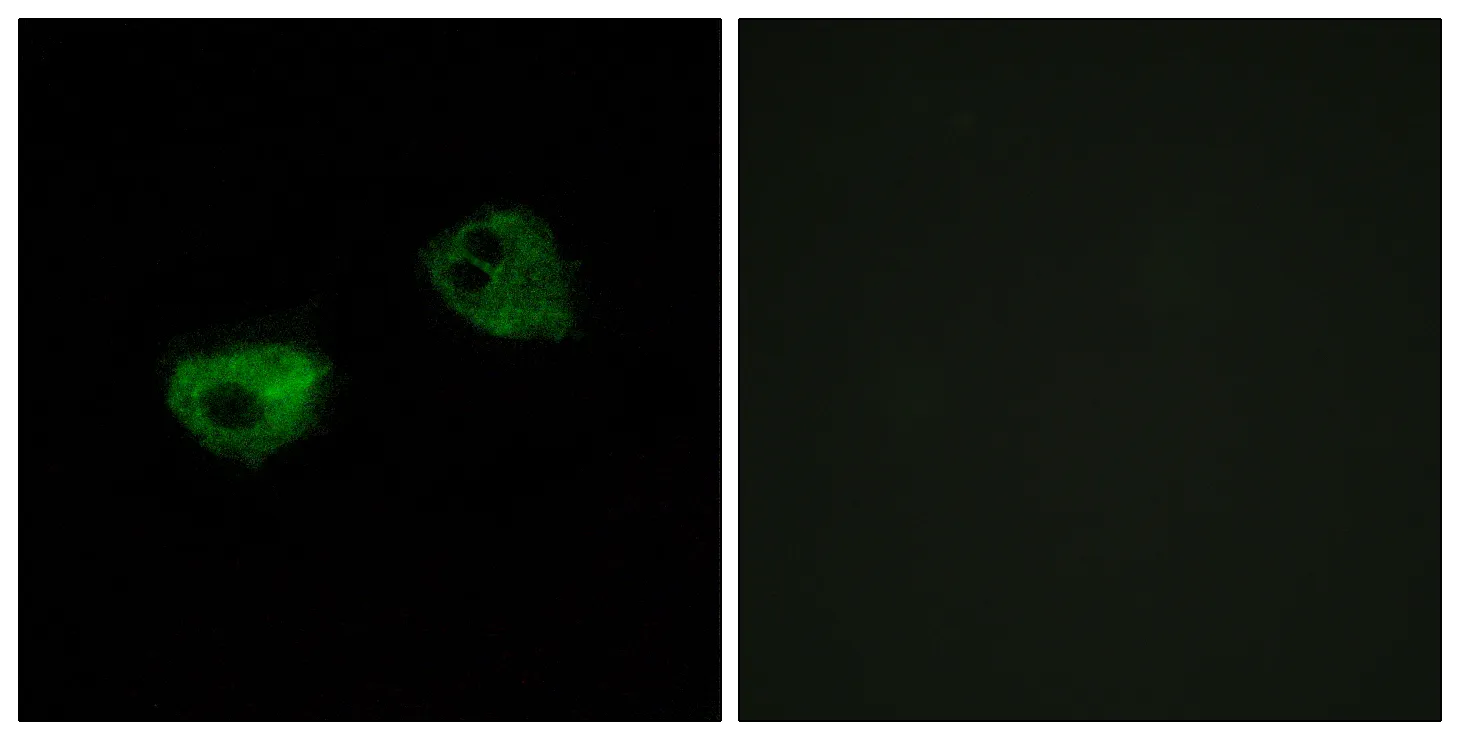
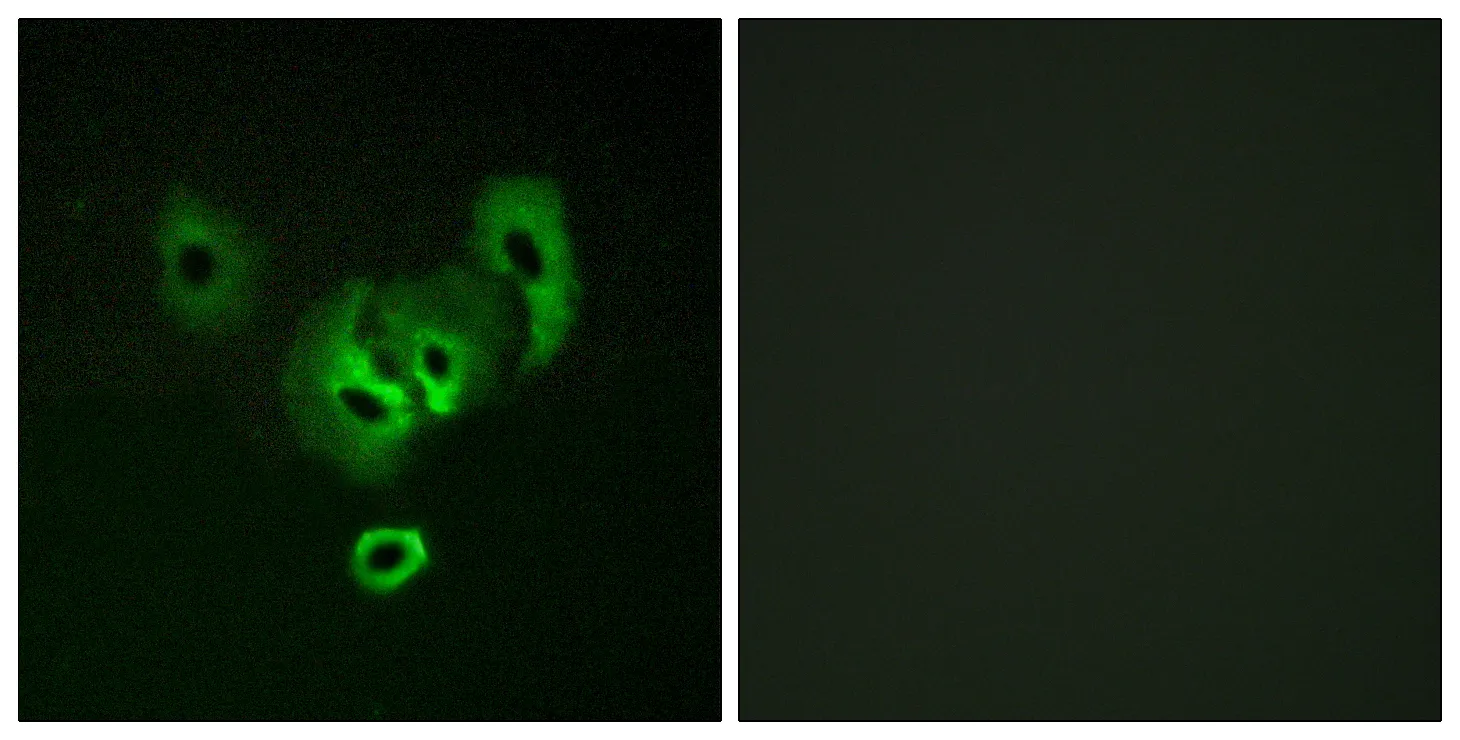
This gene encodes a member of the family of cytosolic voltage-gated potassium (Kv) channel-interacting proteins (KCNIPs), which belong to the neuronal calcium sensor (NCS) family of the calcium binding EF-hand proteins. They associate with Kv4 alpha subunits to form native Kv4 channel complexes. The encoded protein may regulate rapidly inactivating (A-type) currents, and hence neuronal membrane excitability, in response to changes in the concentration of intracellular calcium. Alternative splicing results in multiple transcript variants encoding different isoforms. [provided by RefSeq, May 2013],function:Regulatory subunit of Kv4/D (Shal)-type voltage-gated rapidly inactivating A-type potassium channels. Probably modulates channels density, inactivation kinetics and rate of recovery from inactivation in a calcium-dependent and isoform-specific manner. In vitro, modulates KCND1/Kv4.1 and KCND2/Kv4.2 currents. Seems to be involved in KCND2 trafficking to the cell surface.,similarity:Belongs to the recoverin family.,similarity:Contains 4 EF-hand domains.,subunit:Component of heteromultimeric potassium channels. Interacts with KCND3 and the N-terminal domain of KCND2. Probably part of a complex consisting of KCNIP1, KCNIP2 isoform 3 and KCND2. Can self-associate to form homodimers and homotetramers. Interacts with KCNIP2 isoform 3 in a calcium-dependent manner. Interacts with Naja atra venom CTX3.,tissue specificity:Isoform 1 and isoform 2 are expressed in brain and kidney. Isoform 1 is also expressed in liver, pancreas, skeletal muscle, small intestine and testis. Isoform 2 is also expressed in lung, pancreas, leukocytes, prostate and thymus.,
Research Area