
Summary
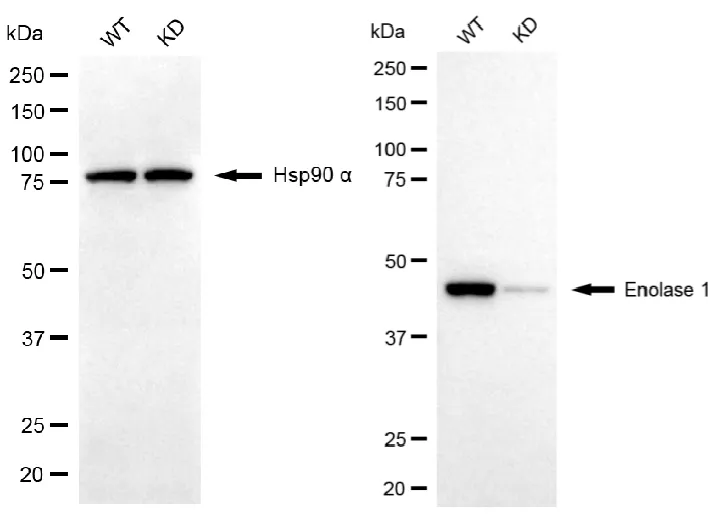
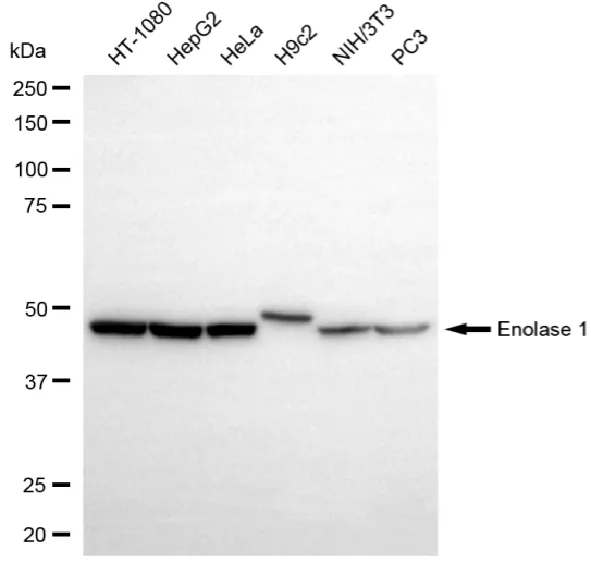
| Production Name | KD-Validated Enolase 1 Recombinant Rabbit Monoclonal Antibody |
| Description | KD-Validated antibody |
| Host | Rabbit |
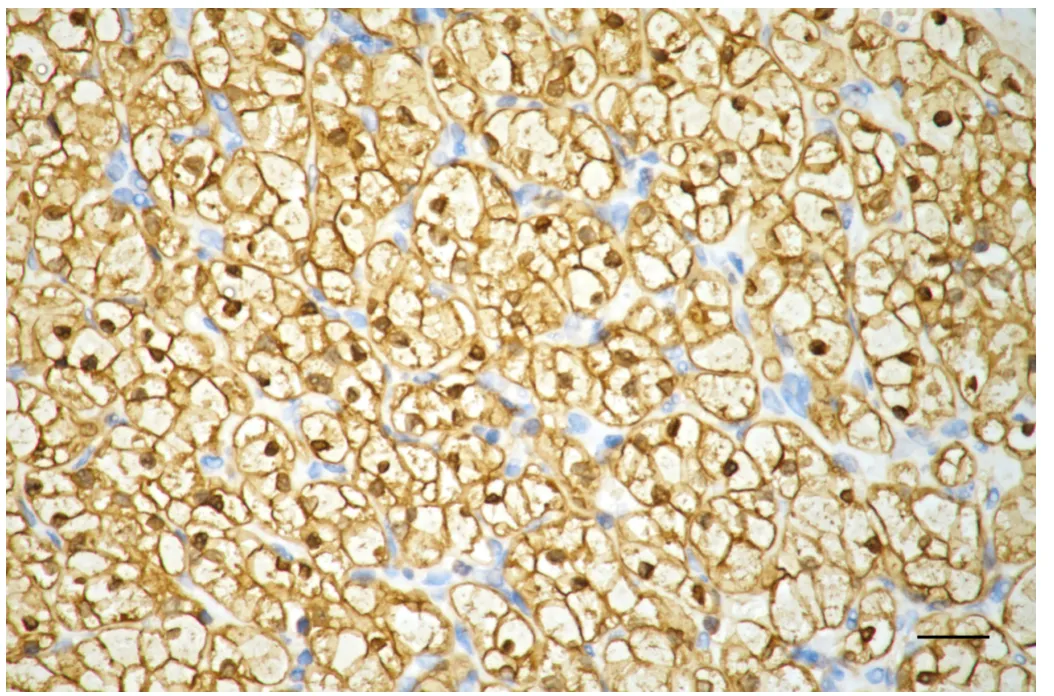
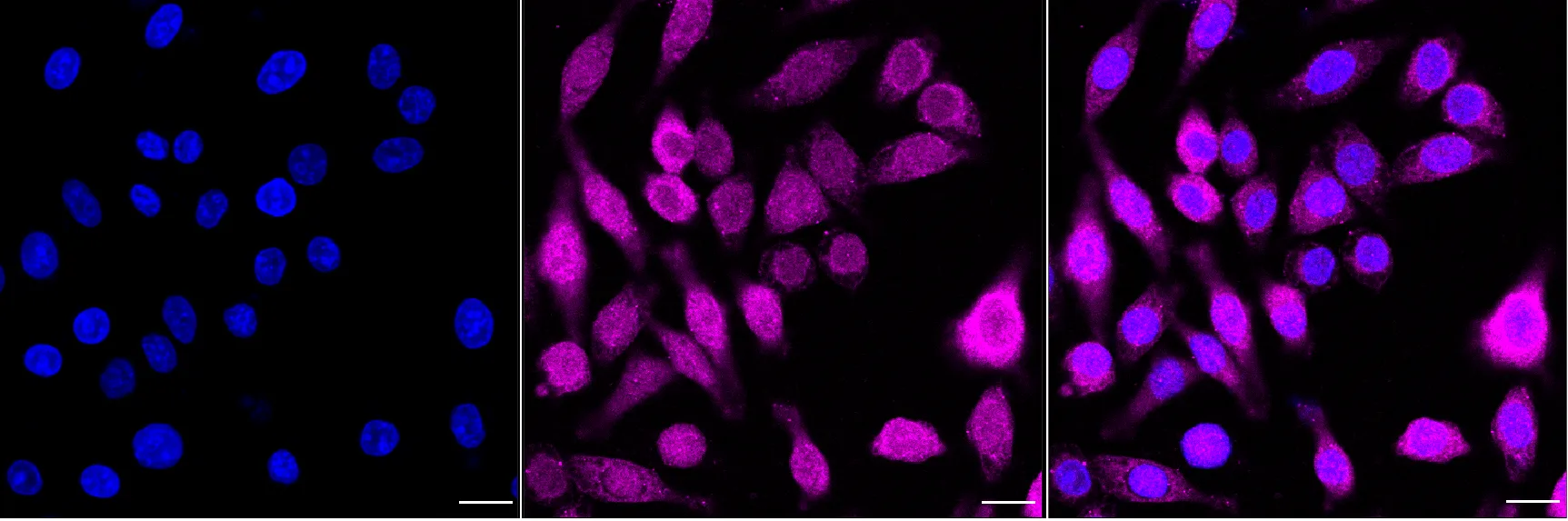
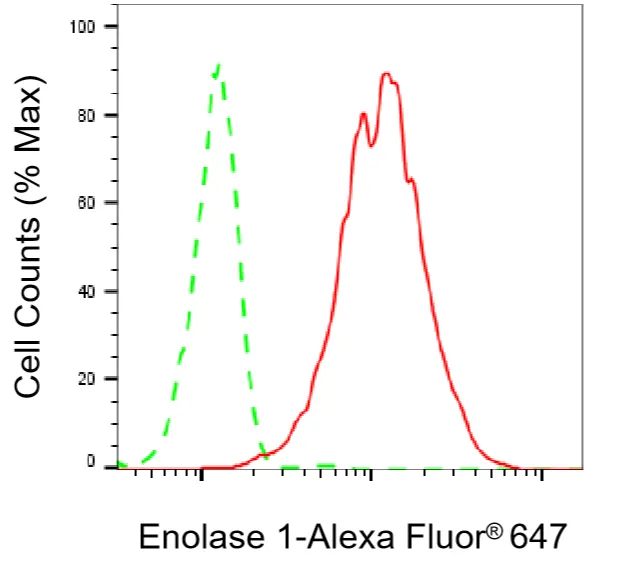
| Application | WB,FCM,ICC,IHC-P |
| Reactivity | Human,Mouse,Rat |
Performance
| Conjugation | Unconjugated |
| Modification | Unmodified |
| Isotype | Rabbit IgG |
| Clonality | Rabbit mAb |
| Form | Liquid |
| Storage | Store at 4°C short term. Aliquot and store at -20°C long term. Avoid freeze/thaw cycles. |
| Buffer | Supplied in PBS (pH 7.4) containing 50% glycerol, and 0.02% sodium azide. |
| Purification | Affinity purification |
Immunogen
| Gene Name | ENO1 |
| Alternative Names | ENO1; Enolase 1; Alpha-Enolase; ENO1L1; MBP-1; MPB1; PPH; ENO1 Intronic Transcript 1 (Non-Protein Coding); 2-Phospho-D-Glycerate Hydro-Lyase; Plasminogen-Binding Protein; ENO1 Intronic Transcript 1; Phosphopyruvate Hydratase; Enolase 1, (Alpha); Non-Neural Enolase; EC 4.2.1.11; ENO1-IT1; NNE; Epididymis Secretory Protein Li 17; C-Myc Promoter-Binding Protein-1; MYC Promoter-Binding Protein 1; C-Myc Promoter-Binding Protein; Alpha Enolase Like 1; Tau-Crystallin; Enolase-Alpha; HEL-S-17; EC 4.2.1; MBPB1; MPB-1 |
| Gene ID | 2023 |
| SwissProt ID | P06733 |
Application
| Dilution Ratio | WB 1:1,000-1:5,000; FC 1:200-1:2,000; ICC 1:100-1:1,000; IHC-P 1:100-1:200 |
| Molecular Weight | Calculated MW: 47.2kDa |
Background
This gene encodes alpha-enolase, one of three enolase isoenzymes found in mammals. Each isoenzyme is a homodimer composed of 2 alpha, 2 gamma, or 2 beta subunits, and functions as a glycolytic enzyme. Alpha-enolase in addition, functions as a structural lens protein (tau-crystallin) in the monomeric form. Alternative splicing of this gene results in a shorter isoform that has been shown to bind to the c-myc promoter and function as a tumor suppressor. Several pseudogenes have been identified, including one on the long arm of chromosome 1. Alpha-enolase has also been identified as an autoantigen in Hashimoto encephalopathy. [provided by RefSeq, Jan 2011]
Research Area
Signal Transduction,Epigenetics and Nuclear Signaling,Cancer,Metabolism