
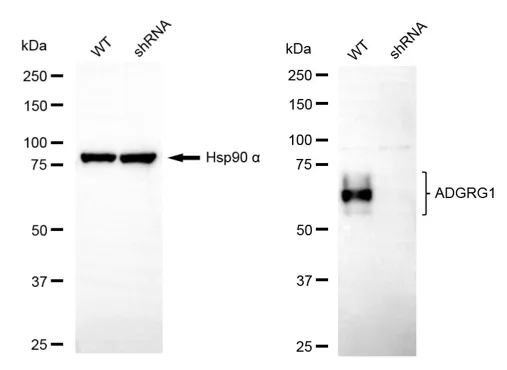
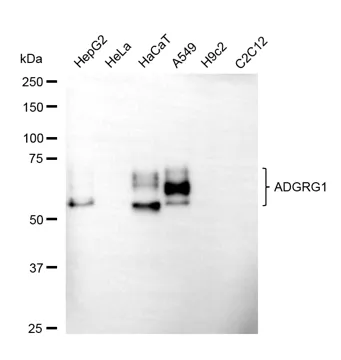
KD-Validated GPR56 Mouse Monoclonal Antibody
Size:20μL Price:$118
Size:50μL Price:$218
Size:100μL Price:$318
Application:WB
Reactivity:Human
Conjugate:Unconjugated
Gene Name:ADGRG1
Size:50μL Price:$218
Size:100μL Price:$318
Application:WB
Reactivity:Human
Conjugate:Unconjugated
Gene Name:ADGRG1
SKU:
KVAb01877
Detail
Summary
Performance
Immunogen
Application
Background
This gene encodes a member of the G protein-coupled receptor family and regulates brain cortical patterning. The encoded protein binds specifically to transglutaminase 2, a component of tissue and tumor stroma implicated as an inhibitor of tumor progression. Mutations in this gene are associated with a brain malformation known as bilateral frontoparietal polymicrogyria. Alternative splicing results in multiple transcript variants. [provided by RefSeq, Feb 2014]
Research Area
Neuroscience,Signal Transduction