
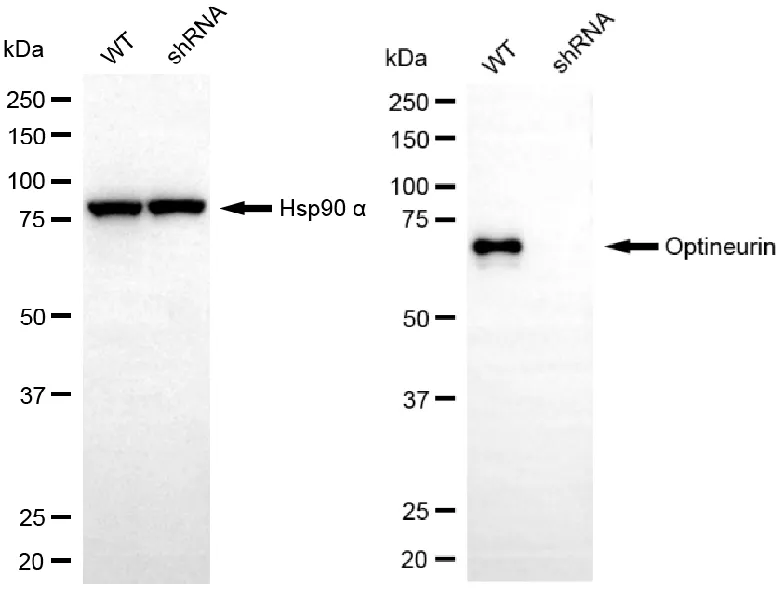
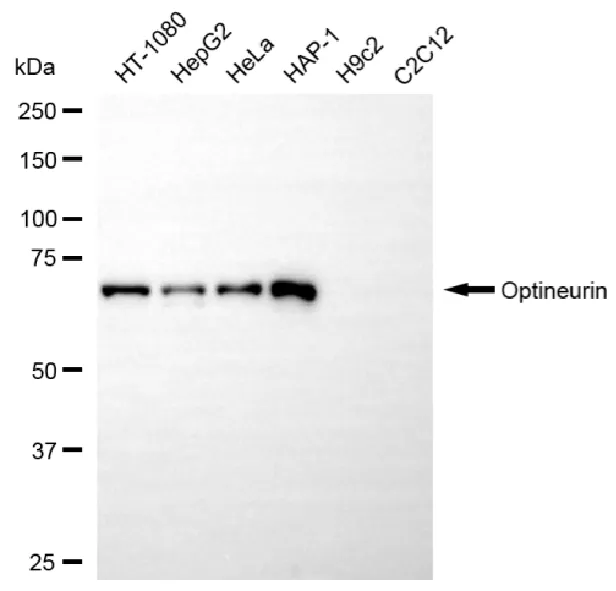
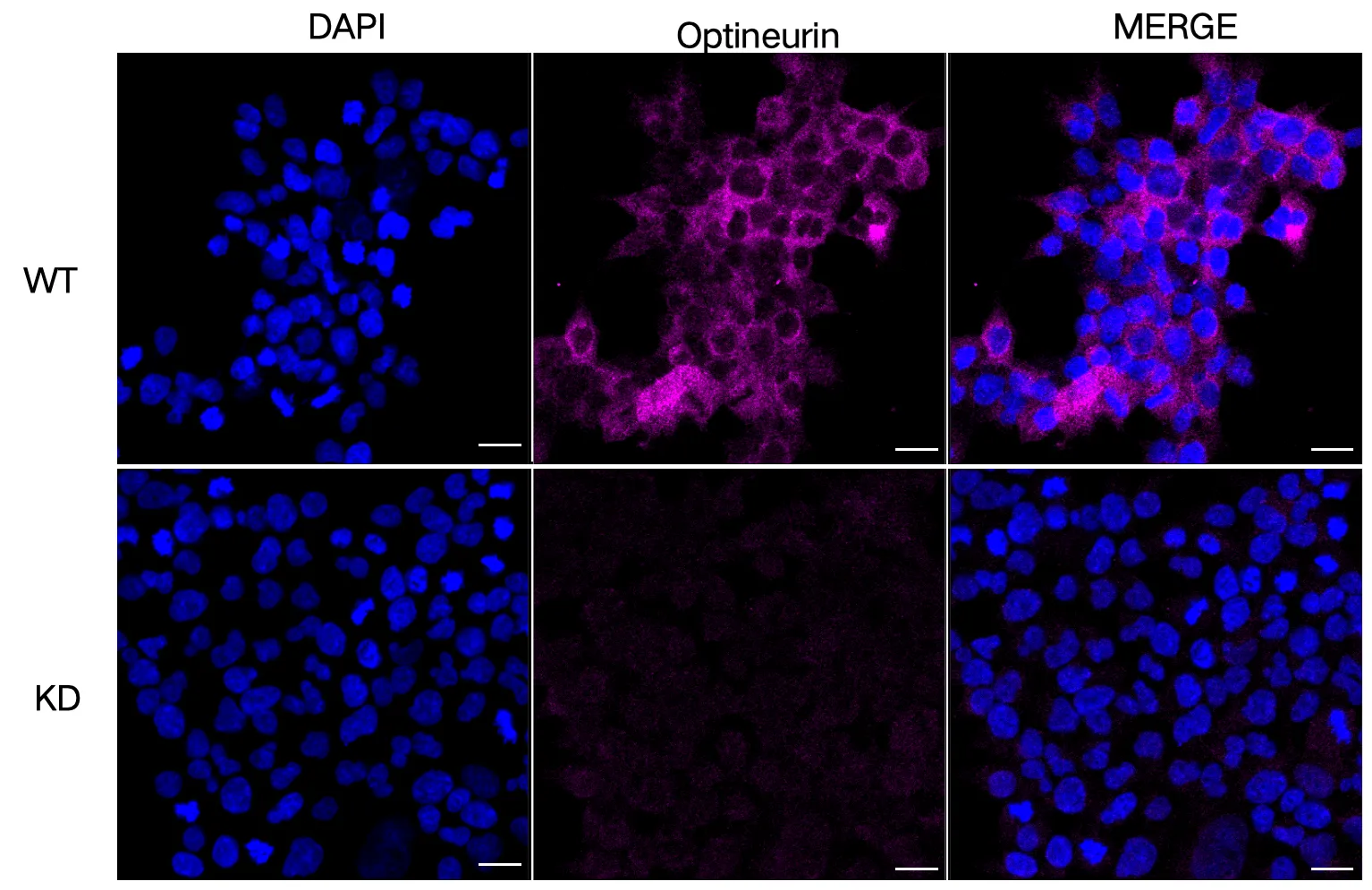
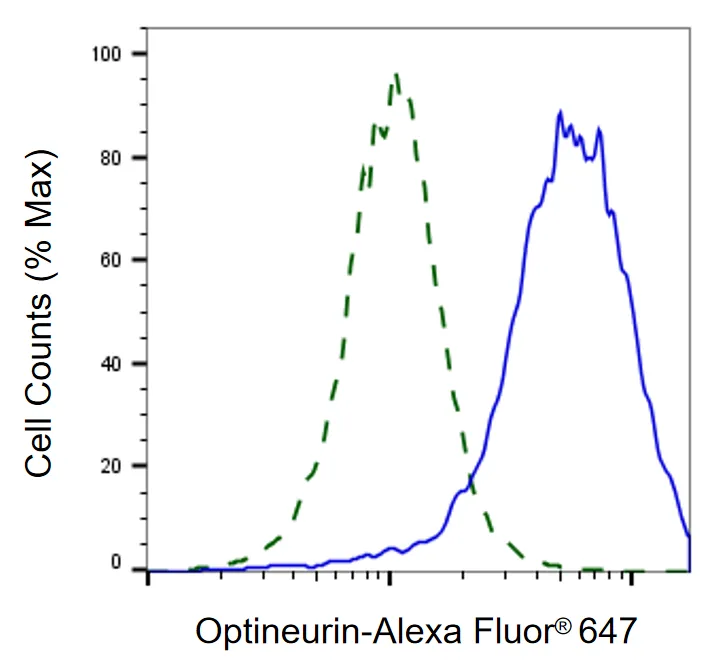
Summary
| Production Name | KD-Validated Optineurin Recombinant Rabbit Monoclonal Antibody |
| Description | KD-Validated antibody |
| Host | Rabbit |
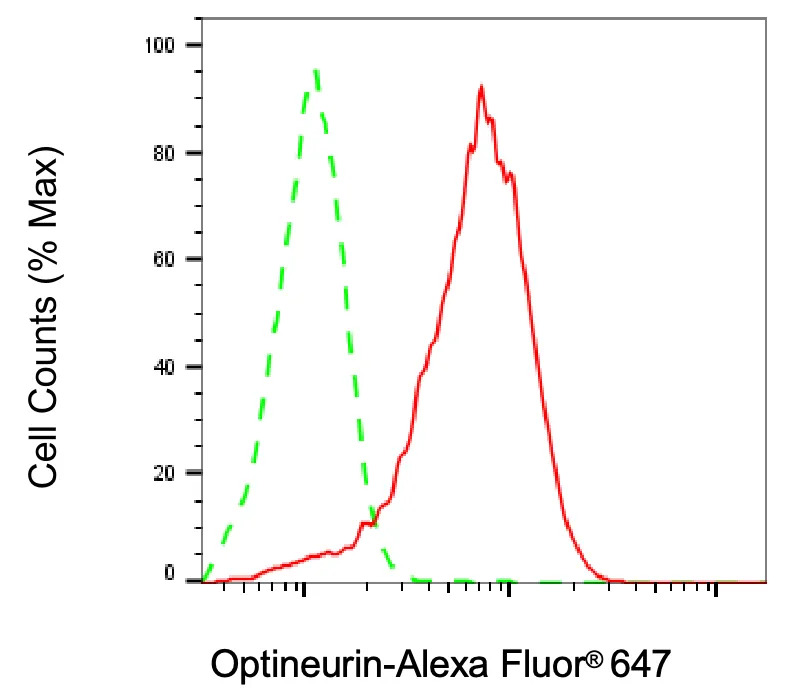
| Application | WB,FCM,ICC |
| Reactivity | Human |
Performance
| Conjugation | Unconjugated |
| Modification | Unmodified |
| Isotype | Rabbit IgG |
| Clonality | Rabbit mAb |
| Form | Liquid |
| Storage | Store at 4°C short term. Aliquot and store at -20°C long term. Avoid freeze/thaw cycles. |
| Buffer | Supplied in PBS (pH 7.4) containing 50% glycerol, and 0.02% sodium azide. |
| Purification | Affinity purification |
Immunogen
| Gene Name | OPTN |
| Alternative Names | OPTN; Optineurin; FIP-2; FIP2; HYPL; HIP7; NRP; TFIIIA-INTP; GLC1E; Transcription Factor IIIA-Interacting Protein; Optic Neuropathy-Inducing Protein; Huntingtin-Interacting Protein 7; Huntingtin-Interacting Protein L; E3-14.7K-Interacting Protein; Huntingtin Yeast Partner L; HIP-7; Tumor Necrosis Factor Alpha-Inducible Cellular Protein Containing Leucine Zipper Domains; Transcrption Factor IIIA-Interacting Protein; Glaucoma 1, Open Angle, E (Adult-Onset); Huntingtin Interacting Protein L; Nemo-Related Protein; NEMO-Related Protein; TFIIIA-IntP; ALS12 |
| Gene ID | 10133 |
| SwissProt ID | Q96CV9 |
Application
| Dilution Ratio | WB 1:1,000-1:5,000; FC 1:200-1:2,000; ICC 1:100-1:1,000 |
| Molecular Weight | Calculated MW: 65.9kDa |
Background
This gene encodes the coiled-coil containing protein optineurin. Optineurin may play a role in normal-tension glaucoma and adult-onset primary open angle glaucoma. Optineurin interacts with adenovirus E3-14.7K protein and may utilize tumor necrosis factor-alpha or Fas-ligand pathways to mediate apoptosis, inflammation or vasoconstriction. Optineurin may also function in cellular morphogenesis and membrane trafficking, vesicle trafficking, and transcription activation through its interactions with the RAB8, huntingtin, and transcription factor IIIA proteins. Alternative splicing results in multiple transcript variants encoding the same protein. [provided by RefSeq, Jul 2008]
Research Area
Immunology,Signal Transduction,Neuroscience