
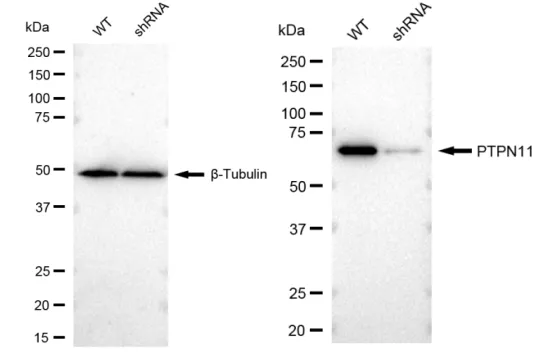
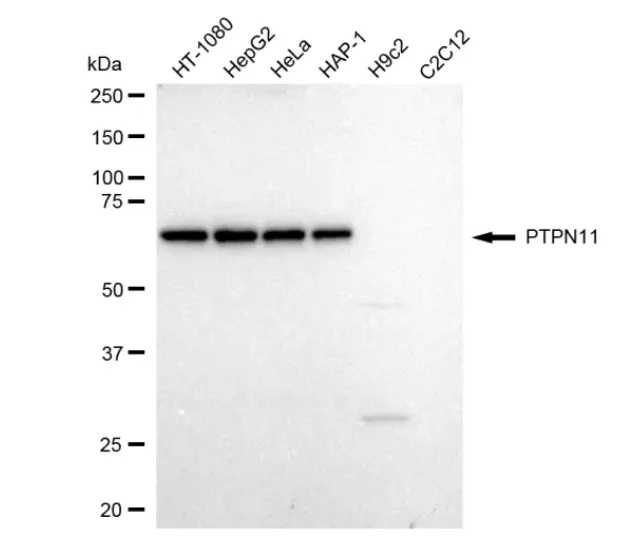
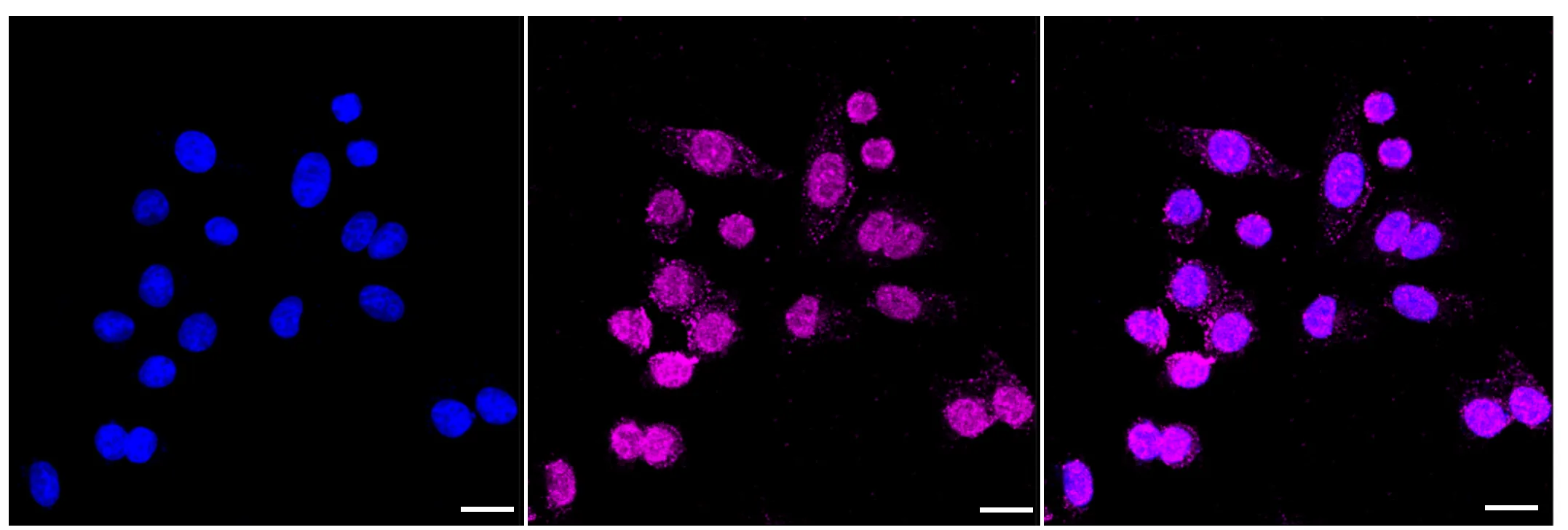
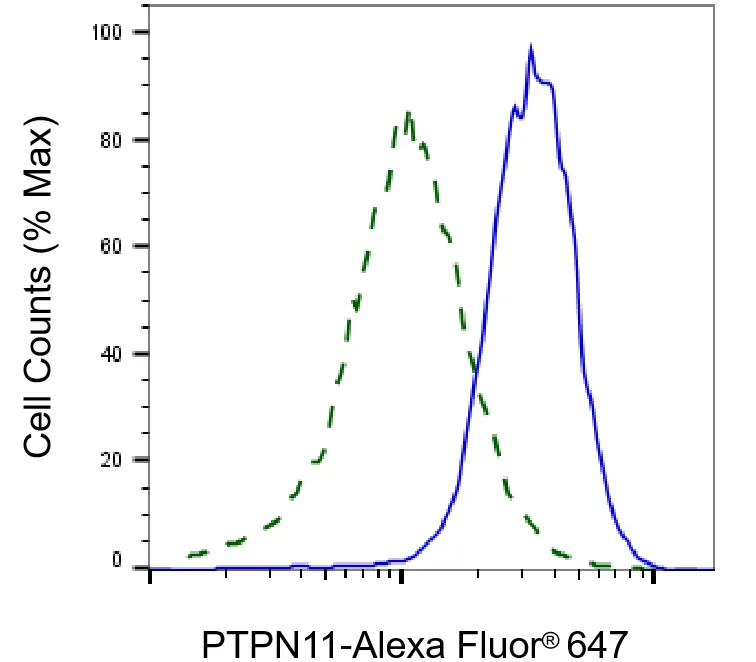
KD-Validated PTPN11 Recombinant Rabbit Monoclonal Antibody
Size:20μL Price:$118
Size:50μL Price:$218
Size:100μL Price:$318
Application:WB,FCM,ICC

Reactivity:Human
Conjugate:Unconjugated
Gene Name:PTPN11
SKU: KVAb01486
Detail

Summary

Production Name

KD-Validated PTPN11 Recombinant Rabbit Monoclonal Antibody

Description

KD-Validated antibody

Host

Rabbit

Application

WB,FCM,ICC

Reactivity

Human


Performance

Conjugation

Unconjugated

Modification

Unmodified

Isotype

Rabbit IgG

Clonality

Rabbit mAb

Form

Liquid

Storage

Store at 4°C short term. Aliquot and store at -20°C long term. Avoid freeze/thaw cycles.

Buffer

Supplied in PBS (pH 7.4) containing 50% glycerol, and 0.02% sodium azide.

Purification

Affinity purification


Immunogen

Gene Name

PTPN11

Alternative Names

PTPN11; Protein Tyrosine Phosphatase Non-Receptor Type 11; SH-PTP2; PTP2C; BPTP3; SHP-2; SHP2; SH2 Domain-Containing Protein Tyrosine Phosphatase 2; Tyrosine-Protein Phosphatase Non-Receptor Type 11; Protein-Tyrosine Phosphatase 1D; Protein-Tyrosine Phosphatase 2C; EC 3.1.3.48; SH-PTP3; PTP-1D; NS1; Protein Tyrosine Phosphatase, Non-Receptor Type 11; Noonan Syndrome 1; METCDS; SHPTP2; PTP-2C; JMML; Shp2; CFC

Gene ID

5781

SwissProt ID

Q06124


Application

Dilution Ratio

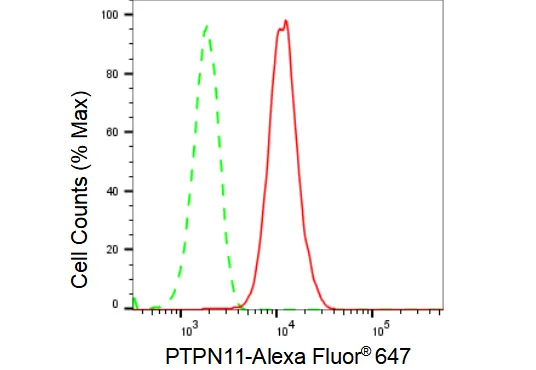
WB 1:1,000-1:5,000; FC 1:200-1:2,000; ICC 1:100-1:1,000

Molecular Weight

Calculated MW: 68.0kDa


Background

The protein encoded by this gene is a member of the protein tyrosine phosphatase (PTP) family. PTPs are known to be signaling molecules that regulate a variety of cellular processes including cell growth, differentiation, mitotic cycle, and oncogenic transformation. This PTP contains two tandem Src homology-2 domains, which function as phospho-tyrosine binding domains and mediate the interaction of this PTP with its substrates. This PTP is widely expressed in most tissues and plays a regulatory role in various cell signaling events that are important for a diversity of cell functions, such as mitogenic activation, metabolic control, transcription regulation, and cell migration. Mutations in this gene are a cause of Noonan syndrome as well as acute myeloid leukemia. [provided by RefSeq, Aug 2016]


Research Area

Signal Transduction,Neuroscience

   💬 WhatsApp