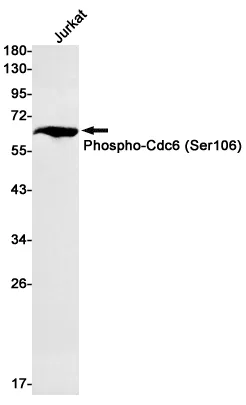
Summary
Performance
Immunogen
Application
Background
The five types of immunoglobulin heavy chains are known as: IgG, IgA, IgM, IgD, and IgE. IgG is divided into four subclasses, and IgA is divided into two subclasses. In serum IgA and IgG are monomers with a single 4 polypeptide unit; while, IgM is a pen tamer. IgA may also form polymers. Kappa light chain antibody can be used for the identification of leukemias, plasmacytomas and certain non Hodgkin's lymphomas. Constant region of immunoglobulin light chains. Immunoglobulins, also known as antibodies, are membrane-bound or secreted glycoproteins produced by B lymphocytes. In the recognition phase of humoral immunity, the membrane-bound immunoglobulins serve as receptors which, upon binding of a specific antigen, trigger the clonal expansion and differentiation of B lymphocytes into immunoglobulins- secreting plasma cells. Secreted immunoglobulins mediate the effector phase of humoral immunity, which results in the elimination of bound antigens (PubMed:22158414, PubMed:20176268). The antigen binding site is formed by the variable domain of one heavy chain, together with that of its associated light chain. Thus, each immunoglobulin has two antigen binding sites with remarkable affinity for a particular antigen. The variable domains are assembled by a process called V-(D)-J rearrangement and can then be subjected to somatic hypermutations which, after exposure to antigen and selection, allow affinity maturation for a particular antigen (PubMed:17576170, PubMed:20176268).
Research Area
Immunology