

LTB4DH Rabbit Polyclonal Antibody($99/20μL)

LTB4DH Rabbit Polyclonal Antibody($99/20μL)

Cat: APRab13472
Size:20μL Price:$99
Size:50μL Price:$118
Size:100μL Price:$220

Size:200μL Price:$380
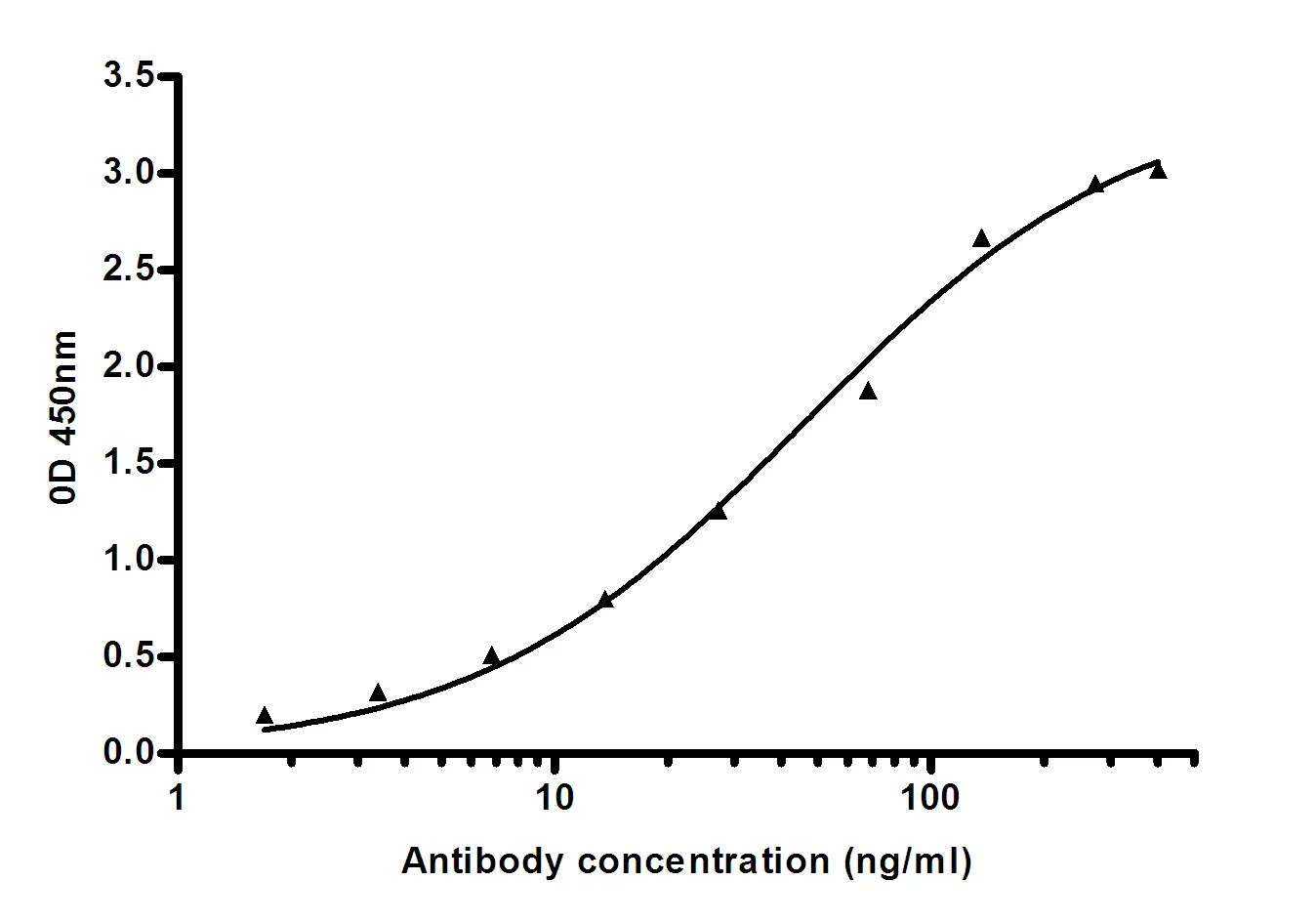
Application:WB,ELISA

Reactivity:Human,Rat,Mouse
Conjugate:Unconjugated
Optional conjugates: Biotin, FITC (free of charge).
See other 26 conjugates.

Gene Name:PTGR1 Category: Polyclonal Antibodies Tags:

Summary

Production Name

LTB4DH Rabbit Polyclonal Antibody

Description

Rabbit polyclonal Antibody

Host

Rabbit

Application

WB,ELISA

Reactivity

Human,Rat,Mouse


Performance

Conjugation

Unconjugated

Modification

Unmodified

Isotype

IgG

Clonality

Polyclonal

Form

Liquid

Storage

Store at 4°C short term. Aliquot and store at -20°C long term. Avoid freeze/thaw cycles.

Buffer

Liquid in PBS containing 50% glycerol, 0.5% protective protein and 0.02% New type preservative N.

Purification

Affinity purification


Immunogen

Gene Name

PTGR1

Alternative Names

PTGR1; LTB4DH; Prostaglandin reductase 1; PRG-1; 15-oxoprostaglandin 13-reductase; NADP-dependent leukotriene B4 12-hydroxydehydrogenase

Gene ID

22949

SwissProt ID

Q14914


Application

Dilution Ratio

WB 1:500-1:2000,ELISA 1:5000-1:10000

Molecular Weight

36kDa


Background

This gene encodes an enzyme that is involved in the inactivation of the chemotactic factor, leukotriene B4. The encoded protein specifically catalyzes the NADP+ dependent conversion of leukotriene B4 to 12-oxo-leukotriene B4. A pseudogene of this gene is found on chromosome 1. Alternative splicing results in multiple transcript variants. [provided by RefSeq, Mar 2009],catalytic activity:11-alpha-hydroxy-9,15-dioxoprost-5-enoate + NAD(P)(+) = (5Z)-(13E)-11-alpha-hydroxy-9,15-dioxoprosta-5,13-dienoate + NAD(P)H.,catalytic activity:n-alkanal + NAD(P)(+) = alk-2-enal + NAD(P)H.,function:Functions as 15-oxo-prostaglandin 13-reductase and acts on 15-oxo-PGE1, 15-oxo-PGE2 and 15-oxo-PGE2-alpha. Has no activity towards PGE1, PGE2 and PGE2-alpha (By similarity). Catalyzes the conversion of leukotriene B4 into its biologically less active metabolite, 12-oxo-leukotriene B4. This is an initial and key step of metabolic inactivation of leukotriene B4.,similarity:Belongs to the NADP-dependent oxidoreductase L4BD family.,subunit:Monomer or homodimer.,tissue specificity:High expression in the kidney, liver, and intestine but not in leukocytes.,


Research Area
   💬 WhatsApp