

Nrf3 Rabbit Polyclonal Antibody($99/20μL)

Nrf3 Rabbit Polyclonal Antibody($99/20μL)

Cat: APRab14894
Size:20μL Price:$99
Size:50μL Price:$118
Size:100μL Price:$220

Size:200μL Price:$380
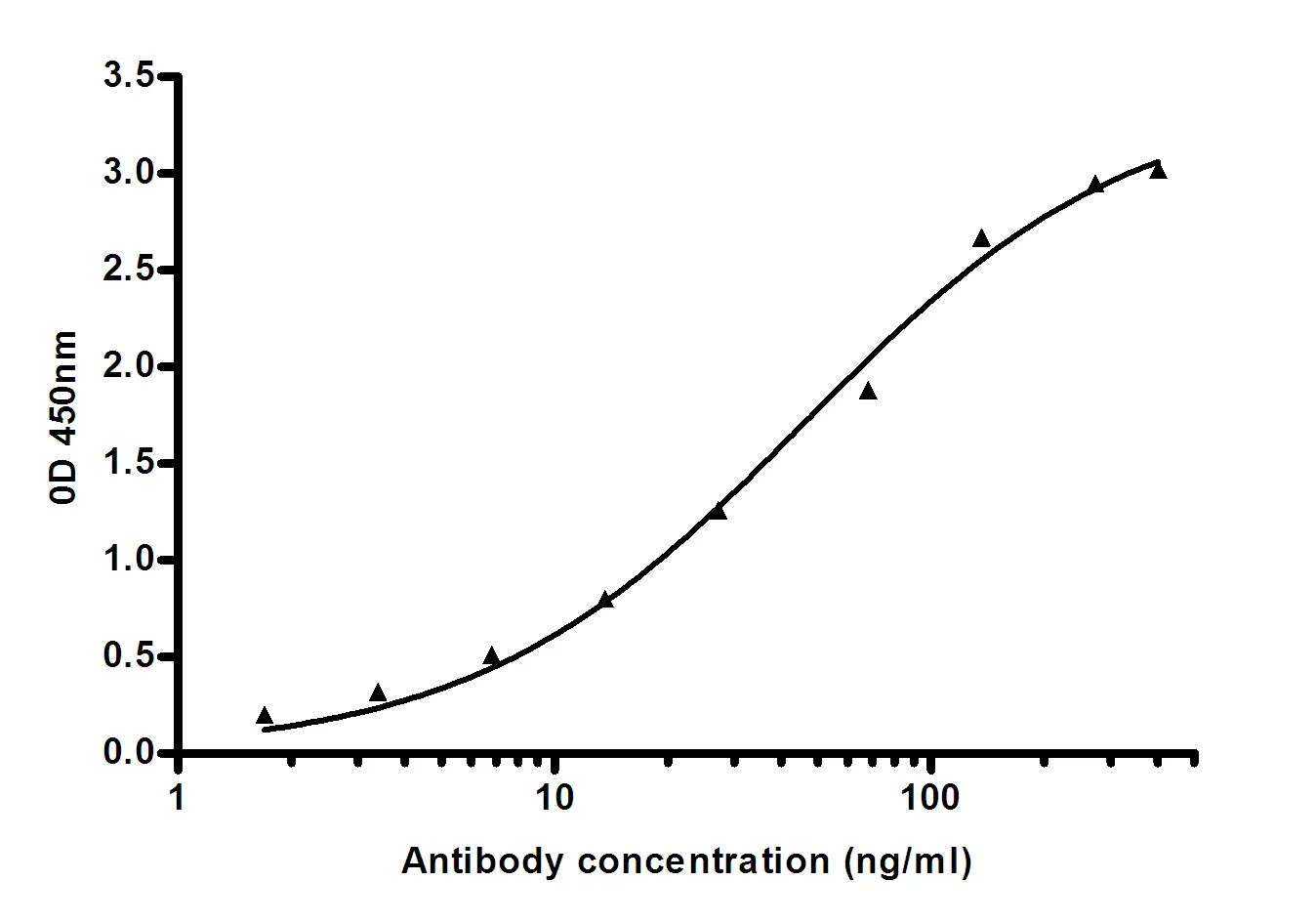
Application:WB,ELISA

Reactivity:Human,Rat,Mouse
Conjugate:Unconjugated
Optional conjugates: Biotin, FITC (free of charge).
See other 26 conjugates.

Gene Name:NFE2L3 Category: Polyclonal Antibody Tags:

Summary

Production Name

Nrf3 Rabbit Polyclonal Antibody

Description

Rabbit polyclonal Antibody

Host

Rabbit

Application

WB,ELISA

Reactivity

Human,Rat,Mouse


Performance

Conjugation

Unconjugated

Modification

Unmodified

Isotype

IgG

Clonality

Polyclonal

Form

Liquid

Storage

Store at 4°C short term. Aliquot and store at -20°C long term. Avoid freeze/thaw cycles.

Buffer

Liquid in PBS containing 50% glycerol, 0.5% protective protein and 0.02% New type preservative N.

Purification

Affinity purification


Immunogen

Gene Name

NFE2L3

Alternative Names

NFE2L3; NRF3; Nuclear factor erythroid 2-related factor 3; NF-E2-related factor 3; NFE2-related factor 3; Nuclear factor; erythroid derived 2, like 3

Gene ID

9603

SwissProt ID

Q9Y4A8


Application

Dilution Ratio

WB 1:500-1:2000,ELISA 1:5000-1:20000

Molecular Weight

75kDa


Background

This gene encodes a member of the cap 'n' collar basic-region leucine zipper family of transcription factors. The encoded protein heterodimerizes with small musculoaponeurotic fibrosarcoma factors to bind antioxidant response elements in target genes. This protein is a membrane bound glycoprotein that is targeted to the endoplasmic reticulum and the nuclear envelope. Pseudogenes of this gene are found on chromosomes 16, 17, and 18. [provided by RefSeq, Mar 2009],function:Activates erythroid-specific, globin gene expression.,similarity:Belongs to the bZIP family.,similarity:Belongs to the bZIP family. CNC subfamily.,similarity:Contains 1 bZIP domain.,subunit:Heterodimer with MAFG, MAFK and other small MAF proteins that binds to the MAF recognition elements (MARE).,tissue specificity:Highly expressed in human placenta and also in B-cell and monocyte cell lines. Low expression in heart, brain, lung, skeletal muscle, kidney and pancreas.,


Research Area
   💬 WhatsApp