PITPβ Rabbit Polyclonal Antibody($99/20μL)

PITPβ Rabbit Polyclonal Antibody($99/20μL)

Cat: APRab16165
Size:20μL Price:$99
Size:50μL Price:$118
Size:100μL Price:$220

Size:200μL Price:$380
Application:WB,IHC,ELISA

Reactivity:Human,Mouse,Rat
Conjugate:Unconjugated
Optional conjugates: Biotin, FITC (free of charge).
See other 26 conjugates.

Gene Name:PITPNB Category: Polyclonal Antibody Tags: , , , ,

Summary

Production Name

PITPβ Rabbit Polyclonal Antibody

Description

Rabbit polyclonal Antibody

Host

Rabbit

Application

WB,IHC,ELISA

Reactivity

Human,Mouse,Rat


Performance

Conjugation

Unconjugated

Modification

Unmodified

Isotype

IgG

Clonality

Polyclonal

Form

Liquid

Storage

Store at 4°C short term. Aliquot and store at -20°C long term. Avoid freeze/thaw cycles.

Buffer

Liquid in PBS containing 50% glycerol, 0.5% protective protein and 0.02% New type preservative N.

Purification

Affinity purification


Immunogen

Gene Name

PITPNB

Alternative Names

PITPNB; Phosphatidylinositol transfer protein beta isoform; PI-TP-beta; PtdIns transfer protein beta; PtdInsTP beta

Gene ID

23760

SwissProt ID

P48739


Application

Dilution Ratio

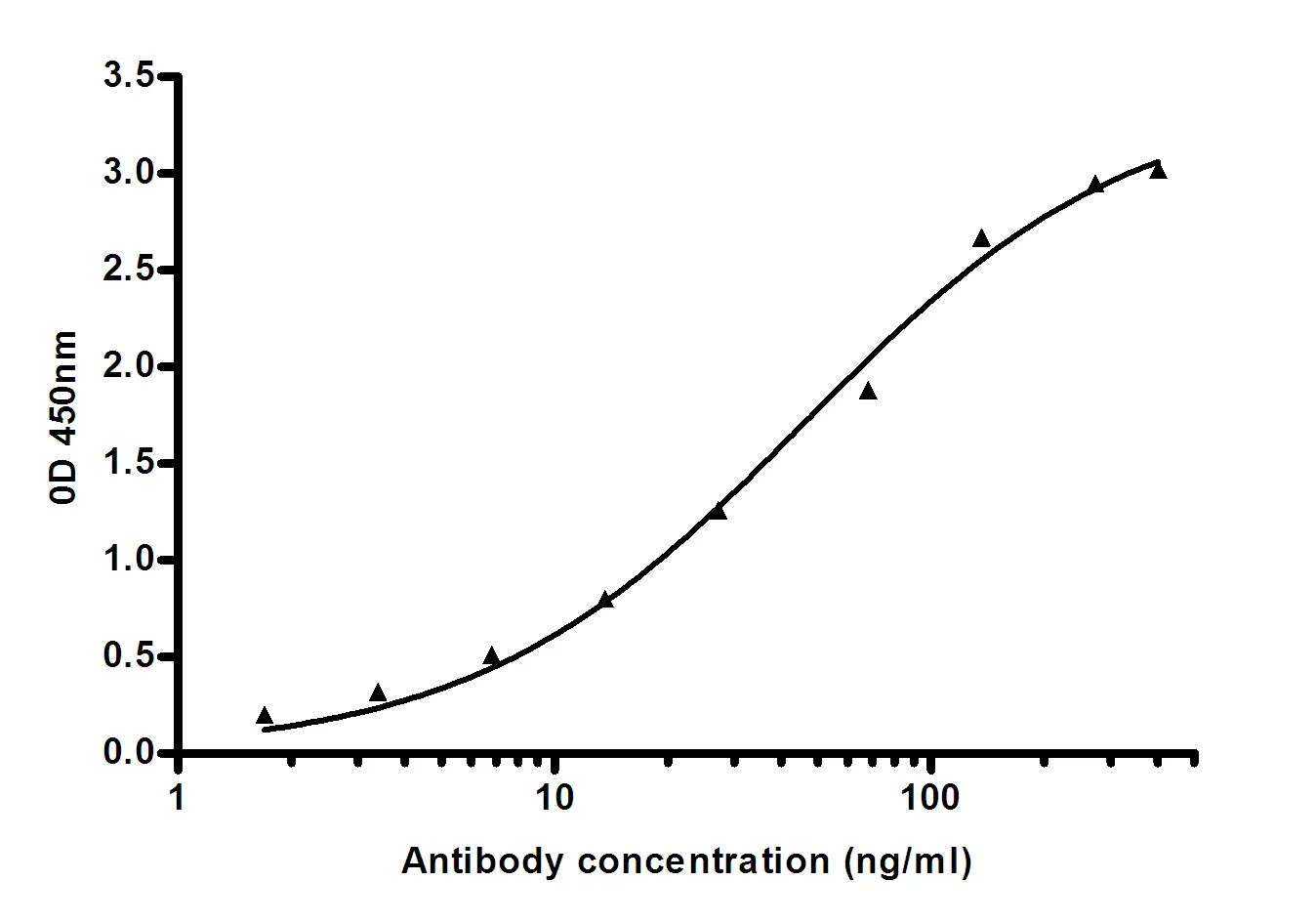
WB 1:500-1:2000,IHC 1:50-1:300,ELISA 1:2000-1:20000

Molecular Weight

32kDa


Background

This gene encodes a cytoplasmic protein that catalyzes the transfer of phosphatidylinositol and phosphatidylcholine between membranes. This transfer activity is required for COPI complex-mediated retrograde transport from the Golgi apparatus to the endoplasmic reticulum. Alternative splicing of this gene results in multiple transcript variants. [provided by RefSeq, Sep 2013],function:Catalyzes the transfer of PtdIns and phosphatidylcholine between membranes.,PTM:Constitutive phosphorylation of Ser-262 has no effect on phospholipid transfer activity but is required for Golgi targeting.,similarity:Belongs to the PtdIns transfer protein family. Class I subfamily.,tissue specificity:Widely expressed in various tissues including brain.,


Research Area

Lipid metabolism; Metabolism; Types of disease; Cancer; Signal Transduction
   💬 WhatsApp