
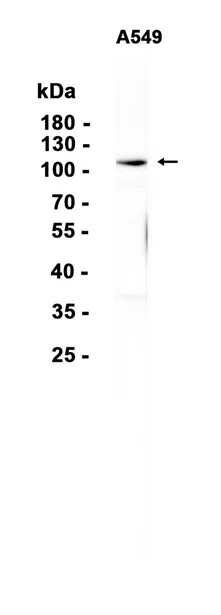
Protein Kinase D2 Rabbit Monoclonal Antibody
Size:20μL Price:$98
Size:50μL Price:$168
Size:100μL Price:$300
Application:WB,IHC,ICC/IF
Reactivity:Human,Mouse
Conjugate:Unconjugated
Optional conjugates: Biotin, FITC (free of charge). See other 26 conjugates.
Gene Name:Protein Kinase D2
Size:50μL Price:$168
Size:100μL Price:$300
Application:WB,IHC,ICC/IF
Reactivity:Human,Mouse
Conjugate:Unconjugated
Optional conjugates: Biotin, FITC (free of charge). See other 26 conjugates.
Gene Name:Protein Kinase D2
SKU:
AMRe86563
Detail
Summary
Performance
Immunogen
Application
Background
The protein encoded by this gene belongs to the protein kinase D (PKD) family of serine/threonine protein kinases. This kinase can be activated by phorbol esters as well as by gastrin via the cholecystokinin B receptor (CCKBR) in gastric cancer cells. It can bind to diacylglycerol (DAG) in the trans-Golgi network (TGN) and may regulate basolateral membrane protein exit from TGN. Alternative splicing results in multiple transcript variants encoding different isoforms. [provided by RefSeq, Jul 2008]
Research Area