Syndecan-2 Rabbit Polyclonal Antibody($99/20μL)

Syndecan-2 Rabbit Polyclonal Antibody($99/20μL)

Cat: APRab18503
Size:20μL Price:$99
Size:50μL Price:$118
Size:100μL Price:$220

Size:200μL Price:$380
Application:WB,ELISA

Reactivity:Human,Rat,Mouse
Conjugate:Unconjugated
Optional conjugates: Biotin, FITC (free of charge).
See other 26 conjugates.

Gene Name:SDC2 Category: Polyclonal Antibodies Tags: ,

Summary

Production Name

Syndecan-2 Rabbit Polyclonal Antibody

Description

Rabbit polyclonal Antibody

Host

Rabbit

Application

WB,ELISA

Reactivity

Human,Rat,Mouse


Performance

Conjugation

Unconjugated

Modification

Unmodified

Isotype

IgG

Clonality

Polyclonal

Form

Liquid

Storage

Store at 4°C short term. Aliquot and store at -20°C long term. Avoid freeze/thaw cycles.

Buffer

Liquid in PBS containing 50% glycerol, 0.5% protective protein and 0.02% New type preservative N.

Purification

Affinity purification


Immunogen

Gene Name

SDC2

Alternative Names

SDC2; HSPG1; Syndecan-2; SYND2; Fibroglycan; Heparan sulfate proteoglycan core protein; HSPG; CD antigen CD362

Gene ID

6383

SwissProt ID

P34741


Application

Dilution Ratio

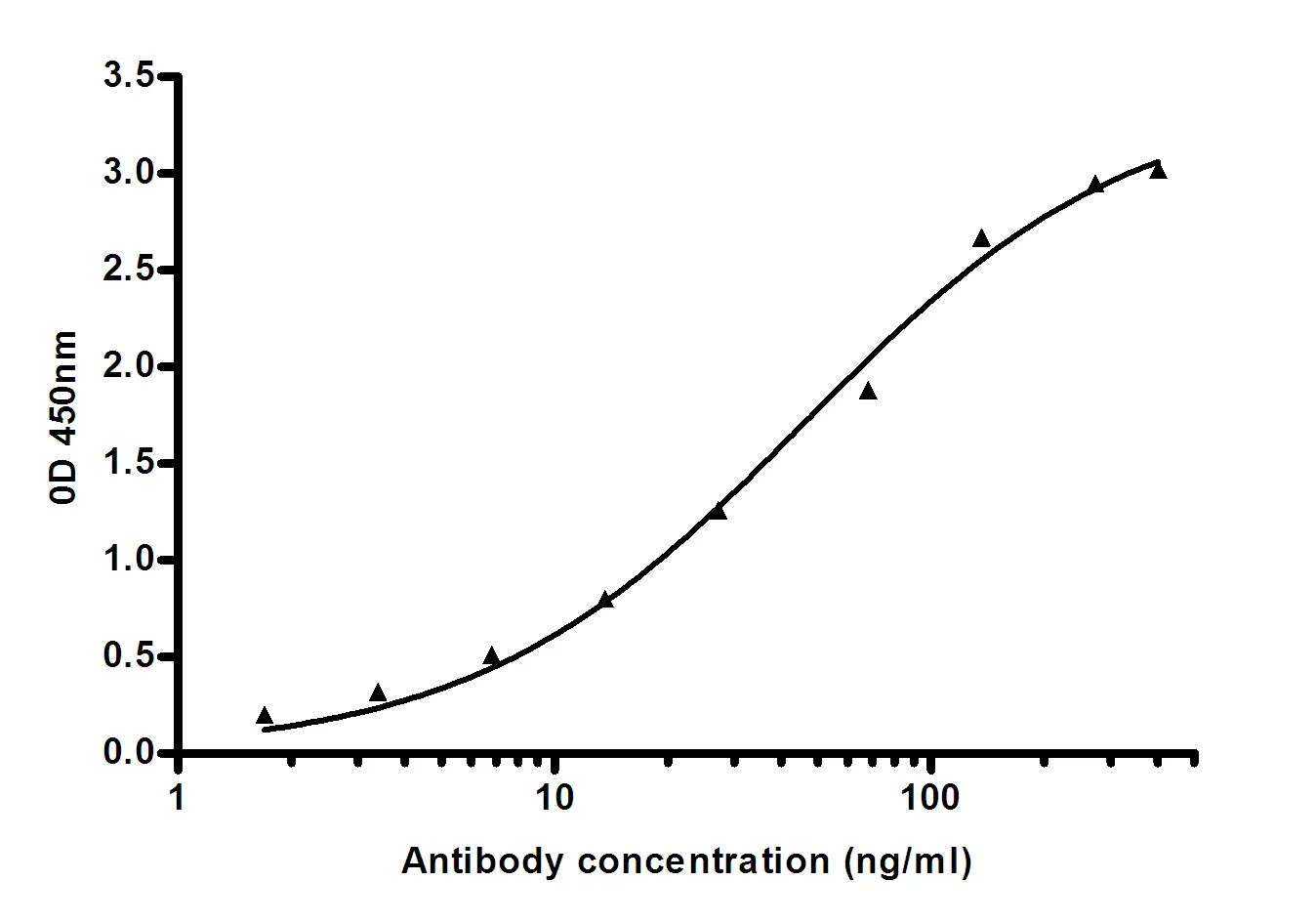
WB 1:500-1:2000,ELISA 1:5000-1:10000

Molecular Weight

22kDa


Background

The protein encoded by this gene is a transmembrane (type I) heparan sulfate proteoglycan and is a member of the syndecan proteoglycan family. The syndecans mediate cell binding, cell signaling, and cytoskeletal organization and syndecan receptors are required for internalization of the HIV-1 tat protein. The syndecan-2 protein functions as an integral membrane protein and participates in cell proliferation, cell migration and cell-matrix interactions via its receptor for extracellular matrix proteins. Altered syndecan-2 expression has been detected in several different tumor types. [provided by RefSeq, Jul 2008],function:Cell surface proteoglycan that bears heparan sulfate.,function:Cell surface proteoglycan.,similarity:Belongs to the syndecan proteoglycan family.,


Research Area

ECM-receptor interaction;Cell adhesion molecules (CAMs);
   💬 WhatsApp