
Nuclear Receptor
Nuclear Receptors are transcription factors responsible for sensing bioactive molecules, including steroid and thyroid hormones. They are regulated by multiple posttranslational modifications, which in turn impacts their ability to regulate the expression of specific genes involved in the control of reproduction, development, and metabolism.
Types of Nuclear Receptors
Androgen Receptor (AR)
Androgen receptor (AR), a zinc finger transcription factor belonging to the nuclear receptor superfamily, is activated by phosphorylation and dimerization upon ligand binding. This promotes nuclear localization and binding of AR to androgen response elements in androgen target genes. AR plays a crucial role in several stages of male development and the progression of prostate cancer.
Estrogen Receptor α (ERα)
Estrogen receptor α (ERα), a member of the steroid receptor superfamily, contains highly conserved DNA binding and ligand binding domains. Through its estrogen-independent and estrogen-dependent activation domains (AF-1 and AF-2, respectively), ERα regulates transcription by recruiting coactivator proteins and interacting with general transcriptional machinery.
Glucocorticoid Receptor (GR)
Glucocorticoid hormones control cellular proliferation, inflammation, and metabolism through their association with the glucocorticoid receptor (GR)/NR3C1, a member of the nuclear hormone receptor superfamily of transcription factors.
Peroxisome Proliferator-Activated Receptor γ (PPARγ)
Peroxisome proliferator-activated receptor γ (PPARγ) is a member of the ligand-activated nuclear receptor superfamily and functions as a transcriptional activator. PPARγ is preferentially expressed in adipocytes, as well as in vascular smooth muscle cells and macrophages (8). Besides its role in mediating adipogenesis and lipid metabolism, PPARγ also modulates insulin sensitivity, cell proliferation, and inflammation.
Progesterone Receptor (PR)
Human progesterone receptor (PR) is expressed as two forms: the full length PR B and the short form PR A. PR A lacks the first 164 amino acid residues of PR B. Both PR A and PR B are ligand activated, but differ in their relative ability to activate target gene transcription.
Retinoic Acid Receptors (RARs)
Nuclear retinoic acid receptors (RARs) consist of three subtypes encoded by separate genes: α (NR1B1), β (NR1B2), and γ (NR1B3). For each subtype, there are at least two isoforms, which are generated by differential promoter usage and alternative splicing and differ only in their N-terminal regions. Retinoids, which are metabolites of vitamin A, serve as ligands for RARs. RARs function as ligand-dependent transcriptional regulators and are found to be heterodimerized with retinoid X receptors (RXRs). These transcriptionally active dimers regulate the expression of genes involved in cellular differentiation, proliferation, and apoptosis.
Retinoid X Receptors (RXRs)
The human retinoid X receptors are encoded by three distinct genes (RXRα, RXRβ, and RXRγ) and bind selectively and with high affinity to the vitamin A derivative, 9-cis-retinoic acid. RXRs are type-II nuclear hormone receptors that are largely localized to the nuclear compartment independent of ligand binding. Nuclear RXRs form heterodimers with nuclear hormone receptor subfamily 1 proteins, including thyroid hormone receptor, retinoic acid receptors, vitamin D receptor, peroxisome proliferator-activated receptors, liver X receptors, and farnesoid X receptor.
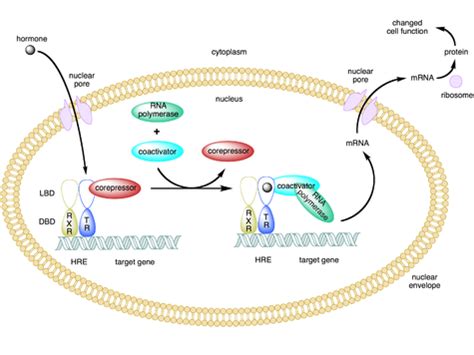
Image of Nuclear Receptor Signal Transduction Mechanism
Relevant Antibodies
| Catalog# | Product Name | Reactivity | Application |
|---|---|---|---|
| AMRe21478 | Histone H2A.X (Phospho Ser139) Rabbit Monoclonal antibody | Human,Mouse,Rat | WB,IHC,IF,IP,ELISA |
| APRab04424 | Cdc25C (phospho Ser216) Rabbit Polyclonal Antibody | Human,Rat,Mouse | WB,IHC-P,IF-P,IF-F,ICC/IF,ELISA |
| APRab04456 | Chk1 (phospho Ser345) Rabbit Polyclonal Antibody | Human,Mouse,Rat | IHC-P,IF-P,IF-F,ICC/IF,ELISA |
| AMRe21449 | RPA32/RPA2 Rabbit Monoclonal antibody | Human,Mouse,Rat | WB,IHC,IF,IP,ELISA |
| AMRe84449 | ATRIP Rabbit Monoclonal | Human,Mouse,Rat | WB,ICC |
| APRab04285 | ATR (phospho Ser428) Rabbit Polyclonal Antibody | Human,Rat,Mouse | IHC-P,IF-P,IF-F,ICC/IF,ELISA |
| APRab13894 | Microcephalin Rabbit Polyclonal Antibody | Human,Mouse | WB,IHC-P,IF-P,IF-F,ICC/IF,ELISA |
| APS0635 | HRP-conjugated Polyclonal Goat Anti-Rabbit IgG(H+L) Secondary Antibody | ||
| AMre80004 | GAPDH (12R9) Rabbit Monoclonal Antibody |
- Avila DM, Zoppi S, McPhaul MJ. The androgen receptor (AR) in syndromes of androgen insensitivity and in prostate cancer. J Steroid Biochem Mol Biol. 2001 Jan-Mar;76(1-5):135-42.[PMID: 11384871].
- Yamamoto KR. Steroid receptor regulated transcription of specific genes and gene networks. Annu Rev Genet. 1985;19:209-52.[PMID: 3909942].
- Kastner P, Krust A, Turcotte B, Stropp U, Tora L, Gronemeyer H, Chambon P. Two distinct estrogen-regulated promoters generate transcripts encoding the two functionally different human progesterone receptor forms A and B. EMBO J. 1990 May;9(5):1603-14.[PMID: 2328727].
- Eifert C, Sangster-Guity N, Yu LM, Chittur SV, Perez AV, Tine JA, McCormick PJ. Global gene expression profiles associated with retinoic acid-induced differentiation of embryonal carcinoma cells. Mol Reprod Dev. 2006 Jul;73(7):796-824.[PMID: 16604517].
- Eifert C, Sangster-Guity N, Yu LM, Chittur SV, Perez AV, Tine JA, McCormick PJ. Global gene expression profiles associated with retinoic acid-induced differentiation of embryonal carcinoma cells. Mol Reprod Dev. 2006 Jul;73(7):796-824. [PMID: 16604517].
 | Flora Flora is a technical support expert at EnkiLife, familiar with immunology and neuroscience, dedicated to providing customers with high-quality product combinations and technical support to help achieve research in neurodegenerative diseases and other neuroscience areas. |