
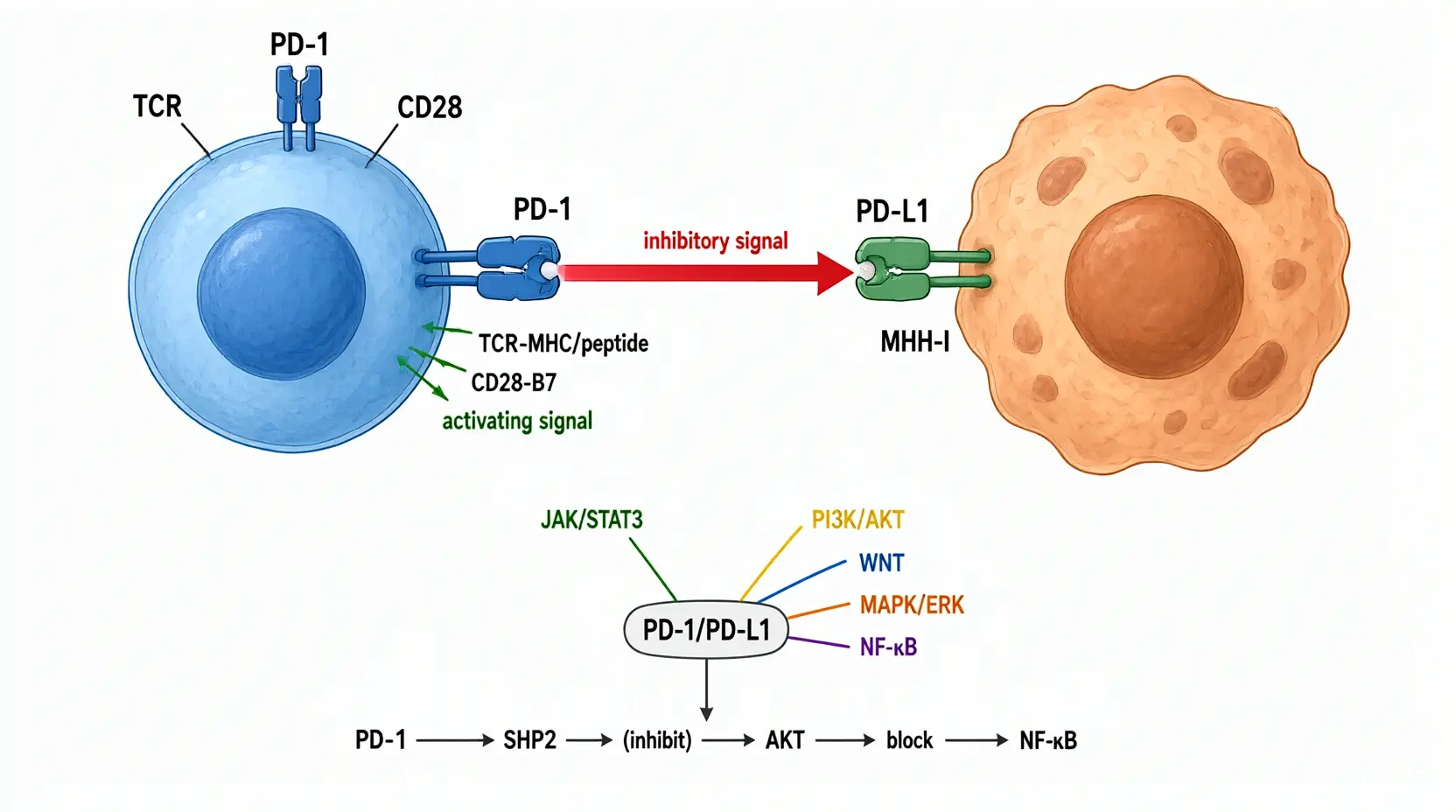
PD-1 and PD-L1 in Cancer Immunotherapy: Pathway, Biomarkers and Research Methods
Programmed cell death protein 1 (PD-1) is an inhibitory receptor that helps restrain T-cell responses. When programmed death ligand 1 (PD-L1) on a tumor cell or another cell in the tumor microenvironment engages PD-1 on a T cell, it can reduce signals needed for T-cell activation and function. Antibodies that block this interaction can release part of that restraint, but their effects depend on the immune context and are not uniform across patients or experimental models.1, 2 For example, PD-L1 expression can appear alongside immune-cell infiltration in human melanoma.5