
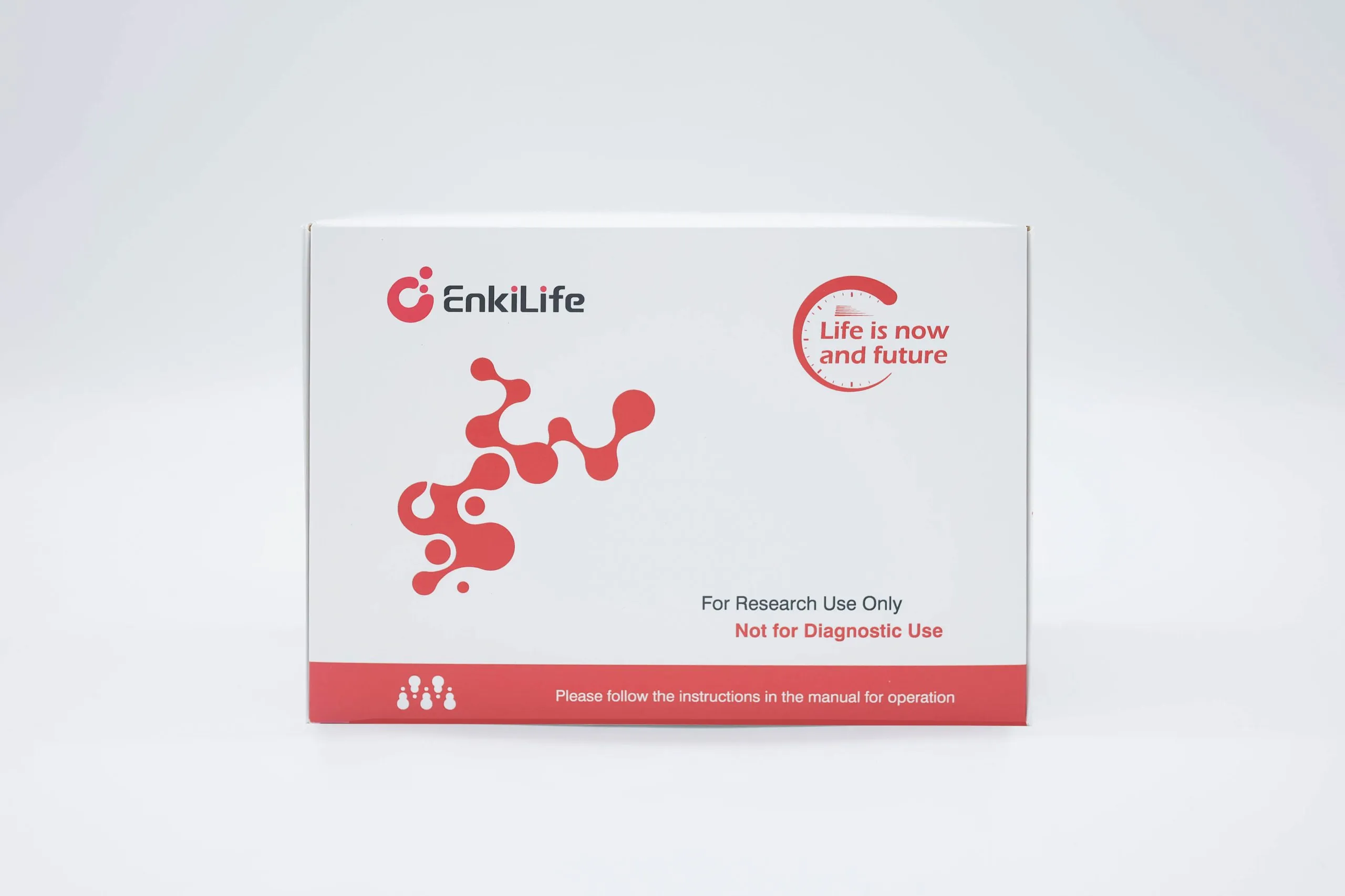
Size1:100T Price1:$340
Detection Method:Colorimetric
Detection Instrument:Quantitative
Sample Type:tissues, cells
Product Introduction
Glutamic acid cysteine synthase (γ-GCS) is the rate-limiting enzyme in the synthesis of glutathione (GSH). Increased intracellular γ-GCS activity accelerates GSH synthesis, thereby increasing the concentration of GSH both inside and outside the cell. GSH is an important antioxidant in the body, playing a crucial role in maintaining the integrity of airway epithelial cells, protecting against lung damage and inflammation, and combating oxidative damage. The lungs have high concentrations of γ-GCS enzyme activity and GSH (6.1–17.5 nmol/mg lung tissue), and the concentration of GSH in the respiratory epithelial lining fluid (200–400 μmol/L) is 100 times that in blood plasma. Therefore, GSH plays a very important role in respiratory inflammation and allergic reactions, and has significant research value in the treatment and prognosis of cardiovascular diseases and tumors.
Principle
Glutamate and cysteine, under the catalysis of gamma-glutamylcysteine synthase (γ-GCS), consume ATP and react to produce γ-glutamylcysteine, inorganic phosphorus, and ADP. The activity of gamma-glutamylcysteine synthase (γ-GCS) can be determined by measuring the amount of inorganic phosphorus in the system at 636 nm through a colorimetric reaction.
Storage
The kit has a shelf life of 6 months.
Notes
This product is for research purposes only and must not be used for clinical diagnosis. Do not take it.
Components
Components | Name | Size | Storage |
Reagent 1 | Buffer solution | 25 mL × 1 bottle | 2~8℃ |
Reagent 2 | Matrix solution | 25 mL × 1 bottle | 2~8℃ |
Reagent 3 | Accelerator | Powder x 3 tubes | 2~8℃ |
Solvent 10 mL x 1 bottle | 2~8℃ | ||
Preparation of reagent 3 application solution: Dissolve each vial of reagent 3 powder in 1.8 mL of reagent 3 solvent before use. Prepare and use immediately. | |||
Reagent 4 | Terminator | 6 mL x 1 bottle | RT |
Reagent 5 | Color developer | Solution A, 7 mL x 8 bottles | 2~8℃ |
Solution B, 6 mL x 8 bottles | 2~8℃ | ||
Preparation of reagent 5 colorimetric reagent: Prepare reagent 5 A solution : reagent 5 B solution in a ratio of 7:6, store at 4℃ to prevent phosphorus contamination. (Note: Reagent 5 B solution may form flocculent precipitate at low temperatures. In this case, it can be dissolved by heating at 60℃ for about 10 minutes before use.) | |||
Reagent 6 | Stabilizer | 100 mL x 1 bottle | RT |
Reagent 7 | 10 mmol/L standard phosphorus stock solution | 5 mL x 1 bottle | 2~8℃, away from ligh |
Matrix buffer solution preparation: Prepare according to the ratio of Reagent 1: Reagent 2 = 0.25: 0.25. Prepare only the amount needed and prepare immediately before use. The mixed reagents are stable within 1 to 2 hours. | |||
Preparation of the colorimetric reagent: When using, add one bottle of reagent A to one bottle of reagent B, mix thoroughly, and store at 4°C. The prepared colorimetric reagent is enough for 13 tubes (if your sample volume is small, you can prepare the colorimetric reagent yourself according to the ratio of reagent A: reagent B = 7:6, prepare only the amount needed). The prepared colorimetric reagent can be stored at 4°C for at least five days. | |||
Preparation of 0.1 μmol/mL standard phosphorus working solution: When using, dilute the 10 mmol/L standard phosphorus stock solution 100 times with double-distilled water, that is, take 0.1 mL of the 10 mmol/L stock solution and add double-distilled water to 10 mL. | |||
Preparation of 0.02 μmol/mL phosphorus standard solution: When using, dilute 0.1 μmol/mL phosphorus standard solution with double-distilled water 5 times, that is, take 1 mL of 0.1 μmol/mL phosphorus standard solution and add 4 mL of double-distilled water. | |||