
Size:50μL Price:$128
Size:100μL Price:$230
Application:WB,IHC,ICC/IF,FC
Reactivity:Human
Conjugate:Unconjugated
Optional conjugates: Biotin, FITC (free of charge). See other 26 conjugates.
Gene Name:CEACAM5
Summary
Performance
Immunogen
Application
Background
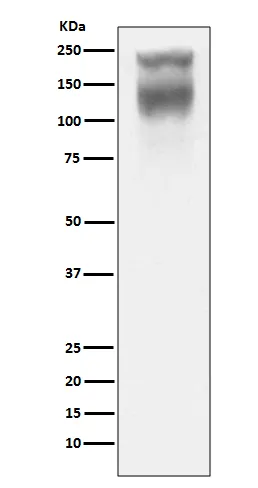
Carcinoembryonic antigen (CEA), also known as CD66e or CEACAM5, is a 180-200 kDa cell surface glycoprotein whose expression is elevated in intestinal carcinomas and other tumors. CEA mediates cell adhesion, though little more is known about its biological activity. Cell surface glycoprotein that plays a role in cell adhesion, intracellular signaling and tumor progression (PubMed:2803308, PubMed:10910050, PubMed:10864933). Mediates homophilic and heterophilic cell adhesion with other carcinoembryonic antigen-related cell adhesion molecules, such as CEACAM6 (PubMed:2803308). Plays a role as an oncogene by promoting tumor progression; induces resistance to anoikis of colorectal carcinoma cells (PubMed:10910050).
Research Area
Tags & Cell Markers