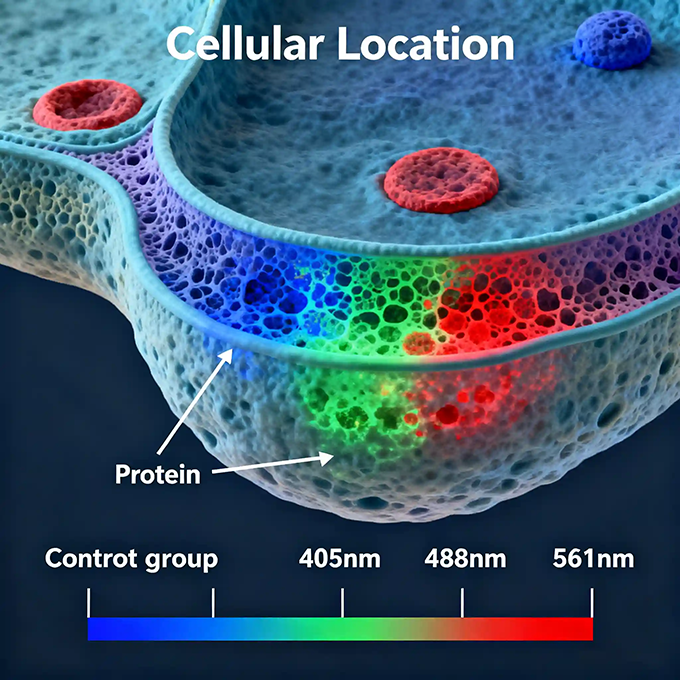
Cellular Localization IF (Immunofluorescence) is an experimental method based on immunofluorescence technology, used to observe the distribution of specific antigens within cells. The principle involves the specific binding of antibodies to target antigens, followed by the use of fluorescently labeled secondary antibodies to mark the primary antibodies. This allows the location of antigens to be visualized under a fluorescence microscope. The technique is highly sensitive and specific, and it can be used to study the localization and function of biomolecules such as proteins and nucleic acids within cells. It is widely applied in the fields of cell biology, molecular biology, and pathology. During the experimental process, it is important to optimize steps such as fixation, permeabilization, and blocking to ensure the accuracy and reliability of the results.
Product List
| Target | Catalog# | Product Name | Reactivity | Application |
|---|---|---|---|---|
β Tubulin | β Tubulin Rabbit Monoclonal antibody | Human,Mouse,Rat | WB,IHC,IF,IP,ELISA |
Related Products
Super-sensitive ECL chemiluminescent reagent
References
- Determination of CHK1 Cellular Localization by Immunofluorescence Microscopy. Cheng YC, et al. Methods Mol Biol. 2021. [PMID: 33786781]
- Immunofluorescence studies to dissect the impact of Cockayne syndrome A alterations on the protein interaction and cellular localization. Ghit A. J Genet Eng Biotechnol. 2021. [PMID: 34132928]