
TNF signaling pathway | ELISA
1
Definition of TNF Signaling Pathway
Tumor Necrosis Factor (TNF, commonly abbreviated as TNFα) is a cytokine that selectively eliminates tumor cells without producing prominent toxic effects on normal healthy cells. It functions as an intracellular signaling mediator that modulates systemic inflammation and constitutes one of the key cytokine components that initiate the organism’s acute‑phase response.
2
Core Biological Functions of TNF Signaling Pathway
The TNF signaling cascade mainly governs the functional regulation of immune cell populations. As an endogenous pyrogenic factor, TNF can trigger fever, initiate apoptotic cell death, induce cachexia, and mediate inflammatory reactions. It also exerts inhibitory effects on tumor development and viral replication, and coordinates defensive responses against sepsis by prompting target cells to synthesize and secrete IL‑1 and IL‑6.
3
Molecular Transduction Process of TNF Signaling Pathway
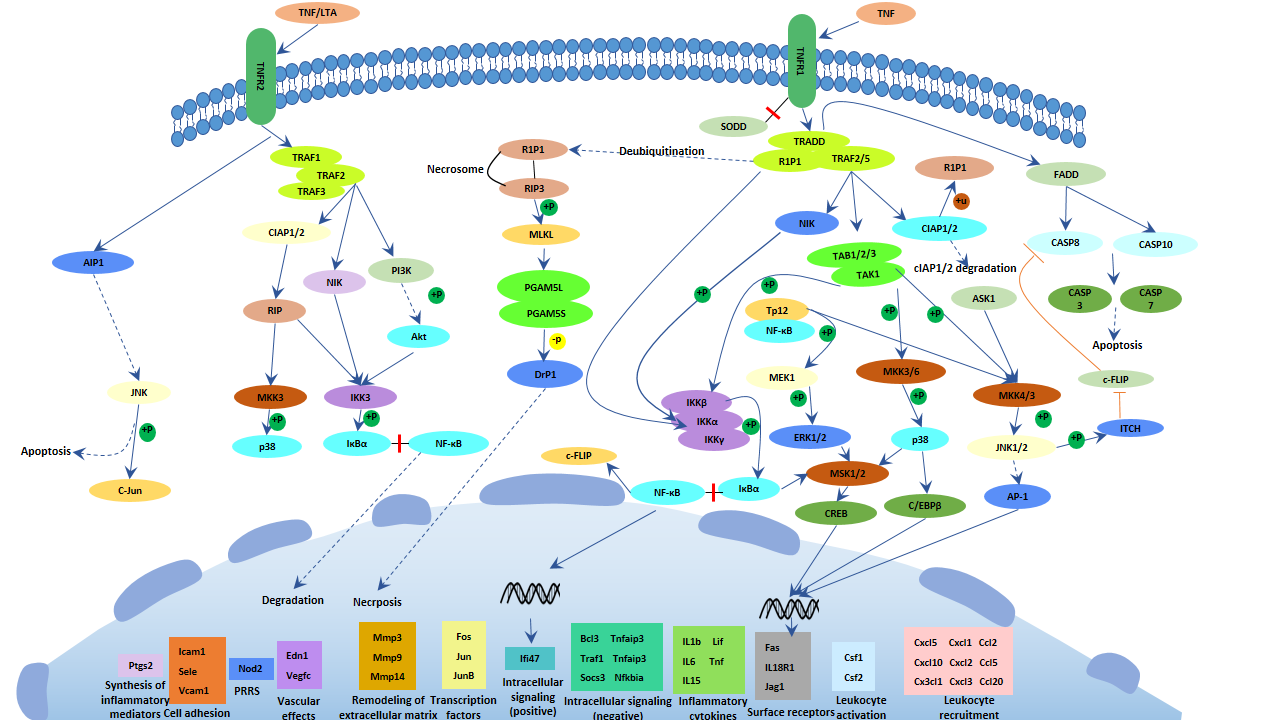
As demonstrated in the pathway diagram, TNF ligands can bind two separate receptor subtypes on cell membranes: TNFR1 (TNF receptor type 1) and TNFR2 (TNF receptor type 2). TNFR1 is widely expressed across almost all tissue types, and it can be fully activated by both soluble trimeric TNF and membrane‑attached TNF forms. In comparison, TNFR2 is mainly distributed on immune cells and only responds to the membrane‑bound homotrimer form of TNF.
The majority of current research findings regarding TNF signal transduction are derived from investigations of TNFR1, implying that the biological functions mediated by TNFR2 may have been insufficiently characterized so far. After TNF binds to its receptors, multiple downstream signaling cascades get activated, among which the NFκB and MAPK signaling pathways are the most well‑studied branches.
Extended research materials are available to explore the distinct biological roles of TNFR1 and TNFR2 within the TNF signaling network. These supplementary documents analyze the overlapping regulatory effects generated by the TNF‑TNFR1 and TNF‑TNFR2 complexes, and further compare the divergent signal transduction patterns mediated by TNFR1 and TNFR2 during allergic reactions, which can offer fresh research insights into TNF‑related mechanisms.
There are also systematic introductory resources tailored for new researchers exploring TNF‑related topics. These materials summarize foundational knowledge including the biological activities of TNF, all members of the TNF superfamily, and various diseases associated with abnormal TNF signaling.
The majority of current research findings regarding TNF signal transduction are derived from investigations of TNFR1, implying that the biological functions mediated by TNFR2 may have been insufficiently characterized so far. After TNF binds to its receptors, multiple downstream signaling cascades get activated, among which the NFκB and MAPK signaling pathways are the most well‑studied branches.
Extended research materials are available to explore the distinct biological roles of TNFR1 and TNFR2 within the TNF signaling network. These supplementary documents analyze the overlapping regulatory effects generated by the TNF‑TNFR1 and TNF‑TNFR2 complexes, and further compare the divergent signal transduction patterns mediated by TNFR1 and TNFR2 during allergic reactions, which can offer fresh research insights into TNF‑related mechanisms.
There are also systematic introductory resources tailored for new researchers exploring TNF‑related topics. These materials summarize foundational knowledge including the biological activities of TNF, all members of the TNF superfamily, and various diseases associated with abnormal TNF signaling.
Key note:TNFR1: ubiquitous expression; TNFR2: immune‑cell‑restricted expression