
Novel Use of Icaritin: Inhibiting Neutrophil Extracellular Traps to Target Urothelial Cancer
I. Research Background
Urothelial cancer is one of the most common malignant tumors in the urinary system. Tumor recurrence and metastasis are the main causes of patient death. Although new therapies such as platinum-based chemotherapy and PD1 antibody immunotherapy have been applied in clinical practice, more than half of patients still do not respond to these treatments. Therefore, finding new therapeutic drugs and targets has become an urgent need to improve the prognosis of patients with urothelial cancer.
Icaritin (ICT), a metabolite of icariin (ICA), the main active component of the traditional Chinese herb Epimedium, has become a hot molecule in tumor research in recent years. In 2022, Icaritin capsules with ICT as the core component were approved by the China National Medical Products Administration for first-line treatment of advanced unresectable hepatocellular carcinoma, showing significant efficacy in prolonging overall survival of patients with hepatocellular carcinoma. Existing studies have confirmed that ICT has both direct anti-tumor and immune regulatory effects: it can directly kill tumor cells by inducing apoptosis and autophagy, and can also reshape the tumor immune microenvironment to activate the body's anti-tumor immune response. However, compared with its in-depth research in hepatocellular carcinoma, the specific mechanism of ICT in urothelial cancer, especially its regulation of the tumor immune microenvironment, has not been systematically elucidated, which has become a key factor limiting its clinical translation in urothelial cancer.
In the tumor microenvironment, negative regulatory molecules and various immune cell subsets inhibit anti-tumor immunity. Among them, neutrophils and the inflammatory microenvironment constructed by neutrophil extracellular traps (NETs) have been confirmed to promote tumor metastasis. However, there are currently no specific inhibitory drugs targeting neutrophils and NETs. Against this background, the research paper "Icaritin inhibits the progression of urothelial cancer by suppressing PADI2-mediated neutrophil infiltration and neutrophil extracellular trap formation" first revealed the potential value of icaritin in the treatment of urothelial cancer, and provided new ideas and targets for the treatment of urothelial cancer by in-depth exploration of its mechanism of action.
II. Research Methods
This study comprehensively used multiple research methods including in vitro cell experiments, in vivo animal models, and clinical sample analysis. First, human urothelial cancer cell lines (UMUC-3, T24) and mouse urothelial cancer cell line (MB49) were used for in vitro experiments. The effect of ICT on tumor cell viability was detected by CCK-8 method, scratch test and Transwell experiment were used to evaluate tumor cell migration and invasion ability, flow cytometry was used to analyze cell apoptosis and cycle changes, and neutrophil isolation and NETs generation experiments were used to explore the regulatory effect of ICT on neutrophils and NETs. For in vivo experiments, mouse subcutaneous tumor models, orthotopic urothelial cancer models, and tail vein lung metastasis models were constructed, and different doses of ICT were administered by gavage to observe tumor growth and metastasis. Flow cytometry and immunohistochemistry were used to analyze changes in immune cell infiltration in the tumor microenvironment. For clinical research, 195 paraffin-embedded urothelial cancer samples, 24 fresh tumor samples, and 40 serum samples were collected. Immunohistochemistry, ELISA, and retrospective analysis were used to explore the correlation between neutrophils, NETs and the prognosis and immune escape of urothelial cancer. In addition, Western blot, RT-qPCR, Biacore, molecular docking and other techniques were used to deeply analyze the mechanism of action of ICT. All experimental data were analyzed using GraphPad Prism.
III. Results Analysis
1. ICT inhibits tumor metastasis by suppressing neutrophil infiltration in vivo
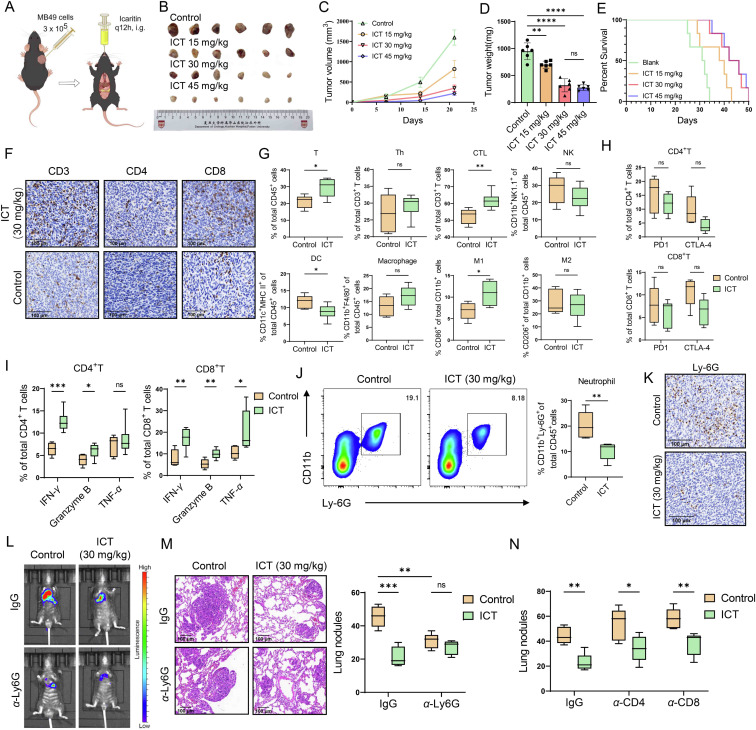
The study first started with in vitro experiments to explore the effect of ICT on the malignant biological behavior of urothelial cancer cells. By treating three urothelial cancer cell lines (UMUC-3, T24, MB49) with different concentrations of ICT, the half inhibitory concentrations (IC₅₀) were determined to be 15.71, 19.55, and 9.32 μmol/L, respectively. ICT showed a concentration-dependent inhibitory effect on tumor cell viability and colony formation, while inducing cell apoptosis and cell cycle arrest, initially confirming the anti-tumor potential of ICT. However, ICT had no significant inhibitory effect on tumor cell migration and invasion, providing an important clue for subsequent exploration of its role through the tumor microenvironment.
Subsequent experiments identified neutrophils as the key target of the core mechanism of ICT's anti-tumor effect in vivo. The researchers first constructed a mouse subcutaneous tumor model, setting up a control group and low, medium, and high dose ICT groups. After 21 days of continuous gavage, tumor volume was measured weekly with a vernier caliper and tumor weight was weighed. It was found that the inhibitory effect of ICT on tumor growth was significantly dose-dependent, with the 30 mg/kg dose group having the highest tumor inhibition rate. By detecting serum alanine aminotransferase (ALT), aspartate aminotransferase (AST) levels and mouse body weight changes, it was confirmed that ICT at this dose had no obvious hepatotoxicity and systemic adverse reactions, with good safety, and could significantly prolong mouse survival, providing a reliable basis for subsequent experimental dose selection. Analysis of the tumor immune microenvironment found that ICT could promote the infiltration of cytotoxic T cells and M1-type macrophages and the secretion of anti-tumor immune effector molecules, while PD-1, CTLA-4 and other immune checkpoint molecules and M2-type macrophage levels showed a downward trend. This regulatory effect was also verified in the mouse hepatocellular carcinoma subcutaneous model, and ICT could significantly inhibit neutrophil infiltration in tumor tissues. Further construction of a mouse orthotopic urothelial cancer model confirmed that ICT could effectively inhibit tumor growth and metastasis.
2. In-depth analysis of the core mechanism of ICT inhibiting NETs formation
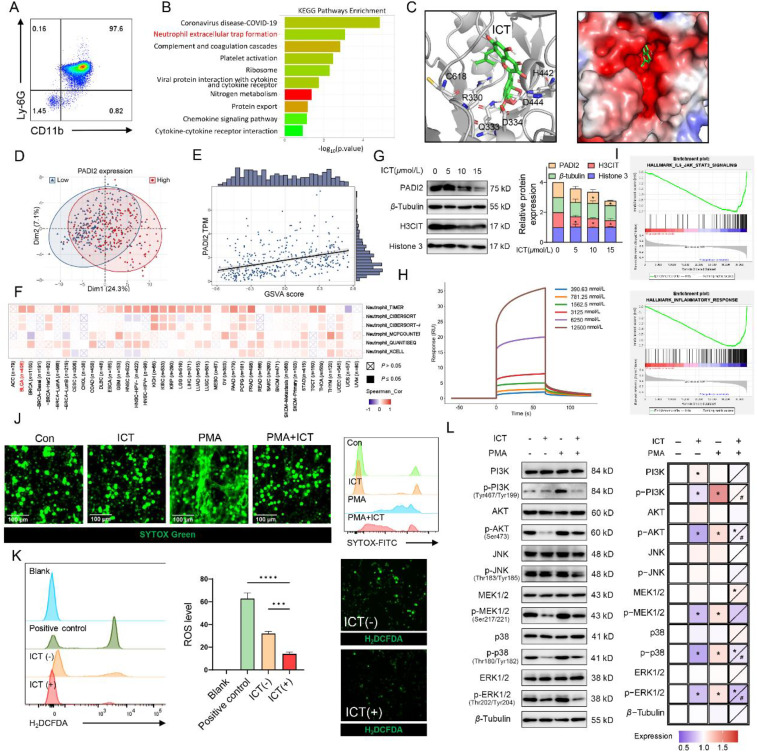
As products of neutrophils undergoing NETosis, NETs are key factors mediating the formation of immune suppression in the tumor immune microenvironment. Therefore, the study further explored the regulatory effect of ICT on NETs formation. Through immunofluorescence staining (MPO and H3CIT double labeling), it was observed that NETs formation in tumor tissues was significantly reduced after ICT treatment. In vitro co-culture experiments, PMA-induced NETs could significantly promote tumor cell invasion and metastasis, while ICT could dose-dependently reverse this effect, and the inhibitory effect was more significant when combined with DNase I. In vivo experiments further confirmed that ICT could reduce NETs formation in lung metastases, while inhibiting tumor EMT transformation and cancer stem cell properties.
To analyze the core molecular mechanism of ICT inhibiting NETs formation, the study first isolated CD45+CD11b+ neutrophils, treated them with ICT, and then performed RNA sequencing and functional enrichment analysis. It was found that ICT could regulate pathways related to NETs formation and chemokine signaling, and differential gene analysis showed that the expression of PADI2 gene, which is closely related to histone citrullination and NETs formation, was significantly downregulated. Molecular docking experiments suggested that ICT could bind to 6 potential sites of PADI2 protein. Combined with the correlation analysis between PADI2 expression and neutrophil infiltration in urothelial cancer and the results of gene set variation analysis, the study proposed the hypothesis that ICT regulation of NETs formation may depend on PADI2. Subsequent Western blot experiments provided key evidence for this hypothesis, showing that ICT could concentration-dependently reduce PADI2 expression and histone citrullination levels.
3. PADI2-mediated NETs have prognostic value for urothelial cancer
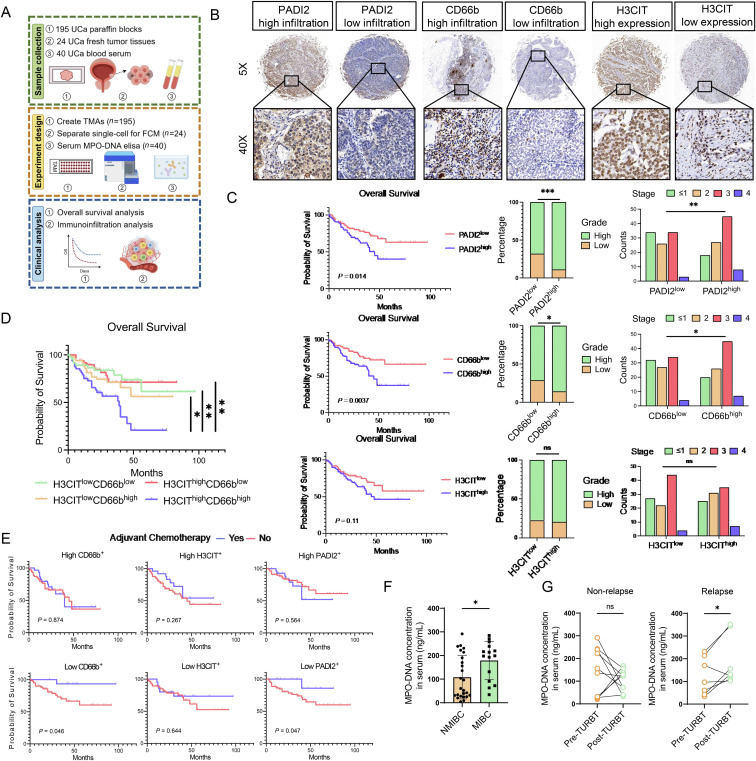
To verify whether PADI2-mediated NETs can serve as prognostic biomarkers for urothelial cancer, the study collected tumor tissues and blood samples from patients with urothelial cancer for correlation analysis, and performed immunohistochemical detection of PADI2, neutrophil marker CD66b, and NETs marker H3CIT in the samples. Through retrospective analysis of 195 evaluable patients, it was found that high expression of CD66b in tumor tissues was associated with poor clinical prognosis, and CD66b expression levels were also closely associated with high tumor grade and advanced pathology. However, the sole expression of H3CIT showed no such correlation, a phenomenon presumably associated with the constitutive expression of H3CIT in tumor tissues. Combined analysis of CD66b and H3CIT found that patients with high expression of both markers had the worst prognosis. The study further analyzed the association between neutrophils, NETs and chemotherapy sensitivity, and the results showed that neutrophil infiltration in tumor tissues was associated with chemotherapy resistance in patients. To clarify the relationship between NETs and tumor progression and recurrence, the study performed ELISA detection on peripheral serum of 40 patients and found that serum MPO-DNA levels in patients with muscle-invasive bladder cancer were significantly higher than those in patients with non-muscle-invasive bladder cancer. Follow-up results of patients after transurethral resection of bladder tumor showed that patients with elevated plasma MPO-DNA levels after surgery were more likely to have tumor recurrence. The above research results fully confirm that neutrophils and NETs-related components can serve as prognostic biomarkers for urothelial cancer.
4. ICT synergizes with anti-PD-1 to exert anti-tumor effects
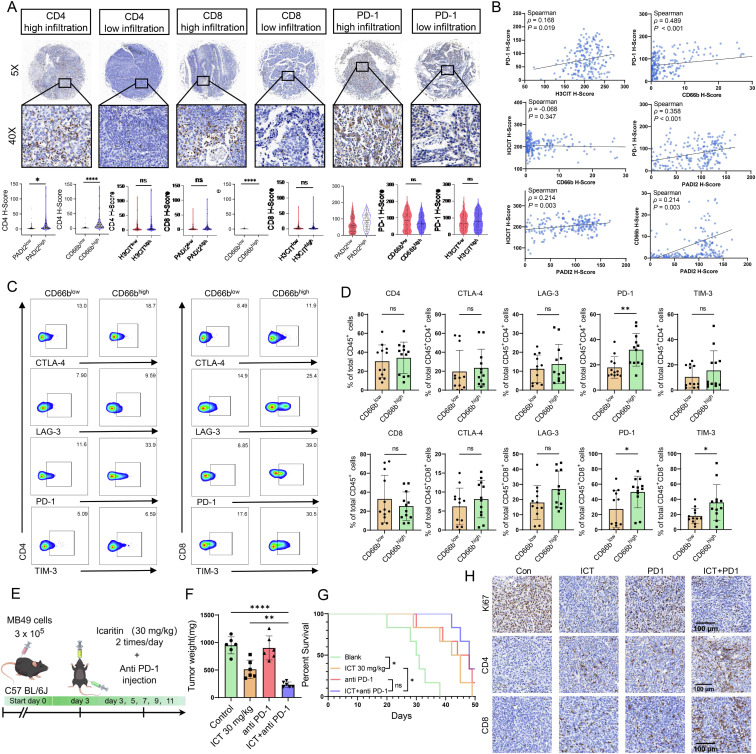
Existing studies have confirmed that neutrophils and NETs in the tumor microenvironment can inhibit the anti-tumor function of T cells, induce T cell exhaustion and eventually lead to tumor immune escape. Therefore, the study further analyzed the association between neutrophils, NETs and T cell exhaustion in tumor tissues. Correlation analysis results showed that neutrophil infiltration and NETs formation in tumors were associated with increased T cell infiltration, but also accompanied by a significant increase in PD-1 expression. The study collected fresh tumor tissues from 24 patients with urothelial cancer, prepared single-cell suspensions, and performed flow cytometry analysis. It was found that the degree of CD66b-positive neutrophil infiltration in tumor tissues was positively correlated with the upregulation of PD-1 and CD8+TIM3 expression, suggesting that high neutrophil infiltration is closely related to tumor immune exhaustion. On the basis of confirming that ICT can inhibit neutrophil infiltration and NETs formation, the study further explored its effect in reversing T cell exhaustion when combined with anti-PD-1 therapy. Through constructing animal models for combined therapy experiments, it was found that the combination of ICT and anti-PD-1 therapy could significantly inhibit tumor growth and improve the prognosis of tumor-bearing mice. Immunohistochemical analysis of tumor tissues showed that the expression of Ki67 in the combined therapy group was significantly reduced, and the infiltration of CD4+ and CD8+ T cells was significantly increased.
IV. Conclusion
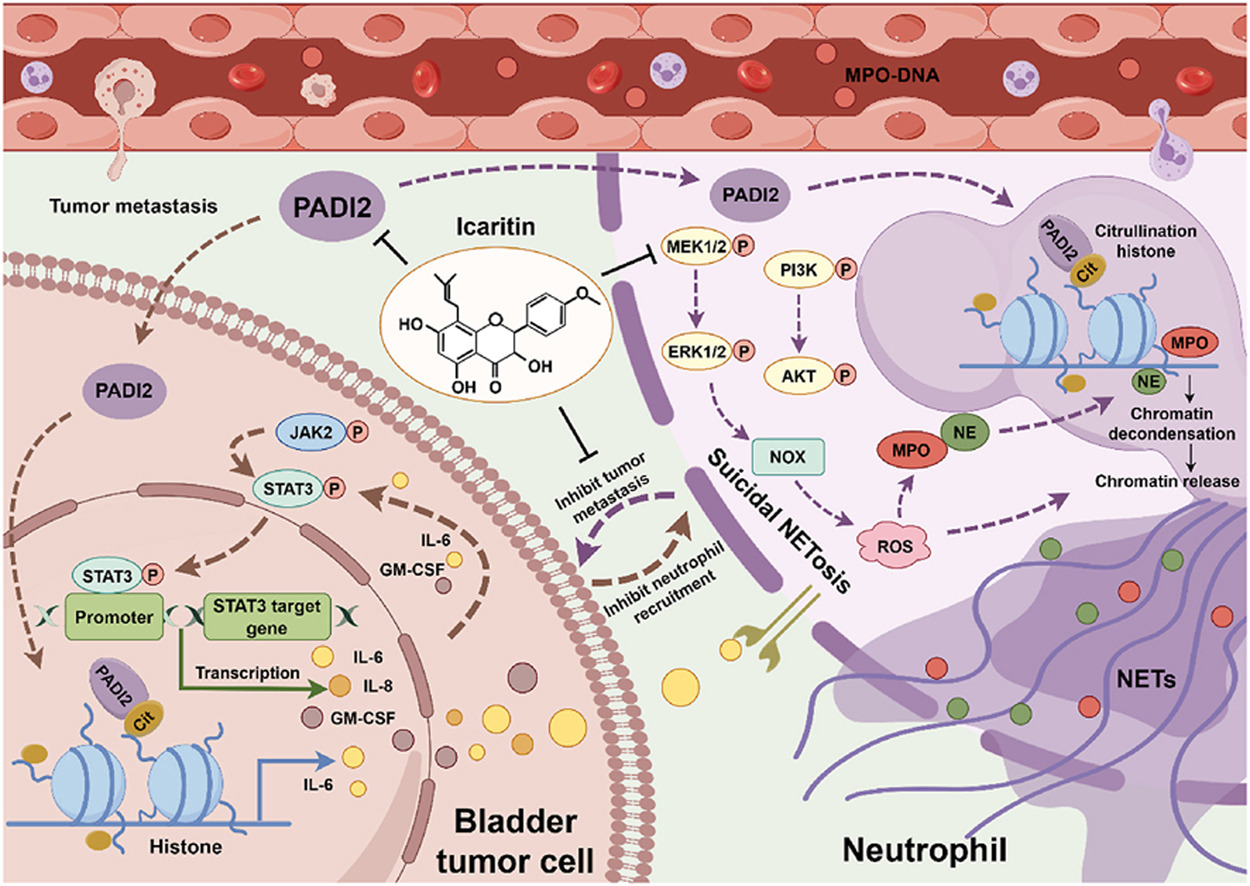
This study first systematically revealed the novel mechanism by which ICT inhibits the progression of urothelial cancer: ICT directly binds to and inhibits the expression of PADI2, on the one hand inhibiting the suicidal NETosis of neutrophils, reducing the formation of NETs, and blocking NETs-mediated tumor EMT and stem cell properties; on the other hand inhibiting PADI2-mediated histone citrullination in tumor cells, reducing the transcription and secretion of IL-6, blocking the IL-6/JAK2/STAT3 positive feedback loop, and inhibiting the recruitment of neutrophils, thereby inhibiting tumor metastasis and progression. At the same time, clinical studies confirmed that neutrophils and NETs-related components can serve as prognostic biomarkers for urothelial cancer, and the synergistic effect of ICT with anti-PD-1 immunotherapy provides a new strategy for the clinical treatment of urothelial cancer. This study not only expands the clinical application scope of ICT, fills the gap in NETs-targeted therapy for urothelial cancer, but also provides a new theoretical basis for the application of traditional Chinese medicine derivatives in tumor immunotherapy.
References
Mou Z, Chen Y, Hu J, Hu Y, Zou L, Chen X, Liu S, Yin Q, Gong J, Li S, Mao S, Xu C, Jiang H. Icaritin inhibits the progression of urothelial cancer by suppressing PADI2-mediated neutrophil infiltration and neutrophil extracellular trap formation. Acta Pharm Sin B. 2024 Sep;14(9):3916-3930. doi: 10.1016/j.apsb.2024.06.029. Epub 2024 Jul 1. PMID: 39309483; PMCID: PMC11413672.
EnkiLife mIHC TSA Kits
Product | Catalog Number |
|---|---|
TSA Six-Label Seven-Color Multiplex Immunohistochemistry Kit | |
TSA Five-Label Six-Color Multiplex Immunohistochemistry Kit | |
TSA Four-Label Five-Color Multiplex Immunohistochemistry Kit | |
TSA Three-Label Four-Color Multiplex Immunohistochemistry Kit | |
TSA Two-Label Three-Color Multiplex Immunohistochemistry Kit |