PROTAC E3 Ligase Profiling Antibody
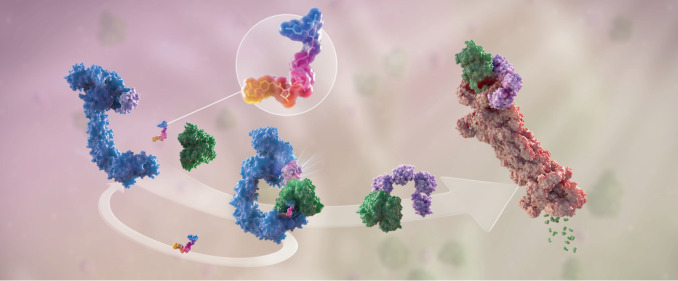
PROTAC (proteolysis-targeting chimera) is a technique that uses a class of small molecules to target specific proteins for degradation. The small molecules are heterobifunctional, consisting of two protein binding parts joined by a linker. One part of the molecule binds a protein of interest (POI), while the other part binds to an E3 ubiquitin ligase, bringing the E3 ligase close to the POI for ubiquitination coupled protein degradation. The first successful PROTAC study used the chimeric PROTAC-1 molecule to recruit the β-TrCP E3 ligase to dictate the ubiquitination and degradation of MetAP2. There are over 600 E3 ligases, and only a few have been successfully developed by PROTAC to degrade target proteins. Among them, CRBN- and VHL-based PROTAC have been extensively explored and successfully applied for multiple disease treatments. The E3 ligased MDM2, c-IAP, and XIAP are fruitful in using PROTAC strategy for cancer treatment. PROTAC design using the KEAP1 E3 ligase has been developed for degradation of BRD3, BRD4, and Tau. KEAP1 is another promising member of the PROTAC team.