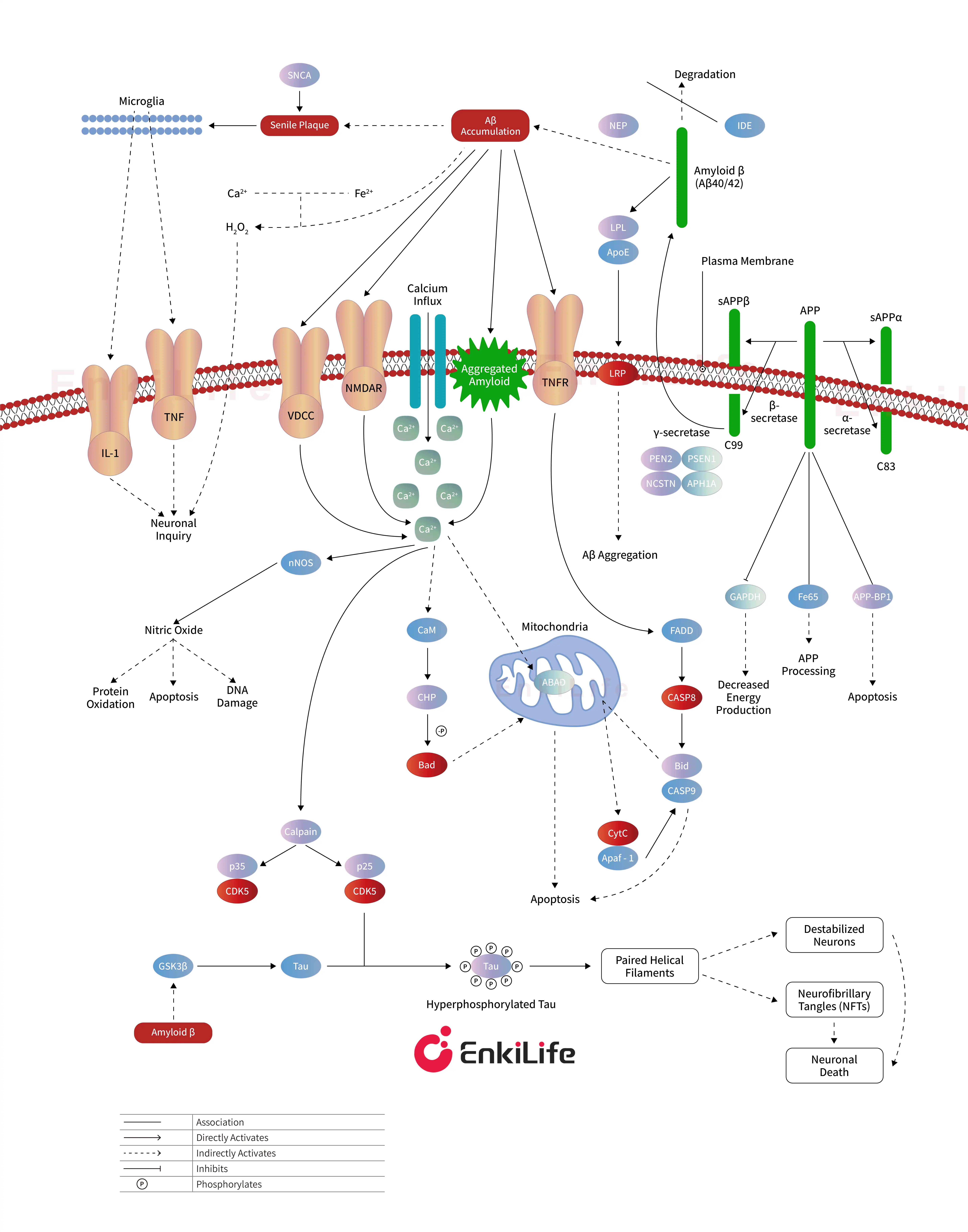
Late-Onset Alzheimer's Disease
Alzheimer's disease (AD) is the leading global cause of dementia, pathologically featured by extracellular amyloid plaques and intracellular neurofibrillary tangles that cause neuronal damage and death. Genome-wide association studies have identified multiple susceptibility genes for late-onset AD, including APOE, BIN1, SORL1, TREM2, EphA1, ABCA7, MEF2C, PTK2B. This paper reviews the functions of these key risk genes and their mechanisms in AD pathogenesis, such as Aβ production and aggregation, tau pathology, microglial immune regulation, synaptic plasticity, lipid metabolism, and cerebrovascular function. Meanwhile, a panel of antibodies targeting AD‑related proteins is provided for experimental detection. Clarifying the roles of these genes helps reveal the molecular basis of AD and supports biomarker and therapeutic development.