Summary
Performance
Immunogen
Application
Background
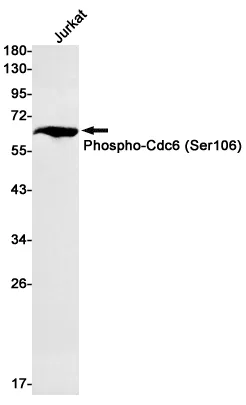
Caspase-6 is one of the major executioner caspases functioning in cellular apoptotic processes. Involved in the activation cascade of caspases responsible for apoptosis execution. Cleaves poly(ADP-ribose) polymerase in vitro, as well as lamins. Overexpression promotes programmed cell death. Cysteine protease that plays essential roles in programmed cell death, axonal degeneration, development and innate immunity (PubMed:8663580, PubMed:32298652). During apoptosis, localizes in the nucleus and cleaves the nuclear structural protein NUMA1 and lamin A/LMNA thereby inducing nuclear shrinkage and fragmentation (PubMed:17401638, PubMed:8663580, PubMed:9463409). Furthermore, cleaves many transcription factors such as NF-kappa-B and cAMP response element-binding protein/CREBBP (PubMed:10559921, PubMed:14657026). Cleaves phospholipid scramblase proteins XKR4 and XKR9 (By similarity). Plays an essential role in axon degeneration during axon pruning which is the remodeling of axons during neurogenesis but not apoptosis (By similarity). Regulates B-cell programs both during early development and after antigen stimulation (By similarity). In addition, promotes the ZBP1-mediated activation of programmed cell death pathways including pyroptosis, apoptosis, and necroptosis (PANoptosis) and plays an essential role in defense against viruses (PubMed:32298652). Mechanistically, interacts with RIPK3 and enhances the interaction between RIPK3 and ZBP1, leading to ZBP1-mediated inflammasome activation and cell death (PubMed:32298652).
Research Area
Cell Biology