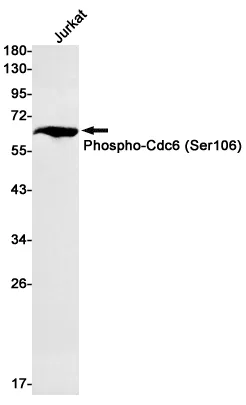
Summary
Performance
Immunogen
Application
Background
The protein encoded by this gene belongs to the glutathione peroxidase family, members of which catalyze the reduction of organic hydroperoxides and hydrogen peroxide (H2O2) by glutathione, and thereby protect cells against oxidative damage. Other studies indicate that H2O2 is also essential for growth-factor mediated signal transduction, mitochondrial function, and maintenance of thiol redox-balance; therefore, by limiting H2O2 accumulation, glutathione peroxidases are also involved in modulating these processes. Several isozymes of this gene family exist in vertebrates, which vary in cellular location and substrate specificity. This isozyme is the most abundant, is ubiquitously expressed and localized in the cytoplasm, and whose preferred substrate is hydrogen peroxide. It is also a selenoprotein, containing the rare amino acid selenocysteine (Sec) at its active site. Sec is encoded by the UGA codon, which normally signals translation termination. The 3' UTRs of selenoprotein mRNAs contain a conserved stem-loop structure, designated the Sec insertion sequence (SECIS) element, that is necessary for the recognition of UGA as a Sec codon, rather than as a stop signal. This gene contains an in-frame GCG trinucleotide repeat in the coding region, and three alleles with 4, 5 or 6 repeats have been found in the human population. The allele with 4 GCG repeats has been significantly associated with breast cancer risk in premenopausal women. Alternatively spliced transcript variants have been found for this gene. Pseudogenes of this locus have been identified on chromosomes X and 21. [provided by RefSeq, Aug 2017]
Research Area