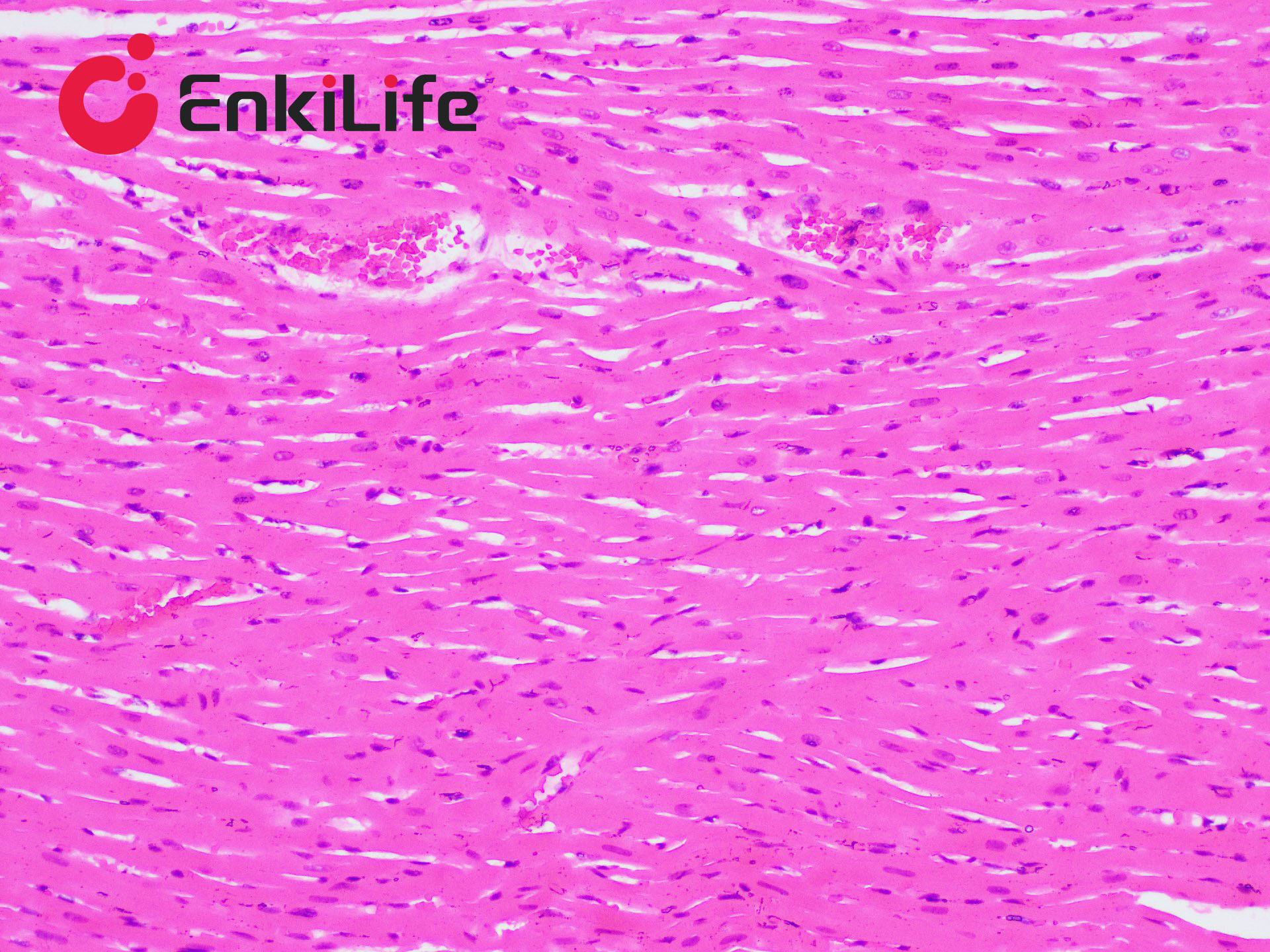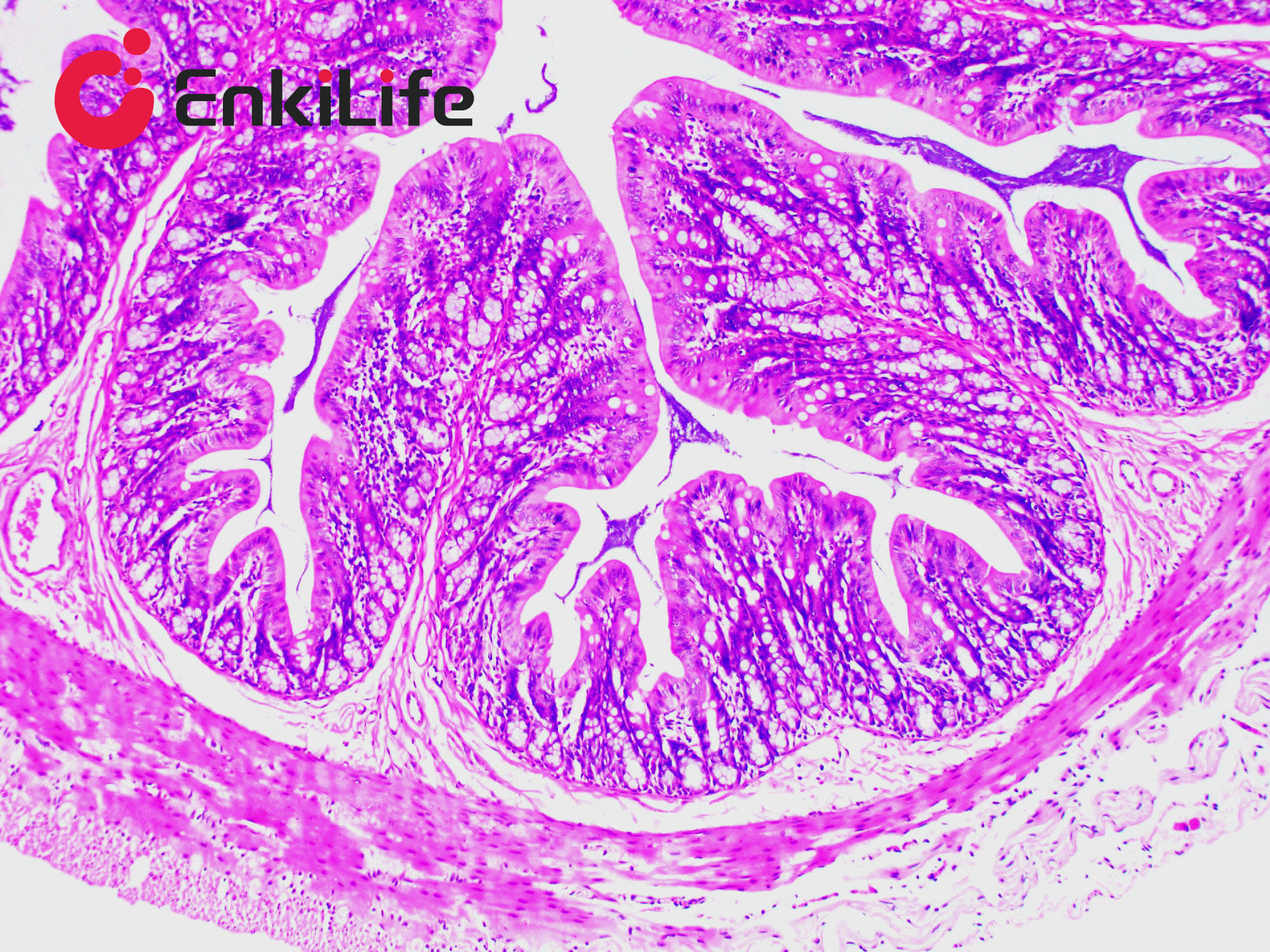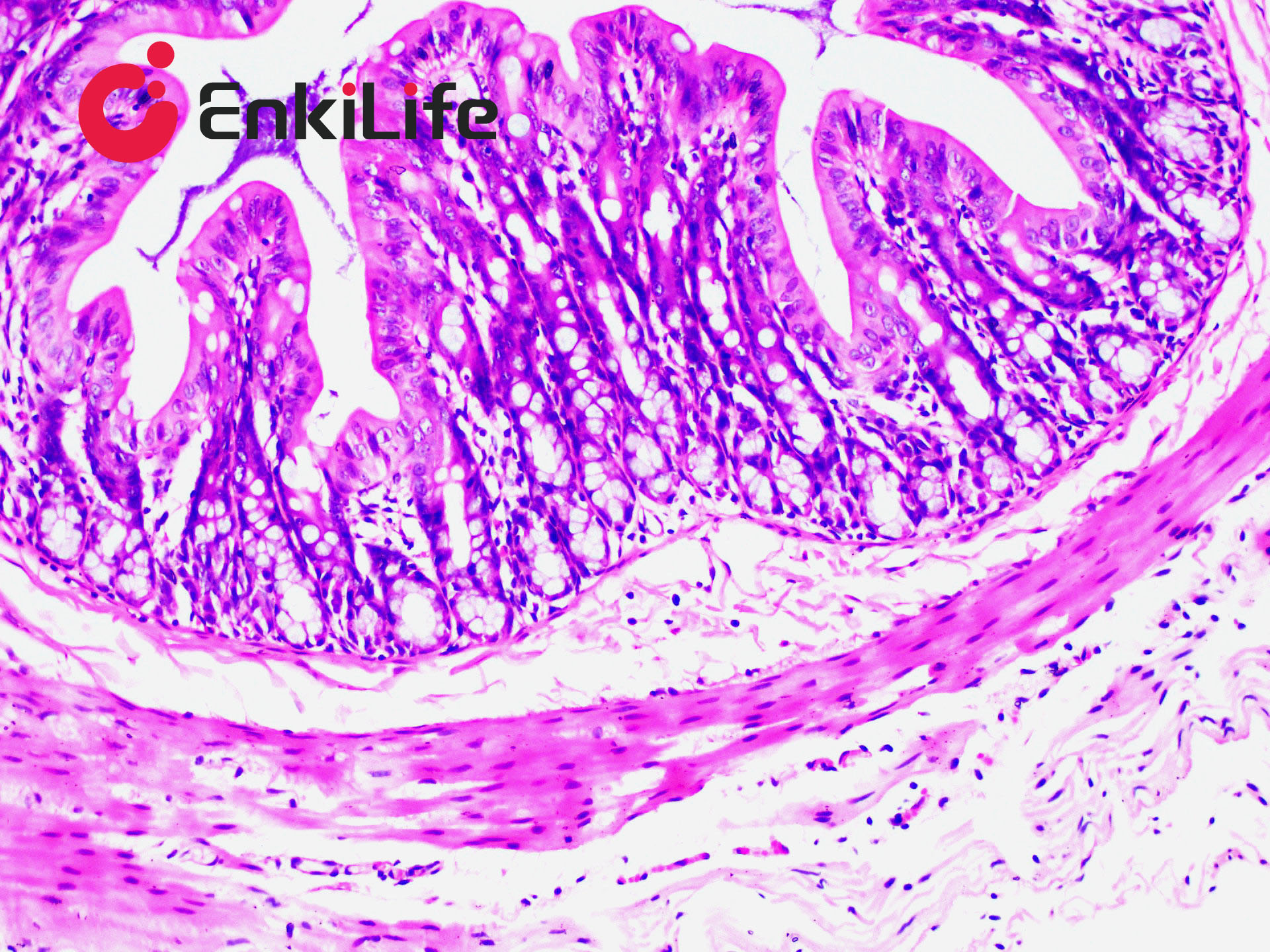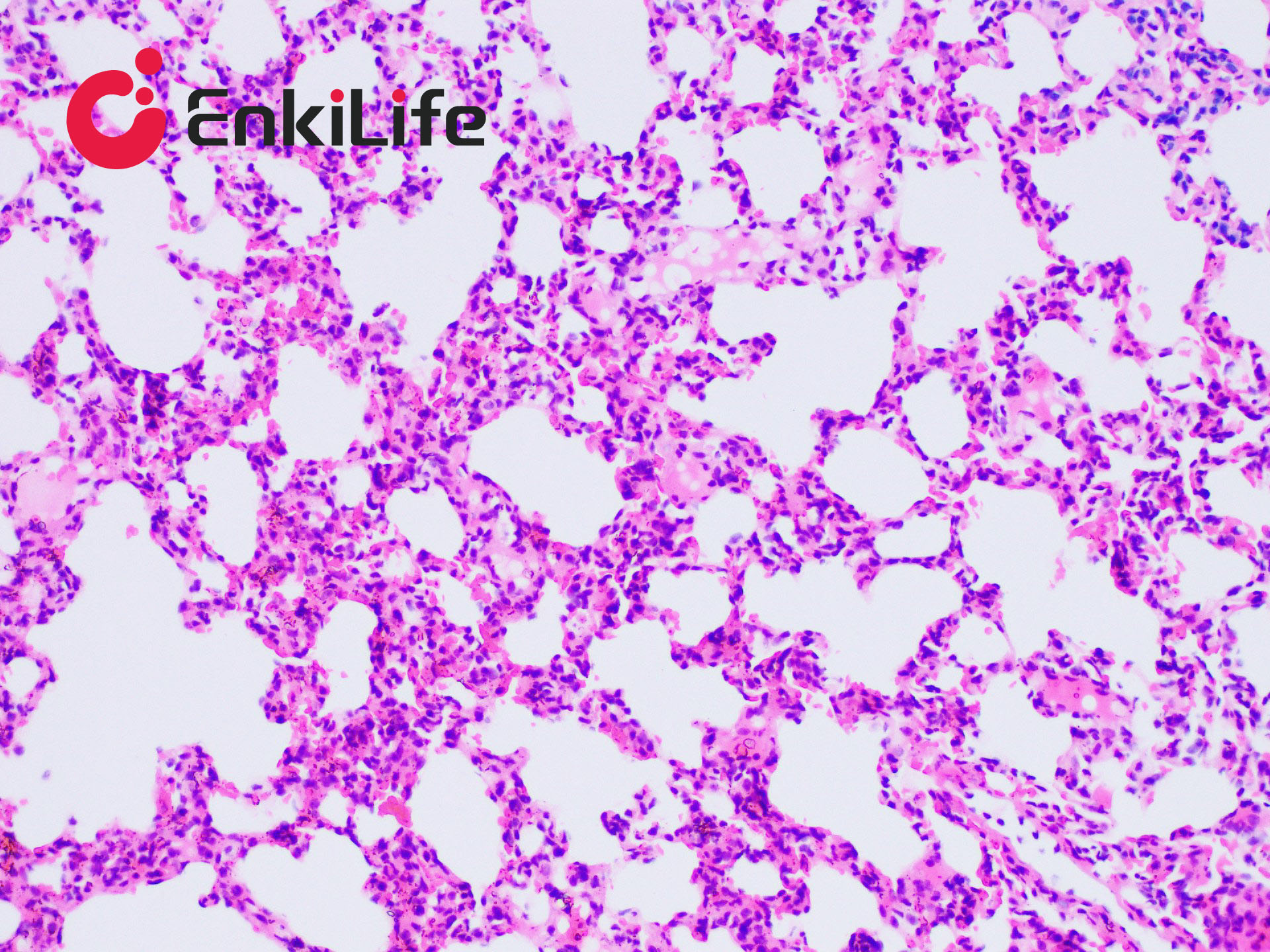


Product Introduction
Hematoxylin and eosin (H&E) staining is the most fundamental staining method in routine histopathology, widely used in pathology, teaching, and scientific research. Hematoxylin is a natural alkaline dye extracted from logwood (Haematoxylon campechianum), appearing as light yellow-brown crystals. After oxidation, it forms hematein, which, together with a mordant (commonly trivalent aluminum or iron salts), stains cell nuclei. H&E staining is used to observe the morphological structure of normal and pathological tissues, and to identify abnormal substances or specific components in cells and tissues. Special staining, enzyme histochemistry, and immunohistochemistry are all performed based on the observation of H&E-stained sections. In H&E-stained sections, nuclei appear blue and cytoplasm appears red, providing a clear contrast for easy observation and analysis.
EnkiLife Hematoxylin and Eosin Staining Solution uses high-purity imported hematoxylin and oxidizing agents, free of harmful substances such as mercuric oxide and methanol. It provides excellent nuclear staining with minimal precipitation and metal film formation. It is widely applicable to human, animal, veterinary, and aquatic samples, and can be used for paraffin-embedded sections, frozen sections, and cytological smears. Both hematoxylin and eosin solutions can be reused.
Basic Information
Product name | Hematoxylin and Eosin (H&E) Staining Kit, Aqueous |
Sizes | 100 mL, 500 mL |
Storage | RT |
Shipping | RT |
Validity | 12 months |
Product Components
Components | 2x 100mL | 2x 500mL |
Reagent (A): Hematoxylin Staining Solution | 100 mL | 500 mL |
Reagent (B): Eosin Staining Solution (Aqueous) | 100 mL | 500 mL |
Notes
1. Dewax sections thoroughly; if temperature is low, incubate at 60–70 °C in an oven.
2. Replace graded ethanol solutions regularly.
3. Differentiation time with hydrochloric acid ethanol should be adjusted according to section thickness, tissue type and age; ensure adequate washing with tap water after differentiation to remove all acid.
4. Ether-ethanol mixed fixative is prepared by mixing equal volumes of ether and 95% ethanol, adding a small amount of acetic acid, and storing in a sealed container.
5. Keep staining times as short as possible for frozen sections.
6. Common bluing solutions include 0.2–1% ammonia water, Scott’s tap water substitute, or 0.1–1% lithium carbonate solution.
7. For your safety and health, wear a lab coat and disposable gloves during operation.