
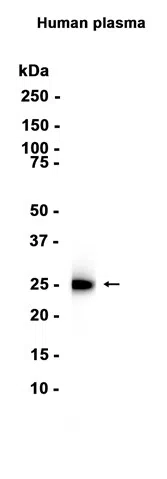
Serum Amyloid P Rabbit Monoclonal Antibody
Size:20μL Price:$98
Size:50μL Price:$168
Size:100μL Price:$300
Application:WB,IHC
Reactivity:Human
Conjugate:Unconjugated
Optional conjugates: Biotin, FITC (free of charge). See other 26 conjugates.
Gene Name:Serum Amyloid P
Size:50μL Price:$168
Size:100μL Price:$300
Application:WB,IHC
Reactivity:Human
Conjugate:Unconjugated
Optional conjugates: Biotin, FITC (free of charge). See other 26 conjugates.
Gene Name:Serum Amyloid P
SKU:
AMRe86540
Detail
Summary
Performance
Immunogen
Application
Background
The protein encoded by this gene is a glycoprotein, belonging to the pentraxin family of proteins, which has a characteristic pentameric organization. These family members have considerable sequence homology which is thought to be the result of gene duplication. The binding of the encoded protein to proteins in the pathological amyloid cross-beta fold suggests its possible role as a chaperone. This protein is also thought to control the degradation of chromatin. It has been demonstrated that this protein binds to apoptotic cells at an early stage, which raises the possibility that it is involved in dealing with apoptotic cells in vivo. [provided by RefSeq, Sep 2008]
Research Area