

Product Introduction
Collagen fibers are the most widely distributed and abundant fibers in connective tissue, found extensively in various organs, especially in the skin, sclera, and tendons. Type I collagen fibers are mainly found in bone, skin, and tendons; Type II collagen fibers are primarily found in cartilage; Type III collagen fibers are mainly present in embryonic tissues and adult blood vessels and gastrointestinal tract; Type IV collagen fibers are mainly found in the basement membrane. Methods for demonstrating collagen fibers include Van Gieson staining, Masson trichrome staining, Victoria blue collagen fiber staining, and Sirius red staining. Under polarized light microscopy, collagen fibers exhibit positive uniaxial birefringence. When combined with Sirius red staining, this birefringence is enhanced, improving resolution and allowing differentiation between collagen types.
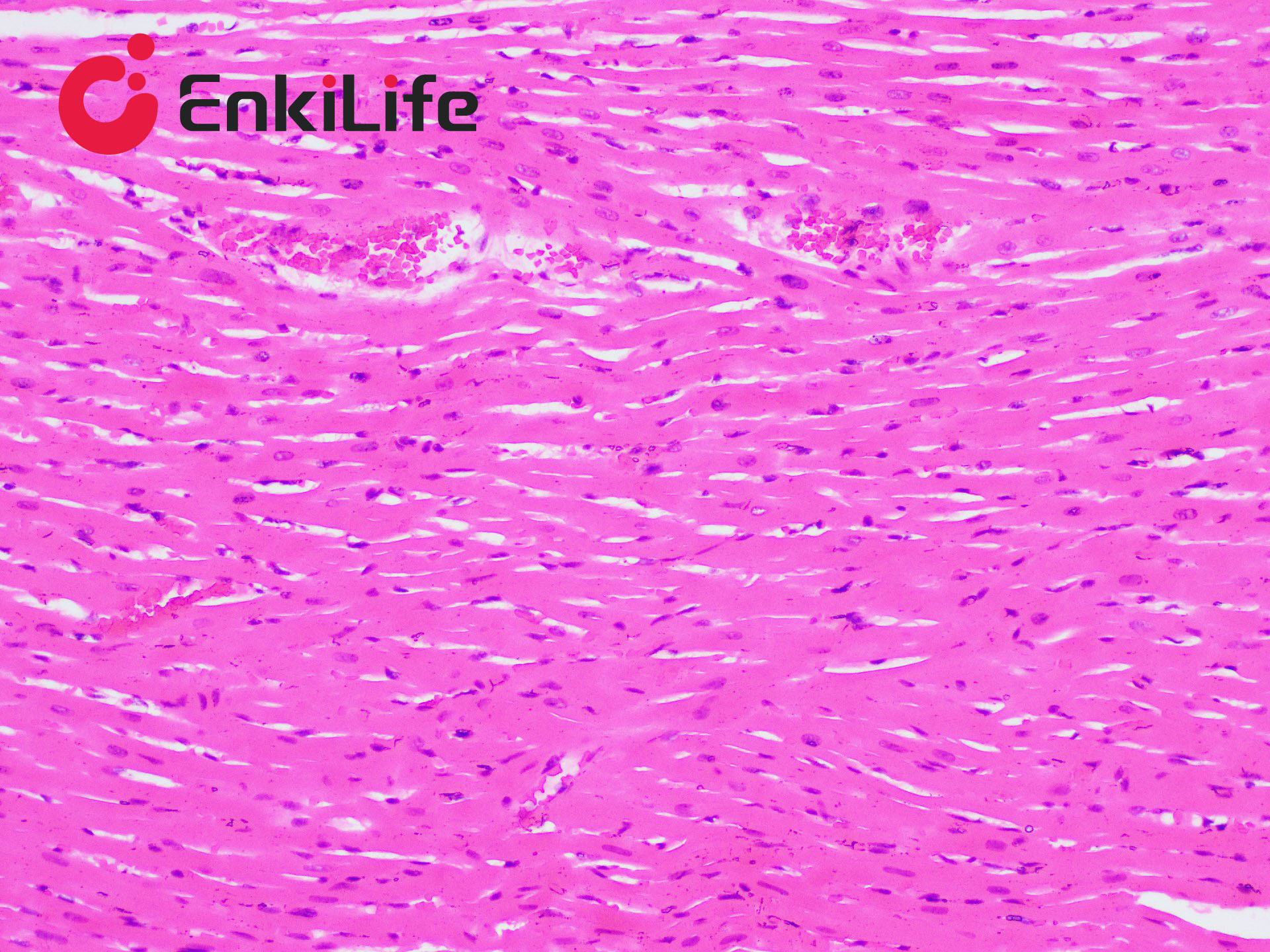
EnkiLife Victoria Blue Collagen Fiber Staining Solution is mainly composed of Victoria blue staining solution and Ponceau staining solution. This staining solution overcomes the disadvantages of VG staining, such as fading and poor contrast. It is primarily used in studies of abnormal collagen fibers or fibrosis in various tissue lesions. Under a conventional light microscope, collagen fibers in tissues such as heart and blood vessels are stained red.
Basic Information
Product name | Victoria Blue Collagen Fiber Staining Kit |
Sizes | 100 mL |
Storage | RT,keep away from light |
Shipping | RT |
Validity | 12 months |
Product Components
Components | 2x 100mL |
Reagent (A): Victoria Blue Staining Solution | 100 mL |
Reagent (B): Ponceau Staining Solution | 100 mL |
Notes
1. The active components in Victoria blue staining solution are volatile. Immersion staining is recommended, and the solution should be tightly sealed after use.
2. After Ponceau staining, do not rinse with water. Dehydrate directly with absolute ethanol.
3. This staining method is stable and resistant to fading.
4. Use reagents promptly after opening to avoid affecting experimental results.
5. For safety and health, wear lab coats and disposable gloves during operation.