
Advantages and Applications of Recombinant Antibodies
In the article "Recombinant Antibody Development——From Design to Expression", we have elaborated on the preparation process of recombinant antibodies in detail. Compared with traditional antibody preparation methods, the antibodies produced by recombinant antibody technology exhibit more prominent application advantages due to their unique technical characteristics, providing strong support for research and practice in related fields.
1. High Specificity and High Affinity
The preparation of recombinant antibodies is based on the design of well-defined antigenic epitopes. Through gene cloning technology, antibody genes that target only specific epitopes of the antigen of interest are screened out, and then a homogeneous antibody product is obtained via in vitro expression and purification. Unlike traditional antibodies, which may have cross-reactivity with multiple epitopes, recombinant antibodies can accurately recognize the unique structure of the target antigen. This capability effectively avoids non-specific binding to other homologous proteins or irrelevant antigens, significantly reducing risks such as false positives in detection and off-target effects in therapy.
2. Animal Component-Free and Suitable for Large-Scale Production
Once the antibody sequence is confirmed, it can be produced indefinitely in cell culture systems on a continuous basis. As a result, recombinant antibodies are completely free of animal components—a significant advantage, especially given the strict global regulatory requirements on the logistics and supply chains of animal-derived components such as serum. Additionally, customers show a stronger preference for recombinant antibodies that can be obtained from animal component-free reagents. Therefore, the animal component-free nature of recombinant antibodies represents a substantial benefit.
3. Consistent Stability Between Batches
For rabbit polyclonal antibodies, 1 mg to 5 mg of antibodies derived from a single rabbit are unique to that specific rabbit. Therefore, when we immunize another rabbit with the same antigen, the antibodies obtained will be different and require re-testing. This is why we assign distinct batch numbers to each rabbit. Although these antibodies may usually share similar characteristics, the success rate of achieving such similarity is only between 25% and 30%. Thus, it is far more difficult to maintain batch-to-batch consistency for rabbit polyclonal antibodies.
Batch-to-batch consistency is much easier to achieve with mouse or rabbit monoclonal antibodies, and they can also be produced on a scalable basis. However, since cell culture is still required in their production process, issues such as gene loss, gene mutation, and cell line drift may occur. As a result, even mouse monoclonal antibodies can undergo sequence changes, leading to slight differences in the sequences of the obtained antibodies.
In contrast, recombinant antibodies with fixed sequences can be stably produced simply by transferring their sequences into plasmids and expressing them in cells. This represents a significant advantage—especially if you have a 10-year-long project that consistently requires the same antibodies, recombinant antibodies would be a prudent choice.
4. Easy Modification and Diverse Formats
Relying on mature genetic engineering technologies, recombinant antibodies can be precisely modified and optimized. By adjusting the amino acid sequence of the variable region, the binding affinity or specificity between the antibody and the antigen can be directionally enhanced. Homotype switching is used to alter the antibody's constant region, thereby regulating its effector functions. Through chimeric modification or humanization design, the immunogenicity of heterologous antibodies is reduced, laying a foundation for the development of therapeutic antibodies. Additionally, key properties of antibodies such as stability, half-life, or solubility can be optimized via methods like site-directed mutagenesis.
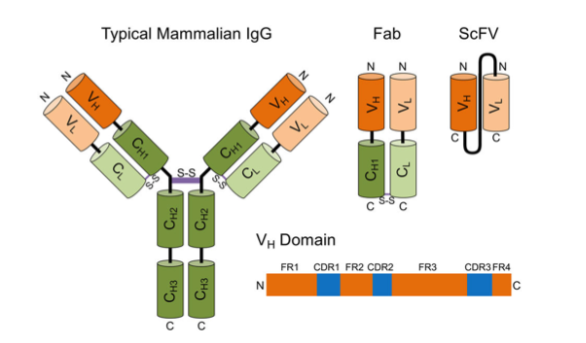
In terms of expression formats, recombinant antibodies can be designed into a variety of functional forms. These include not only complete full-length antibodies but also antigen-binding fragments such as Fab and F(ab’)₂. Specialized formats like single-chain antibodies, bispecific antibodies, and chimeric antibodies can also be constructed.
These characteristics enable recombinant antibodies to break through the functional limitations of traditional antibodies and flexibly meet the diverse needs of different fields such as basic research, in vitro diagnostics, and disease treatment.
Core applications of recombinant antibodies in the field of scientific research
1. Qualitative and localization analysis of proteins
As a core detection reagent in WB, it can accurately recognize target proteins separated by gel electrophoresis. Signal amplification is achieved through labeled secondary antibodies, enabling efficient detection even for low-abundance proteins. In IHC/ICC, fluorescent or enzyme-labeled recombinant antibodies are used to realize the visual localization of target proteins in tissue sections or cells. In IF and LSCM, fluorescently labeled recombinant antibodies allow simultaneous detection of multiple target proteins; co-localization analysis can determine the interaction sites or co-expression relationships between proteins. In ELISA, as capture or detection antibodies, they are used for qualitative or quantitative analysis of target proteins in samples such as cell culture supernatants, serum, and tissue homogenates. In Flow Cytometry, combined with fluorescently labeled recombinant antibodies, it can quickly quantify the expression levels of proteins on the cell surface or within cells, and simultaneously analyze multiple protein markers, achieving accurate typing and functional evaluation of cell subsets.
2. Protein Purification and Enrichment
In affinity chromatography purification, recombinant antibodies are conjugated to chromatographic media to construct specific affinity columns, which are used to capture target proteins from cell lysates and recombinant protein expression systems. Recombinant antibodies can be designed to target specific epitopes of proteins; even if the target protein has modifications or cleavage variants, efficient enrichment can still be achieved to obtain high-purity protein samples. For complex samples such as serum and tissue extracts, recombinant antibody magnetic beads are used to enrich target proteins, eliminating interference from impurity proteins and improving the accuracy of subsequent detection.
3. Molecular Mechanism and Function Research
When exploring signal pathway mechanisms, recombinant antibodies targeting specific modified forms can specifically recognize the activated or modified states of proteins, facilitating the study of signal pathway activation mechanisms. Combined with CRISPR/Cas9 technology, recombinant antibodies are used to detect changes in the expression of target proteins in cells after gene editing, enabling rapid evaluation of gene editing efficiency. In functional blocking experiments, neutralizing recombinant antibodies are used to specifically block the function of target proteins; by observing changes in cell phenotypes, the core role of target proteins in biological processes can be verified. In the research on pathogens and infection mechanisms, recombinant antibodies targeting antigens of pathogens such as viruses and bacteria are used. Through IF, IHC, or FCM, the infection sites and replication of pathogens in cells are detected, making it possible to analyze host-pathogen interactions during the infection process.
EnkiLife's recombinant rabbit monoclonal antibodies, boasting a diverse portfolio of over 7,000 varieties and full-scenario experimental compatibility, deliver efficient solutions for scientific research needs. Visit our website to view Recombinant Rabbit Monoclonal Antibody. Additionally, we offer 30 antibody labeling kits and provide customized antibody labeling services to further support your research endeavors. Visit our website to view Antibody Labeling Kits.
 | Felicia Felicia is a technical support specialist at EnkiLife, with extensive professional experience in antibody development, optimization, and ELISA assay design and application. She is committed to assisting our clients in selecting suitable antibody products, optimizing ELISA experimental protocols, and resolving technical challenges encountered in the process, thereby supporting the smooth progress of their life science research projects. |