More Infiltration Means Better Prognosis? Colorectal Cancer Immune Subtyping Breaks Conventional Understanding
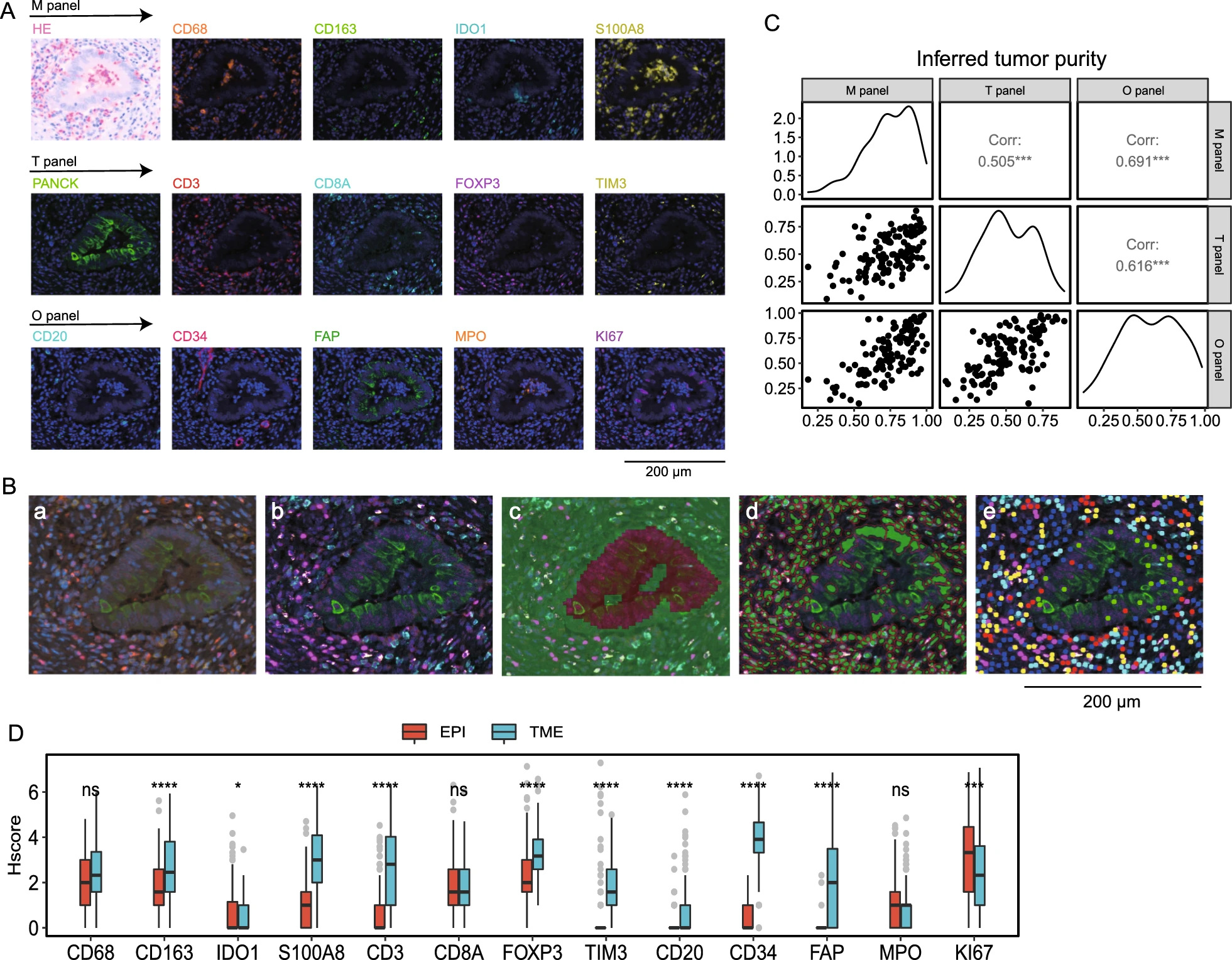
Current research mostly focuses on the infiltration abundance and subtype classification of immune cells, generally overlooking the spatial positional relationship between immune cells and tumor cells. However, the spatial arrangement of immune cells in tumor tissues is not random, but forms an organized ecological system, with significant differences in immune cell functions across different regions of the tumor microenvironment. Meanwhile, advanced spatial detection technologies such as spatial transcriptomics and imaging mass cytometry are costly and not widely accessible, making large-scale application in clinical prognosis evaluation and basic research challenging. Therefore, there is an urgent need for a low-cost, scalable technological system to systematically analyze the in situ spatial distribution patterns of tumor-infiltrating immune cells (TIICs) in colorectal cancer, clarify the regulatory value of immune cell spatial positioning on patient prognosis, and fill the research gap in this field.